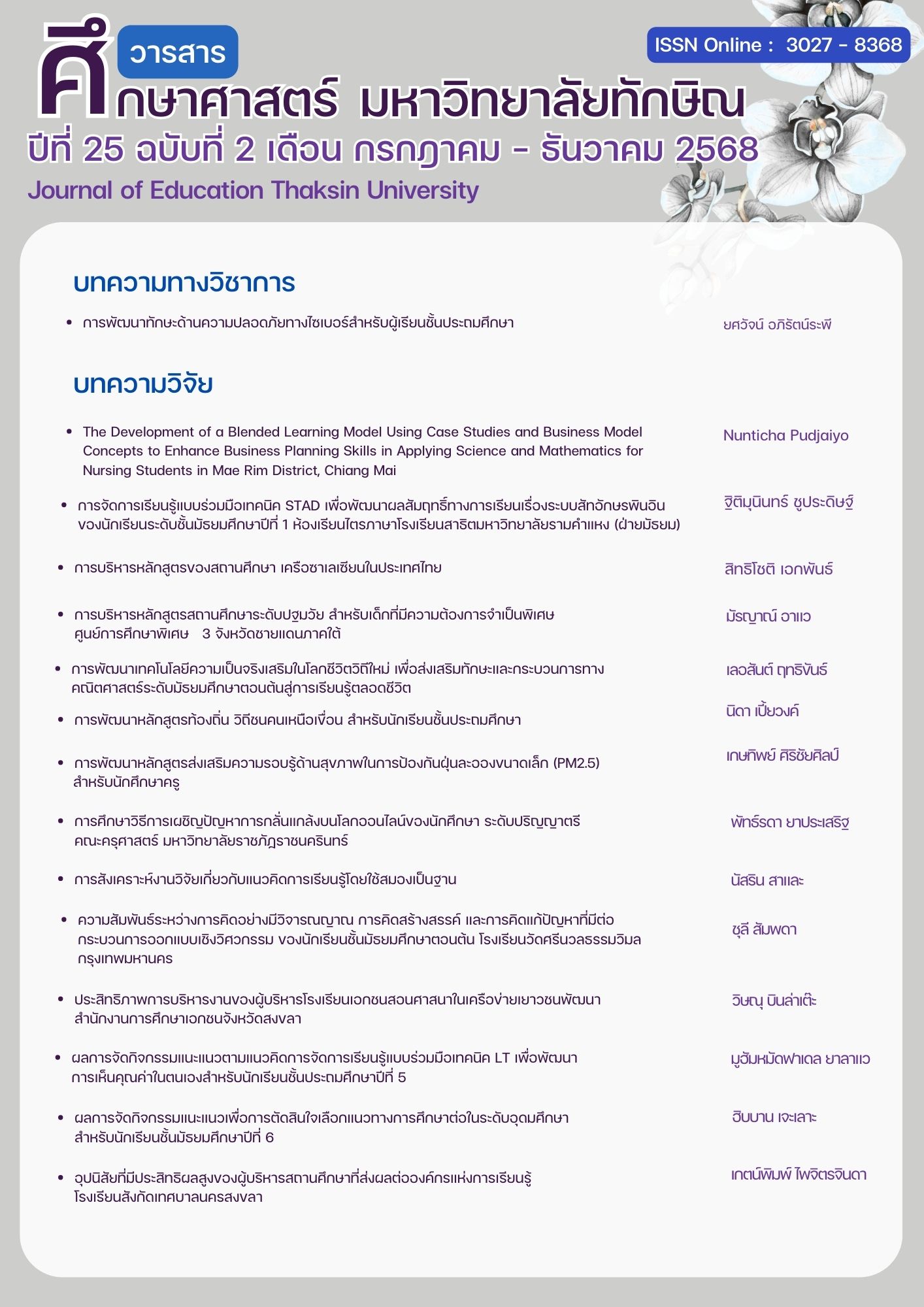
Enhancing Cybersecurity Skills for Elementary Students
Article Sidebar
Main Article Content
Abstract
The development of cybersecurity skills for elementary school students aims to raise awareness and knowledge in protecting against various cyber threats, such as cyberbullying, phishing, personal data breaches, and accessing inappropriate content. The study is divided into two main parts: the first focuses on promoting cybersecurity knowledge, digital literacy, and emotional intelligence among students. This includes key skills such as safeguarding online identity, critical thinking for data analysis, personal data management, and appropriate screen time usage. The second part involves developing practical cybersecurity skills through interactive learning activities, such as the Interland game, designed to allow students to practice skills like thinking before sharing information, verifying the source of information, setting secure passwords, and defending against online bullying. These activities make cybersecurity learning engaging, accessible, and encourage effective participation.
Article Details

This work is licensed under a Creative Commons Attribution-NonCommercial-NoDerivatives 4.0 International License.
ในกรณีที่กองบรรณาธิการ หรือผู้เชี่ยวชาญ ซึ่งได้รับเชิญให้เป็นผู้ตรวจบทความวิจัย หรือ บทความทางวิชาการมีความเห็นว่าควรแก้ไขความบกพร่อง ทางกองบรรณาธิการจะส่งต้นฉบับให้ ผู้เขียนพิจารณาจัดการแก้ไขให้เหมาะสมก่อนที่จะลงพิมพ์ ทั้งนี้ กองบรรณาธิการจะยึดถือความคิด เห็นของผู้เชี่ยวชาญเป็นเกณฑ์
References
กนกวรรณ อินทรปรีชา. (2564). บทบาทของการศึกษาในการเสริมสร้างความปลอดภัยทางไซเบอร์ในกลุ่มเยาวชน. วารสารวิชาการเทคโนโลยีสารสนเทศ, 8(1), 23-36.
ญาศินี เกิดผลเสริฐ. (2565). การพัฒนาทักษะการเรียนรู้สู่พลเมืองดิจิทัล. วารสารวิชาการ กสทช., 354 – 379. https://so04.tci-thaijo.org/index.php/NBTC_Journal/article/view/260058/177102
ฐิติพร ศุภสิทธิ์ธํารง (2566). EQ (Emotional quotient) ความฉลาดทางอารมณ์. สืบค้น 30 ตุลาคม 67 : https://www.medparkhospital.com/lifestyles/eq-emotional-quotient
วัตสาตรี ดิถียนต์ (2567). แนวทางการส่งเสริมความสามารถในการสร้างความปลอดภัยทางไซเบอร์สำหรับ ผู้เรียน. วารสารวิชาการมหาวิทยาลัยการกีฬาแห่งชาติ, 16(1) 291 – 302. https://he02.tci-thaijo.org/index.php/TNSUJournal/article/view/262006/182325
ศุภณัฐ เพิ่มพูนวิวัฒน์ และคณะ (2564). ความเป็นพลเมือง: บทสำรวจสถานะความเป็นพลเมืองกับการรู้ดิจิทัล. สำนักส่งเสริมการเมืองภาคพลเมือง สถาบันพระปกเกล้า. https://www.kpi.ac.th/knowledge/
สรานนท์ อินทนนท์. (2563). ความฉลาดทางดิจิทัล.กรุงเทพฯ: วอล์คออนคลาวด์.
อนุกูล ปีดแก้ว. (2565). การสำรวจสถานการณ์เด็กกับภัยออนไลน์. กระทรวงการพัฒนาสังคมความมั่นคงของมนุษย์. สืบค้น 30 ตุลาคม 67 : https://www.m-society.go.th/ewtadmin/ewt/MSO_WEB_NEW/news_view.php?nid=34491.research/data/1194?page=3
DQ Institute. (2019). DQ global standards report 2019: Common framework for digital literacy, skills, and readiness. https://www.dqinstitute.org/wp-content/uploads/2019/11/
DQGlobalStandardsReport2019.pdf
Park, Y. H. (2023). Child Online Safety Index reveals a persistent cyber pandemic. DQ Institute. Retrieved from https://www.dqinstitute.org/news-post/child-online-safety-index-reveals-a-persistent-cyber-pandemic/
