
Approach to Developing the Potential of Local Personnel in the Digital Era of Phaniat Subdistrict Administrative Organization, Nakhon Pathom Province
Article Sidebar
Main Article Content
Abstract
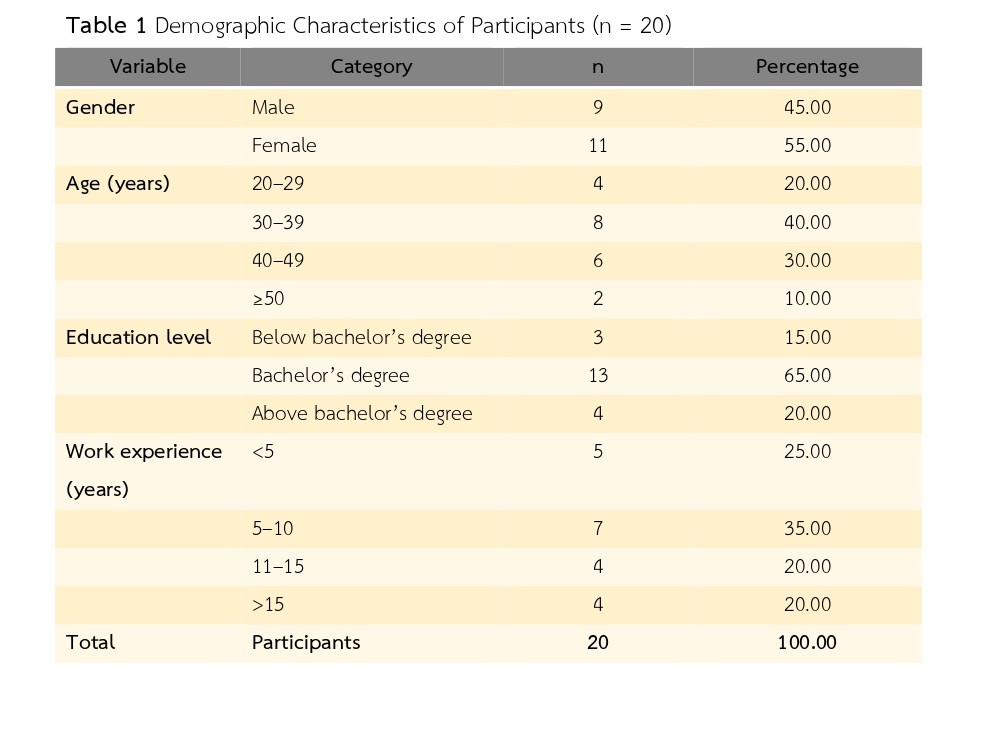
In the rapidly evolving digital era, government agencies must undergo significant transformation, with human resource development serving as the primary catalyst. This research aimed to: 1) explore guidelines for developing the potential of local personnel at the Phaniat Subdistrict Administrative Organization, and 2) analyze the readiness and needs of personnel in adapting to the digital age. This study employed a qualitative research methodology, collecting data through in-depth interviews with 10 participants and a focus group discussion with 10 participants, totaling 20 key informants. The research findings revealed that: 1) personnel potential development currently lacks continuity and systematic implementation. Although personnel demonstrate high levels of readiness and a strong demand for digital skills, supportive tools, and a conducive learning environment, they face constraints related to organizational structure and internal attitudes. 2) The organization has increasingly adapted to change and promoted personnel development, particularly through the integration of information technology into office operations to enhance work efficiency. Proposed guidelines for development include organizing practical workshops coupled with a follow-up system, providing supportive resources and welfare systems to boost motivation, and fostering an organizational culture that embraces change. These strategies are expected to ensure sustainable efficiency in public service delivery within the digital era.
Article Details

This work is licensed under a Creative Commons Attribution-NonCommercial-NoDerivatives 4.0 International License.
The Editorial Board claims a right to review and correct all articles submitted for publishing
References
Akaraborworn, C. (2022). HR 5.0: Digital HR System (p. 295). Kornkanok Printing, Bangkok.
Ali, S., & Anwar, M. (2023, November 1). Digital readiness of government employees in developing countries: Barriers and opportunities. https://www.sciencedirect.com/science/article/pii/S0740624X2300071
Boonyarataphan, T. (2023). Human resources’ digital competency management with agile team designing: The challenges of organization in digital era. Journal of Social Science, Law and Politics, 7(1), 1 - 33. https://so02.tci-thaijo.org/index.php/Lawpol_Journal/article/view/260683
Buosonte, R. (2015). Qualitative Research in Education (p. 316). Chulalongkorn University Press.
Burtscher, M., Drouet, C., & Ditlev-Simonsen, M.E. (2024, October 10). Developing skills for digital government: A review of good practices across OECD governments. https://doi.org/10.1787/f4dab2e9-en
Cao, G., Duan, Y., & Edward, J.S. (2025). Organizational culture, digital transformation, and product innovation. Information & Management, 62(4), 1 - 14. https://doi.org/10.1016/j.im.2025.104135
Chantaravareelekha, W. (2020). Guidelines in supporting employees’ skill development in applying the use of digital technology (digital savvy) according to digital competency plan: A case study of Electricity Generating Authority of Thailand (EGAT). (p. 102). M.P.A. Independent Study. Chulalongkorn University
Charmaz, K. (2000). Grounded theory: Objectivist and constructivist methods. pp. 509-535. In: N. K. Denzin and Y. S. Lincoln (eds.). Handbook of Qualitative Research. (2nd ed.). Sage, Thousand Oaks.
Charmaz, K. (2011). Grounded theory methods in social justice research. pp. 359–380. In: N. K. Denzin and Y. S. Lincoln (eds.). Handbook of Qualitative Research (4th ed.). Sage, Thousand Oaks.
Choknumchaisiri, K., & Sato, S.C. (2025). Welfare satisfaction that affects organizational commitment of metropolitan health and wellness institution. Regional Health Promotion Center 9 Journal, 19(2), 386 – 400. https://he02.tci-thaijo.org/index. php/RHPC9Journal/article/view/272484
Corbin, J., & Strauss, A. (2015). Basics of Qualitative Research: Techniques and Procedures for Developing Grounded Theory (p. 416). Sage, Thousand Oaks.
DGA. (2023, February 14). Digital government readiness survey of Thai government agencies. Annual report 2023 (B.E. 2566https://www.dga.or.th/wp-content/uploads/2023/12/DGA-Readiness-Survey.pdf.
Glaser, B.G., & Strauss, A.L. (1968). The Discovery of Grounded Theory: Strategies for Qualitative Research (p. 271). Weidenfeld and Nicolson, London
Inarda, A.V., Madriaga, E.M., Protacio, M.L., & Santos, M.S. (2019). Office skills among local government units’ personnel towards a proposed extension project. Asia Pacific Journal of Academic Research in Social Sciences, 4, 40 - 49. https://asiapjournals. org/office-skills-among-local-government-units-personnel-towards-a-proposed-extension-project/
Interapakdee, P. (2019). Competency and human resource development in the digital HR era of a state enterprise employee. [Master’s thesis]. Chulalongkorn University, Bangkok
Kano, E., & Tsuda, K. (2023). Analysis of factors affecting local government officials' interest in digital technology. Procedia Computer Science, 225, 1853 - 1861. https://doi.org/10.1016/j.procs.2023.10.175
Kesorn, C., & Phinaitrup, B. (2023). The career paths of supporting staff in autonomous university: Case study of supporting staff in the national institute of development administration. Research Community and Social Development Journal, 17(3),
- 97. https://so04.tci-thaijo.org/index.php/NRRU/article/view/265434
Matvijit, N., & Tantayakul. S. (2025). Digital skills development of personnel: A case study of the Office Human Resources Management, Office of the Attorney General. Ramkhamhaeng Journal of Public Administration, 8(1), 445 – 476. https://so16.tcithaijo.org/index.php/RJPA/article/view/1534
Na Phuket, P.R. (2016). Philosophy of social science: Social explanation as a foundation for social science research (2nd ed.). Chulalongkorn University Press.
Nunchaikaew, W. (2021). Human resources management in government organizations in the digital technology era. Journal of Management and Local Development, 4(2), 17 - 32. https://so11.tci-thaijo.org/index.php/jMLD/article/view/921
Organisation for Economic Co-operation and Development (2021). The OECD Framework for Digital Talent and Skills in the Public Sector. (p. 53). Organisation
for Economic Co-operation and Development, Paris
Panboonplook, S., & Hasoontree. N. (2023). Welfare satisfaction affects the work efficiency of university employees Chulalongkorn University. SSRU Journal of Public Administration, 6(1), 1 - 13. https://so04.tci-thaijo.org/index.php/SSRUJPD/article/view/259834
Phetpankan, P. (2022). The development of digital skill for sup-district administrative organization personnel in the district of Mueang Ratchaburi, Ratchaburi province. [Master’s thesis]. Rangsit University.
Phiromkarn, P., & Suksan, B. (2021). The approach development for welfare provisions of officers in Nakon Phanom University. Journal of MCU Nakhondhat, 8(2), 411 - 422. https://so03.tci-thaijo.org/index.php/JMND/article/view/250519
Podhisita, C. (2021). The Science and Art of Qualitative Research (9th ed.) Amarin Printing
Puang-ngam, K. (2016). Thai local administration: Principles and new dimensions for the future (9th ed.). Winyuchon
Strauss, A., & Corbin, J. (1998). Basics of qualitative research: Techniques and procedures for developing grounded theory. (2nd ed.) Sage, Thousand Oaks
Suebyart, T., & Ninkron, P. (2024). Participation of local community in promoting well-being of region based on cultural heritage of the western region. Journal for Community Development and Life Quality, 12(2), 155 - 165. https://so02.tcithaijo.org/index.php/JCDLQ/article/view/264563
Sumalee, E. (2015). Smart City: Developing and Implementing IT Systems in Urban Management (p. 290). King Prajadhipok’s Institute
Sumalee, E., & Tanchai, C. (2020). Smart City Guide Book II (p. 126). King Prajadhipok’s Institute
Thammasak, T. (2025). The Great Reset (7th ed.). Baanphraathit
UNDP. (2023, January 24). Digital skills needs and opportunities. https://www.undp.org/sites/g/files/zskgke326/files/202309/digital_skills_needs_and_opportunities.pdf.
Vetchayanon, N. (2018). Competency-Based Approach (p. 368). The Graphico Systems
