
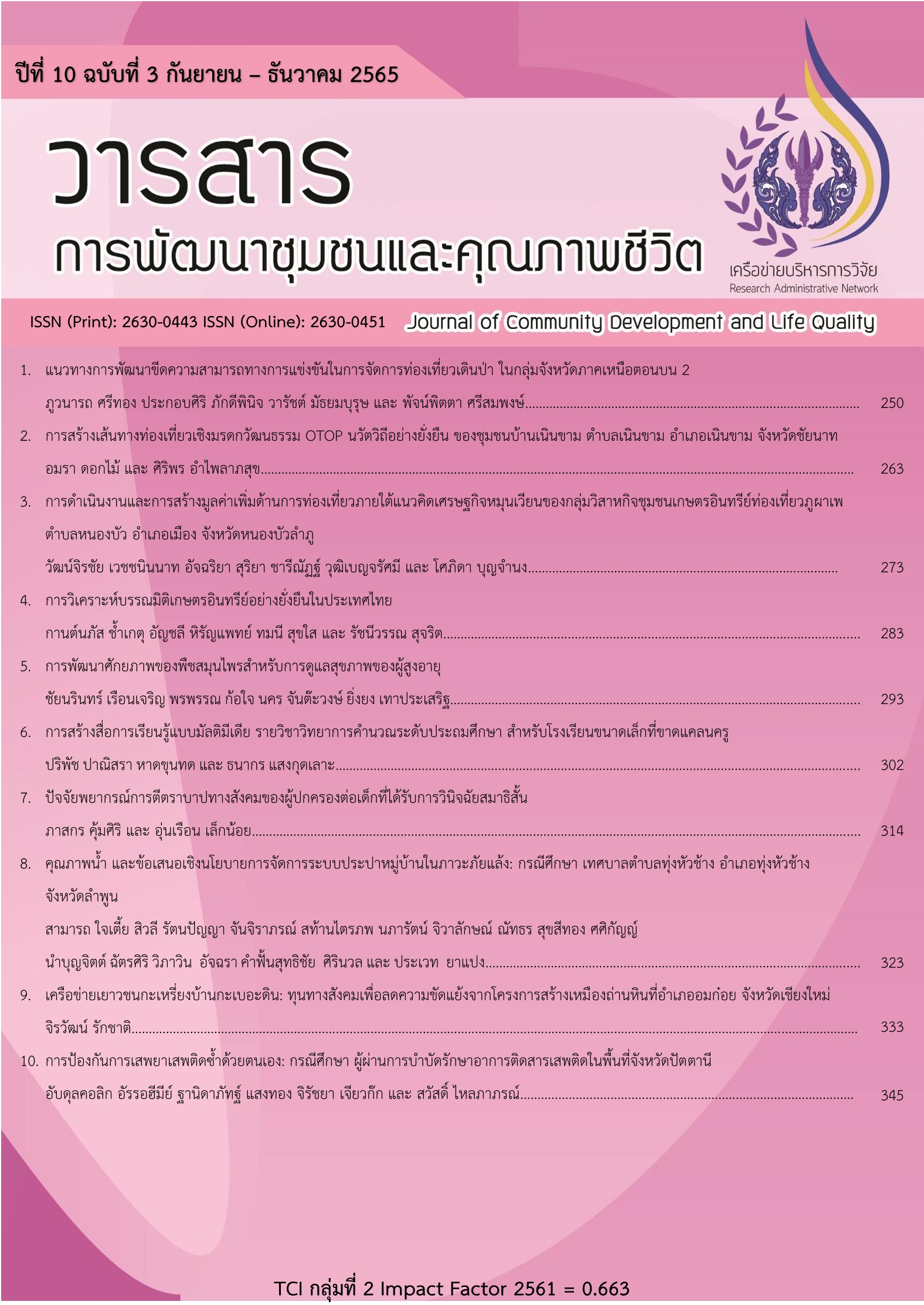
Creation of Multimedia Learning Materials Elementary Computational Science Course for Small Schools with a Shortage of Teachers
Keywords:
Multimedia, computer science, small schoolAbstract
The purposes of the research were to design multimedia learning materials for elementary computational science course for small schools with a shortage of teachers and assess the quality of the multimedia learning materials. The sample were 3 experts selected by purposive sampling method. Research tools include multimedia learning materials for elementary computational science course and multimedia quality assessment form. The results of this research were as follows: Multimedia learning materials involves 5 steps of learning methods: introduction of the lesson, teaching, summarizing, practicing and applying. It is divided into the first grade, grades 1-3, which could be divided into 5 clips, simple programming using software or media. and program error detection and the second level, grade 4-6, which could be divided into 5 clips, programming sequence, condition, iteration and error detection of the program titled “Rabbit and Tortoise” The research result also reveal that the quality of multimedia learning materials is at a high level.
References
Ananpatiwet, S. Tubtimtong, W. and Cinmuk, U. 2021. The Development of Video Media Basedon ADDIE Model on Nursing Care for High-Risk Preterm Infants. Journal of nursing and education. 14(4): 64-76.
Geo-informatics for educational personnel management. 2019. small school statistics year 2019. (Online). Avaliable: http://gisedu.obec.go.th/ (March 29, 2022). (in Thai)
Choetlaor, P. and A. Pimpimool. 2019. The development of multimedia on mathematics for Mathayom suksa I students. Journal of Technology Management, Maha Sarakham Rajabhat University 6(2): 28-37. (in Thai)
Jinda, A. and E. Bangthamai. 2016. The problems and guidelines support of use information and communication technology for educational of schools in Nakhon Pathom Primary Educational Service Area Office 2. Veridian E-Journal, Silpakorn University Humanities, Social Sciences and Arts 9(1): 395-407. (in Thai)
Ngoenthong, M. and Wechayaluk, N. 2016. A Study of Management Problems for Small Schools under Phitsanulok Primary Educational Service Area Office 3, National academic conferences and research presentations Graduate Network Phetchabun Rajabhat University 3: 234-248. (in Thai)
Prasertsith, K. (2021). A Development of Animation Media with Local Wisdom in Field of Mathematics: Case Study of Wat Metarang School, Sam Khok District, Pathum Thani Province, Journal of Community Development and Life Quality 9(1): 134-145. (in Thai)
Ratchawiang, A. 2018. The quality of the video media for psychological healing to the muslims of unrest situation in the southern border provinces, VRU Research and Development Journal Science and Technology 13(1):219-227.
Romae A., C. Chunphon and O. Isaranarakul. 2021. Development of multimedia for learning on alternative energy in Narathiwat province for students in private Islamic schools. Princess of Naradhiwas University Journal of Humanities and Social Sciences 9(1): 258-274. (in Thai)
McGriff, Steven J. 2000. Instructional System Design (ISD): Using the ADDIE Model, Instructional Design Models 226(14): 1-2.
Wangsalae, S. and W. Swengam. 2021. Guidelines of computing science instruction for lower secondary school, Journal of the Association of Researchers 26(1): 116-132. (in Thai)
Yasaka S. and S. Suksakulchai. 2020.Study of status, problems, and needs of computing science learning management. pp. 2191 – 2199. In: Proceeding of the 12th NPRU National Academic Conference, Nakhon Pathom Rajabhat University, Nakorn Prathom. (in Thai)
Downloads
Published
How to Cite
Issue
Section
License
Copyright (c) 2022 Journal of Community Development and Life Quality

This work is licensed under a Creative Commons Attribution-NonCommercial-NoDerivatives 4.0 International License.
The Editorial Board claims a right to review and correct all articles submitted for publishing


