
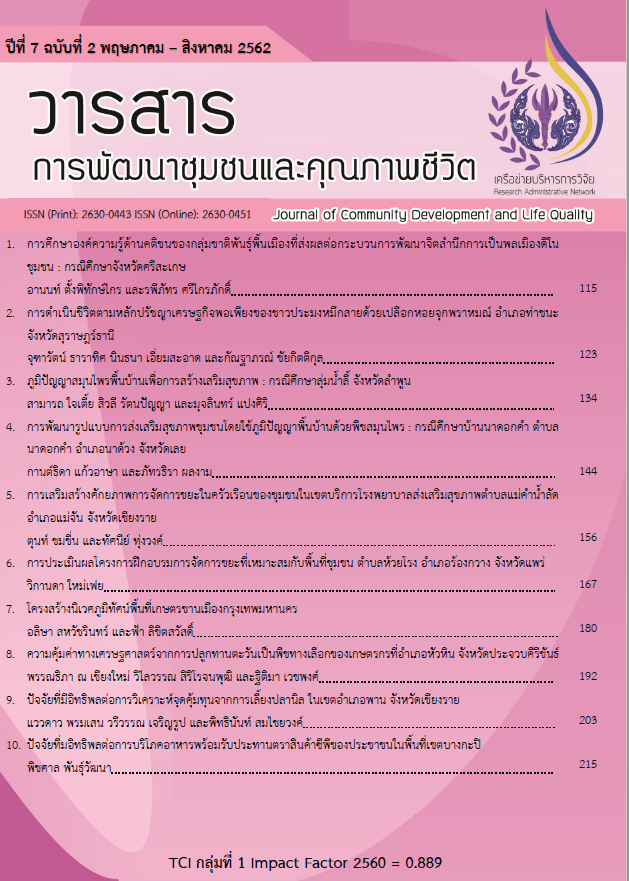
Development of Community Health Promotion Model Using Local Wisdom on Herbs: A Case Study at Na Dok Kham, Naduang, Loei
Keywords:
Community, participatory, ectourism, tourism, managementAbstract
The purpose of this study was to 1) to study the knowledge of Ban Na Dok Kham, Loei Province. 2) to develop the model of community health promotion. Using local wisdom with herbs. 3) Apply the model to promote community health. Practice and evaluation using an action research model. The instruments used in the study were interview questionnaires and group discussion. And a brainstorming session The samples were 10 local folk doctors. There are 90 people involved in the network of local doctors and related health organizations. Banana Dok Kham Folk Doctor The herbal knowledge and herbal treatment from hereditary ancient herbal texts. Have experience in treatment for at least 20 years. Develop a model of community health promotion. Knowledge transfer by local doctors to community, temple and school. Learning process Accompany with the lifestyle of the people in the community. Enhance knowledge, promote the planting and use of herbs in the community to become a center for collecting knowledge, knowledge, herbs. Create a learning process. Development of the wisdom of the use of medicinal plants. Take care of the health of the people in the community sustainably.
References
จักรพงษ์ แพทย์หลักฟ้า วิรุณ ตั้ง เจริญ พฤทธิ์ ศุภเศรษฐศิริ และวิชัย วงษ์ใหญ่.2556.การมีส่วนร่วมของชุมชนเมืองในการพัฒนาแหล่งเรียนรู้ศิลปวัฒนธรรม: กรณีศึกษาชุมชนลาดพร้าว. วารสารสถาบันวัฒนธรรมและศิลปะ 14 (2): 35 – 48.
ดารณี อ่อนชมจันทร์. 2548. การส่งเสริมพัฒนาการนวดพื้นบ้านในการดูแลสุขภาพและเสริมสร้างรายได้ชุมชน. นนทบุรี: กลุ่มงานการแพทย์พื้นบ้านไทย กรมพัฒนาการแพทย์แผนไทยและการแพทย์ทางเลือก กระทรวงสาธารณสุข.
นัยนา หนูนิล.2543. รูปแบบการมีส่วนร่วมของชุมชน ในการส่งเสริมสุขภาพ วารสารสาธารณสุขมูลฐาน ภาคใต้ ปีที่ 14 ฉบับที่ 3 เมษายน-มิถุนายน 2543:3.
พชรมน พรหมศวร; และ ปิยธิดา คูหิรัญญรัตน์. (2554). สัดส่วนและปัจจัยที่เกี่ยวข้องกับพฤติกรรมการแสวงหาบริการด้านสุขภาพของผู้ป่วยที่มารับบริการที่คลินิกแพทย์แผนไทยประยุกต์ คณะแพทย์ศาสตร์ มหาวิทยาลัยมหาสารคามเป็นลำดับแรก. รายงานการประชุมวิชาการครั้งที่ 27. Srinagarind Med Journal. 26(Supplement): 236-239.
พระสุริยา มาต์คำ.2552. การพัฒนากระบวนการสืบทอดภูมิปัญญาหมอพื้นบ้านในประเทศไทยและสาธารณรัฐประชาธิปไตยประชาชนลาว.เลย: ยุทธศาสตร์การพัฒนาภูมิภาค มหาวิทยาลัยราชภัฏเลย.
ภควรรณ ปัทมสุวรรณ .2559. การพัฒนารูปแบบการมีส่วนร่วมของชุมชนในการจัดการท่องเที่ยวเชิงนิเวศจังหวัดชัยภูมิ: กรณีศึกษา มอหินขาว. วารสารการพัฒนาชุมชนและคุณภาพชีวิต. 4 (2): 237-250.
ภัทรธิรา ผลงาม. 2555. การพัฒนารูปแบบการส่งเสริมสุขภาพชุมชนโดยใช้ภูมิปัญญาหมอพื้นบ้านอีสาน. กรุงเทพ: สำนักบริหารโครงการวิจัยในอุดมศึกษาและพัฒนามหาวิทยาลัยวิจัยแห่งชาติ.
รัชนี จันทร์เกษและประพจน์ เภตรากาศ. 2559. การบูรณาการการแพทย์แผนไทย: สถานการณ์การให้บริการการแพทย์แผนไทย. กรุงเทพฯ: หน่วยปฏิบัติการวิจัยเภสัชศาสตร์สังคม กรมพัฒนาการแพทย์แผนไทยและการแพทย์ทางเลือก จุฬาลงกรณ์มหาวิทยาลัย.
สามารถ ใจเตี้ย สิวลี รัตนปัญญา รพีพร เทียมจันทร์ สมชาย แสนวงศ์ และพันนภา อุสาห์ใจ .2559.การพัฒนากระบวนการเรียนรู้ชุมชนเพื่อการส่งเสริมวัฒนธรรมสุขภาพ : กรณีศึกษาลุ่มนํ้าลี้ จังหวัดลำพูน. วารสารการพัฒนาชุมชนและคุณภาพชีวิต. 4 (2): 284-296.
Pender, N. J. 1996. Health Promotion in Nursing Practice. Norwalk: Appleton & Lange
Williams, E.1976. Participation Management. Concepts, Theory, and Implementation, Georgia State
University, Atlanta.
Downloads
Published
How to Cite
Issue
Section
License
The Editorial Board claims a right to review and correct all articles submitted for publishing


