
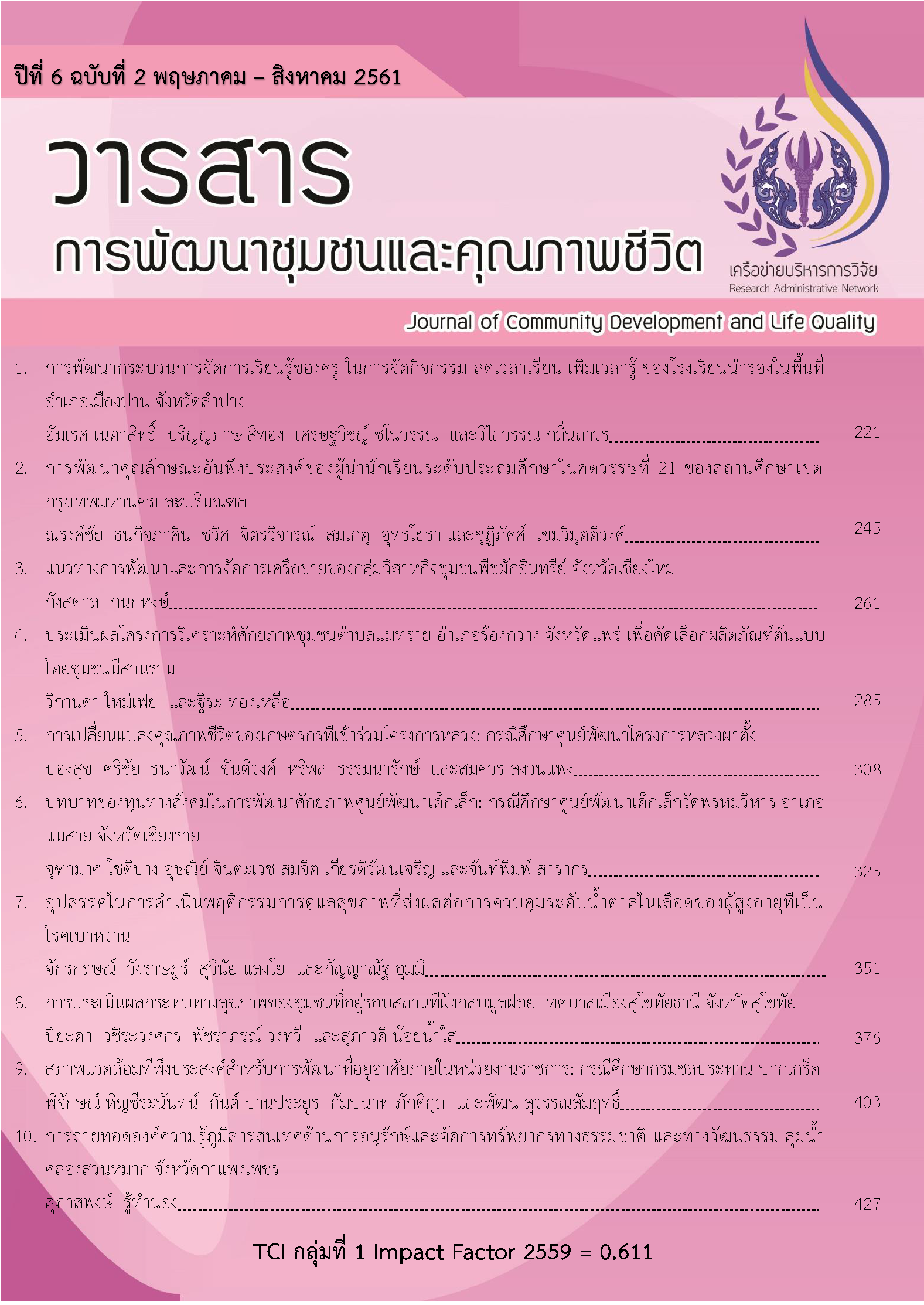
การพัฒนาคุณลักษณะอันพึงประสงค์ของผู้นำนักเรียนระดับประถมศึกษาในศตวรรษที่ 21 ของสถานศึกษาเขตกรุงเทพมหานครและปริมณฑล
บทคัดย่อ
การวิจัยครั้งนี้มีวัตถุประสงค์ 1) เพื่อศึกษาคุณลักษณะอันพึงประสงค์ของผู้นำนักเรียนระดับประถมศึกษาในศตวรรษที่ 21 ของสถานศึกษาเขตกรุงเทพมหานครและปริมณฑล 2) เพื่อสร้างรูปแบบการพัฒนาคุณลักษณะอันพึงประสงค์ของผู้นำนักเรียนระดับประถมศึกษาในศตวรรษที่ 21 ของสถานศึกษาเขตกรุงเทพมหานครและปริมณฑล 3) เพื่อพัฒนาคู่มือการพัฒนาคุณลักษณะอันพึงประสงค์ของผู้นำนักเรียนระดับประถมศึกษาในศตวรรษที่ 21 ของสถานศึกษาเขตกรุงเทพมหานครและปริมณฑล โดยใช้วิธีการวิจัยเชิงปริมาณและการวิจัยเชิงคุณภาพ สังเคราะห์ทฤษฎีจากผู้เชี่ยวชาญ 5 คน ผู้ให้ข้อมูลด้านการศึกษา ได้แก่ ผู้นำนักเรียน และ ครู จำนวน 1,308 โรงเรียน ผู้อำนวยการโรงเรียนและครูในโรงเรียนรางวัลสภานักเรียนระดับชาติ จาก 6 ภาค 6 โรงเรียน วิเคราะห์ข้อมูลโดยการตรวจสอบความเที่ยงตรงของเนื้อหา แจกแจงความถี่ ร้อยละ ผู้ให้ข้อมูลด้านการสร้างรูปแบบในระยะที่ 2 ได้แก่ ผู้เชี่ยวชาญรางวัลระดับชาติด้านการพัฒนาผู้นำนักเรียน จำนวน 9 คน วิเคราะห์ข้อมูลโดยการถอดเทปการสนทนากลุ่มย่อย ผู้ให้ข้อมูลด้านการพัฒนาคู่มือในระยะที่ 3 ได้แก่ ครูจำนวน 30 โรงเรียน วิเคราะห์ข้อมูลจากการศึกษาคู่มือโดยการหาประสิทธิผล EI และความพึงพอใจโดยแจกแจงความถี่
ร้อยละ ผลการวิจัยปรากฏดังนี้ 1) คุณลักษณะของผู้นำนักเรียนระดับประถมศึกษาในศตวรรษที่ 21 ควรประกอบด้วย การรู้จักตนเองของผู้นำนักเรียน การทำงานเป็นทีมของผู้นำนักเรียน ทัศนคติในการเป็นผู้นำนักเรียน ความสัมพันธ์ของผู้นำนักเรียนกับเพื่อนสภา ผู้มีส่วนเกี่ยวข้องกับการพัฒนาผู้นำนักเรียน คุณลักษณะของผู้มีส่วนเกี่ยวข้อง กระบวนงานในการพัฒนาผู้นำนักเรียน กิจกรรมการพัฒนาผู้นำนักเรียน 2) รูปแบบ SAPA-STAR เป็นรูปแบบการพัฒนาคุณลักษณะอันพึงประสงค์ของผู้นำนักเรียนระดับประถมศึกษาในศตวรรษที่ 21 3) ประสิทธิผลของการศึกษาคู่มือของครู 30 โรงเรียน เพิ่มสูงขึ้นกว่าเกณฑ์ที่กำหนดไว้ที่ระดับ 0.89 จากเกณฑ์มาตรฐานที่ 0.50 ความพึงพอใจต่อคู่มือการพัฒนาคุณลักษณะอันพึงประสงค์ของผู้นำนักเรียนในศตวรรษที่ 21 ในระดับมาก
เอกสารอ้างอิง
ปัญญา ทองนิล. 2554. รูปแบบการพัฒนาสมรรถนะภาพการสอนโดยการบูรณาการแบบสอดแทรกสำหรับนักศึกษาครูเพื่อเสริมสร้างคุณลักษณะอันพึงประสงค์ของผู้เรียน. วารสารศิลปากรศึกษาศาสตร์วิจัย 3(1, 2): 92-93.
พระครูวิชัยคุณวัตร ชาญสมบัติ. 2559. การพัฒนารูปแบบกิจกรรมส่งเสริมคุณธรรมจริยธรรมของนักเรียนตามพระบรมราโชวาทของพระบาทสมเด็จพระเจ้าอยู่หัว: โรงเรียนพังงูวิทยาคม. วารสารการพัฒนาชุมชนและคุณภาพชีวิต 4(2): 262-272.
สำนักงานคณะกรรมการการศึกษาขั้นพื้นฐาน. 2557. สภานักเรียน. สำนักงานคณะกรรมการการศึกษาขั้นพื้นฐาน, กรุงเทพฯ. 52 หน้า.
สำนักงานคณะกรรมการพัฒนาระบบราชการ. 2552. กรอบโครงการสร้างคู่มือ. สำนักงานคณะกรรม การพัฒนาระบบราชการ, กรุงเทพฯ. 9 หน้า.
อัจศรา ประเสริฐสิน. 2558. การพัฒนารูปแบบคู่มือการวัดคุณลักษณะอันพึงประสงค์ 8 ประการของนักเรียนระดับมัธยมศึกษา. วารสารศิลปากรศึกษาศาสตร์วิจัย 8(1): 63-76.
Dudley, D. C. and R. A. Abigail. 2006. Managing Conflict Through Communication. 3rd . Pearson, Boston. 279 P.
Bellanca, J. and R. Brandt. 2013. 21st Century Skills: Rethinking How Students Learn. Open worlds, Bloomington. 272 P.
Krejcie, R.V. and D.W. Morgan. 1970. Determining sample size for research activities. Education and Psychological Measurement 30: 607-610.
ดาวน์โหลด
เผยแพร่แล้ว
รูปแบบการอ้างอิง
ฉบับ
ประเภทบทความ
สัญญาอนุญาต
กองบรรณาธิการขอสงวนสิทธิ์ในการตรวจและแก้ไขบทความที่เสนอเพื่อตีพิมพ์ในวารสารการพัฒนาชุมชนและคุณภาพชีวิต
บทความหรือข้อความคิดเห็นใด ๆ ที่ปรากฏในวารสารการพัฒนาชุมชนและคุณภาพชีวิต เป็นวรรณกรรมของผู้เขียนโดยเฉพาะคณะผู้จัดทำไม่จำเป็นต้องเห็นด้วย และไม่ใช่ความรับผิดชอบของมหาวิทยาลัยและคณะผู้จัดทำ / บรรณาธิการ


