ผลของการจัดการเรียนรู้วิทยาศาสตร์สืบเสาะโดยใช้บอร์ดเกมดิจิทัลต่อแรงจูงใจทางวิทยาศาสตร์ เรื่อง การสังเคราะห์ด้วยแสงของพืช
Article Sidebar
Main Article Content
บทคัดย่อ
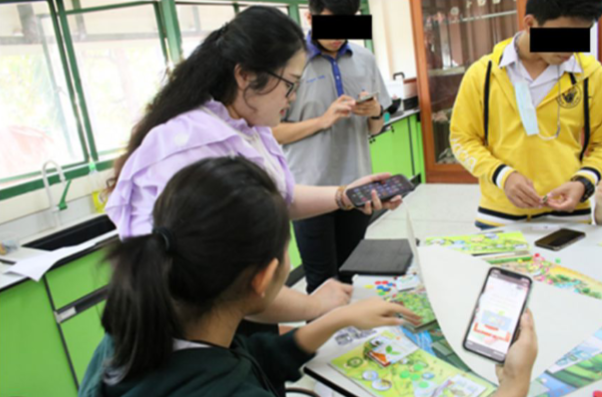
การเรียนรู้แบบสืบเสาะโดยใช้บอร์ดเกมดิจิทัลเป็นการจัดการเรียนที่ทันสมัยและน่าสนใจ นอกจากเกมมีไว้เล่นเพื่อความสนุกสนานแล้ว ยังถือว่าเป็นสื่อการเรียนรู้ยุคใหม่ที่มีประโยชน์อย่างมาก เพราะทำให้ผู้เล่นสามารถพัฒนาทักษะด้านความรู้ด้านอารมณ์ ได้อย่างเป็นอย่างดี การวิจัยนี้มีวัตถุประสงค์เพื่อศึกษาผลของการจัดการเรียนรู้สืบเสาะแบบเปิดโดยใช้บอร์ดเกมดิจิทัล ต่อแรงจูงใจทางวิทยาศาสตร์ เรื่องการสังเคราะห์ด้วยแสงของพืช ดังนั้น ผู้วิจัยได้พัฒนากิจกรรมการเรียนรู้ เรื่องการสังเคราะห์ด้วยแสงของพืช โดยใช้บอร์ดเกมดิจิทัล ในขั้นการดำเนินการสำรวจและค้นหาของการเรียนรู้วิทยาศาสตร์สืบเสาะ จำนวน 3 แผนรวม 6 คาบ และศึกษาแรงจูงใจทางวิทยาศาสตร์ ของนักเรียนชั้นมัธยมศึกษาปีที่ 5 จำนวน 109 คน ของโรงเรียนแห่งหนึ่งในจังหวัดขอนแก่น และเก็บรวบรวมข้อมูลด้วยแบบวัดแรงจูงใจทางวิทยาศาสตร์เป็นแบบมาตราส่วนประมาณค่า 5 ระดับจำนวน 25 ข้อ ผลการวิจัยพบว่า นักเรียนที่ได้รับการจัดการเรียนรู้สืบเสาะแบบเปิดโดยใช้บอร์ดเกมดิจิทัลมีแรงจูงใจทางวิทยาศาสตร์ในมิติแรงจูงใจภายใน ความจูงใจในการทำงาน ประสิทธิภาพของตนเอง และความจูงใจในผลการเรียน มีความแตกต่างอย่างมีนัยสำคัญทางสถิติ เมื่อเทียบกับการจัดการเรียนรู้แบบปกติ แต่การตัดสินใจด้วยตนเอง ไม่มีความแตกต่างกัน แสดงให้เห็นว่า ความแตกต่างของวิธีการจัดการเรียนรู้มีผลต่อแรงจูงใจภายใน ความจูงใจในการทำงาน ประสิทธิภาพของตนเอง และความจูงใจในผลการเรียน แต่ไม่มีผลต่อการตัดสินใจด้วยตนเอง ดังนั้น การจัดการเรียนรู้สืบเสาะแบบเปิดโดยใช้บอร์ดเกมดิจิทัลเป็นวิธีที่ช่วยส่งเสริมให้นักเรียนมีแรงจูงใจทางวิทยาศาสตร์
Article Details
เอกสารอ้างอิง
จักริน งานไว. (2552). “ผลสัมฤทธิ์ทางการเรียนและการแก้ปัญหาทางวิทยาศาสตร์เรื่องไฟฟ้าจากการจัดกิจกรรมการเรียนการสอนแบบสืบเสาะหาความรู้ Inquiry Cycle (5Es) ในนักเรียนชั้นมัธยมศึกษาปีที่ 3.” (การศึกษาอิสระปริญญศึกษาศาสตรมหาบัณฑิต สาขาวิชาวิทยาศาสตร์ศึกษา บัณฑิตวิทยาลัย, มหาวิทยาลัยขอนแก่น).
ธวัชชัย คงนุ่ม. (2549). “ผลสัมฤทธ์ทางการเรียนและมโนมติในวิชาวิทยาศาสตร์ เรื่อง พลังงานของนักเรียนชั้นมัธยมศึกษาปีที่ 1 ที่ได้รับการสอนแบบสืบเสาะหาความรู้ตามแนววงจรการเรียนรู้.” (วิทยานิพนธ์ศึกษาศาสตรมหาบัณฑิต สาขาวิชาวิทยาศาสตร์ศึกษา บัณฑิตวิทยาลัย, มหาวิทยาลัยเชียงใหม่).
นิวัฒน์ ศรีสวัสดิ์. (2552). แนวทางการพัฒนากระบวนการคิดเชิงวิทยาศาสตร์ผ่านการจัดการเรียนรู้วิทยาศาสตร์แบบสืบเสาะ เอกสารประกอบการสอนรายวิชา 232 429 ปฏิบัติการทดลองวิทยาศาสตร์ผ่านคอมพิวเตอร์ในการสอนวิทยาศาสตร์. ขอนแก่น: มหาวิทยาลัยขอนแก่น.
ภพ เลาหไพบูลย์. (2542). แนวการสอนวิทยาศาสตร์(พิมพ์ครั้งที่ 3). กรุงเทพฯ: ไทยวัฒนาพานิช.
ไมตรี อินทรประสิทธิ์. (2549). โครงการปฏิรูปกระบวนการเรียนรู้วิชาคณิตศาสตร์ของนักเรียนชั้นมัธยมศึกษาด้วยยุทธวิธีปัญหาปลายเปิด. ขอนแก่น: ศูนย์วิจัยคณิตศาสตร์ศึกษา คณะศึกษาศาสตร์ มหาวิทยาลัยขอนแก่น.
รณชัย กลิ่นกล้า, ศรัณยู ภิบาลชนม์ และ สพลณภัทร์ ศรีแสนยงค์. (2559). ผลการจัดการเรียนรู้แบบสืบเสาะหาความรู้ และวิธีการแบบเปิดเพื่อพัฒนาความสามารถในการคิดวิเคราะห์ วิชาเคมีเรื่อง ปริมาณสารสัมพันธ์ สําหรับ นักเรียนชั้นมัธยมศึกษาปีที่ 5. วารสารศึกษาศาสตร์ มหาวิทยาลัยนเรศวร. 8(1), 211-217.
ศิริพิมล หงส์เหม. (2555). การพัฒนาความสามารถในการคิดแก้ปัญหาทางวิทยาศาสตร์และคุณลักษณะใฝ่เรียนรู้ของนักเรียนชั้นมัธยมศึกษาปีที่ 4 โดยการจัดการเรียนรู้แบบสืบเสาะหาความรู้. (ปริญญาศึกษามหาบัณฑิตบัณฑิตวิทยาลัย, มหาวิทยาลัยศิลปากร).
สถาบันสงเสริมการสอนวิทยาศาสตรและเทคโนโลยี (สสวท.). (2546). การจัดสาระการเรียนรู้กลุ่มวิทยาศาสตร์ หลักสูตรการศึกษาขั้นพื้นฐาน. กรุงเทพฯ: องค์การคุรุสภา.
สถาบันส่งเสริมการสอนวิทยาศาสตร์และเทคโนโลยีกระทรวงศึกษาธิการ (สสวท.). 2545. เอกสารประกอบหลักสูตร การศึกษา ขั้นพื้นฐาน พุทธศักราช 2544 คู่มือการจัดการเรียนรู้กลุ่มสาระการเรียนรู้วิทยาศาสตร์. กรุงเทพฯ: กรมวิชาการ.
Bayeck, R.Y., (2020). Examining Board Gameplay and Learning: A Multidisciplinary Review of Recent Research. Simulation & Gaming, 51(4), 411– 431.
Berland, L. K. and Reiser, B. J. (2009). “Making Sense of Argumentation and Explanation”. Science Education. 93(1), 26-55.
Chanunan, S. (2018). Open Inquiry in Facilitating Metacognitive Skills on High School Biology Learning: An Inquiry on Low and High Academic Ability. International Journal of Instruction, 11(4), 593-606.
Dass K., Head L. M., & Rushton T. G. (2015). Building an understanding of how model-based inquiry is implemented in the high school chemistry classroom. Journal of Chemical Education, 92, 1306-1314.
Gardner, H. (1999). Intelligences reframed: Multiple intelligences for the 21st century. Basic Books: Member of the Perseus Books Group.
Glynn, S.M., Brickman, P., Armstrong, N., & Taasoobshirazi, G. (2011). Science motivation questionnaire II: Validation with science majors and nonscience majors. Journal of Research in Science Teaching, 48(10), 1159-1176.
Gonzalo-Iglesia, J. L., Lozano-Monterrubio, N., & Prades-Tena, J. (2018). Perceptions of students experiencing game-based learning methodologies. Noneducational board games in university education. Revista LUsófona de Educação, 41(41), 45 – 62.
Kuhn, L. and Reiser, B. (2004). “Students Constructing and Defending Evidence-Based Scientific Explanations”. Retrieved October 9, 2020, from http://p2061.org/documents/Students_Evidence_Based_ScientificExplanations.pdf.
Lepper, M. R., Corpus, J. H., & Iyengar, S. S. (2005). Intrinsic and extrinsic motivational orientations in the classroom: Age differences and academic correlates. Journal of Educational Psychology, 97(2), 184-196.
McNeill, K. L. et al. (2006). “Supporting Students’ Construction of Scientific Explanations by Fading Scaffolds in Instructional Materials”. The Journal of the Learning Sciences. 15 (2), 153–191.
Premthaisong, S. and Srisawasdi, N. (2020). Supplementing Primary Science Learning with Multi-player Digital Board Game: A Pilot Study. ResearchGate. Retrieved October 9, 2020, from https://www.researchgate.net/publication/339472576.
Ruiz-Primo, M. A. et al. (2008). “Testing One Premise of Scientific Inquiry in Science Classrooms: A Study That Examines Students’ Scientific Explanations”. (Research Report Graduate School of Education & Information Sciences University of California, Los Angeles).
Srisawasdi, N. (2018). Transforming chemistry class with technology-enhanced active inquiry learning for the digital native generation. In C. Cox & W. Schatzberg (Eds.) International Perspectives on Chemistry Education Research and Practice (pp. 221–233). ACS Symposium Series 1142, American Chemical Society: Washington, DC.
Srisawasdi, N., and Panjaburee, P. (2019). Implementation of Game-transformed Inquiry-based Learning to Promote the Understanding of and Motivation to Learn Chemistry. Journal of Science Education and Technology, 28, 152–164.
Srisawasdi, N., Moonsara, R., and Panjaburee, P. (2013). Students’ Motivation of Science Learning in Integrated Computer-based Laboratory Environment. In S. C. Tan (Ed.), the 21st International Conference on Computers in Education. Indonesia: Asia-Pacific Society for Computers in Education.
Taspinar, B., Schmidt, W., and Schuhbauer, H. (2016). Gamification in education: A board game approach to knowledge acquisition. Procedia Computer Science, 99, 101–116.
Wu, C.J., Chen, G.D. and Huang, C.W. (2014). Using digital board games for genuine communication in EFL classrooms. Education Tech Research. 62, 209–226.
