Women and Thai Boxing Exercise and Gender Fluidity
Keywords:
THAI BOXING, EXERCISE, FEMININITY, GENDER, INJURIESAbstract
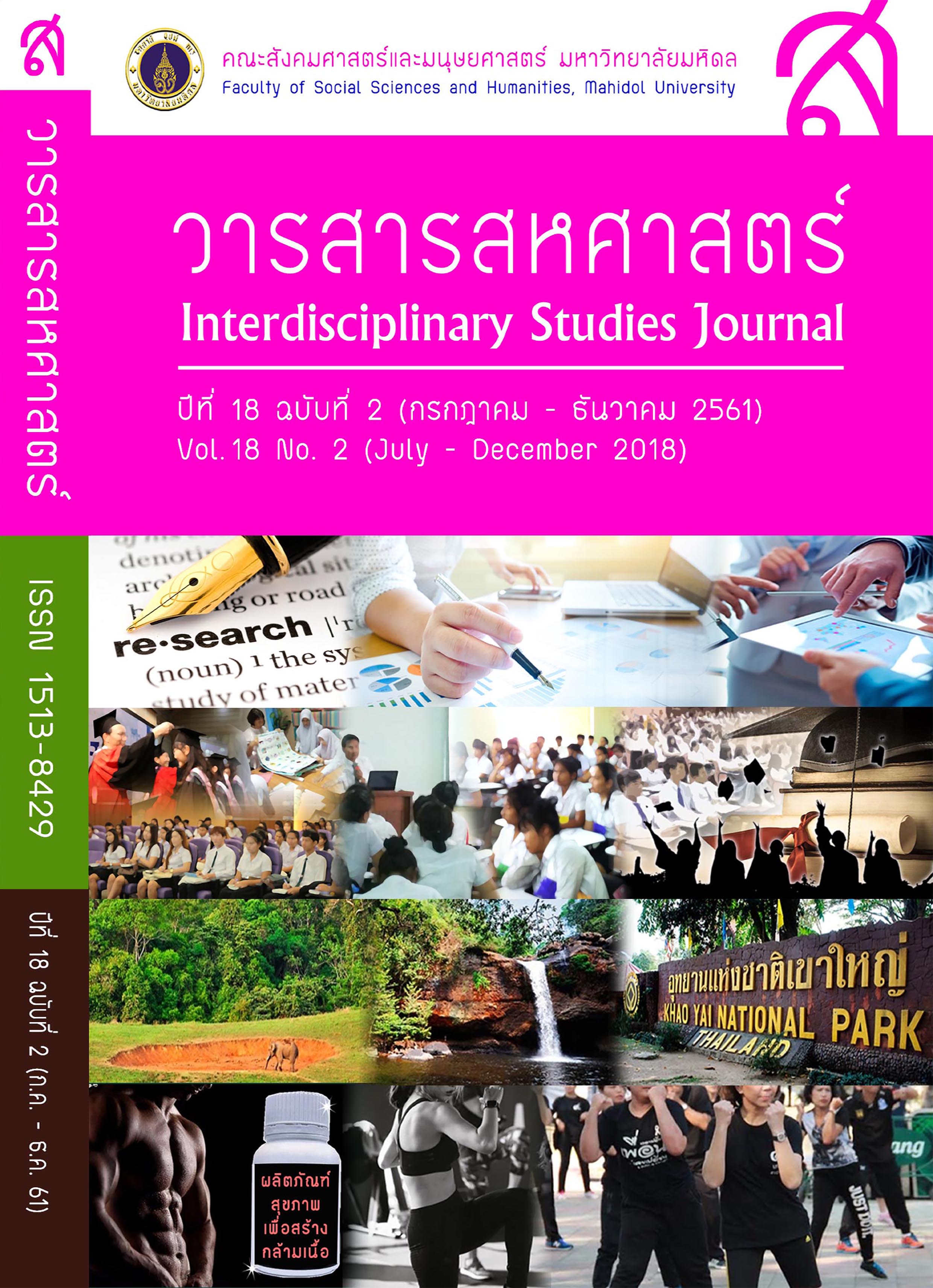
This research aims to explain the perception of womanhood among women who exercise by doing Thai boxing. The study also explores the range of meaning in all possible deviations in female boxing as well as the physical problems which can occur by doing Thai boxing. The research used qualitative strategies, and in-depth interviews were conducted with of 20 women who exercise by doing Thai boxing, two gym managers and two Thai boxing trainers from two gyms in Bangkok’s parameter area. The participant observation method was applied in this study for total 240 hours, and the researcher participated in the exercise for four months. The content analysis was used to analyze data. The results of the study state that women who exercise by doing Thai boxing perceive their femaleness as the inferior sex. Therefore, they have to increase more endurance and more masculinity when they exercise by doing Thai boxing. Nevertheless, the women boxers still recognize themselves as masculine rather than feminine, and this recognition can be clearly seen by action of saying words “Man up”. The meanings of exercise with Thai boxing vary from each other and they do it for good health, for self-protection, for self-identification of being healthy, for relaxing and for socializing. Thai boxing might cause nerve and muscle injuries. However, those injuries are understood as the normal effect of exercise by seeing from “The worrier would have wound”. The research examined the contradiction of the femininity in the area of Thai boxing exercise.
References
ชาย โพธิสิตา. (2549). ศาสตร์และศิลป์แห่งการวิจัยเชิงคุณภาพ. สถาบันวิจัยประชากรและสังคม
มหาวิทยาลัยมหิดล. 23-60
นพวรรณ ระลึกมูล. (2003). เปรียบเทียบผลของการฝึกการเต้นแอโรบิกและแอโรบิกแบบศิลปะมวยไทยที่มีต่อ
สมรรถภาพทางกลไกและเปอร์เซ็นต์ไขมันของร่างกายของนิสิตหญิง. บัณฑิตวิทยาลัย มหาวิทยาลัยเกษตรศาสตร์เพื่อความสมบูรณ์แห่งปริญญาศิลปะศาสตรมหาบัณฑิต (พลศึกษา).
ประเวศ ภาษสันติ. (2012). แรงจูงใจในการเลือกเล่นกีฬารักบี้ฟุตบอลของนักกีฬาหญิงที่เข้าร่วมการ
แข่งขันกีฬาเยาวชนแห่งชาติครั้งที่ 26 พ.ศ. 2553. วารสารคณะพลศึกษา, ปีที่ 14 เล่มที่ 1,
235. Retrieved from http://ejournals.swu.ac.th/index.php/pe/article/view/2252
ภัทรวดี เหรียญมณี. (2015). การสื่อสารทางการตลาดแบบบูรณาการผ่านสื่อดิจิทัลที่ส่งผลต่อการตัดสินใจใช้บริการ ค่ายมวย (Boxing Gym) เพื่อการออกกำลังกายในเขตกรุงเทพมหานคร. การค้นคว้าอิสระ, หลักสูตร
บริหารธุรกิจมหาบัณฑิต, มหาวิทยาลัย กรุงเทพ.
Retrieved from http://dspace.bu.ac.th/handle/123456789/2114
สุชาดา ทวีสิทธิ์. (2004). เพศภาวะ: การท้าทายร่าง การค้นหาตัวตน. ศูนย์สตรีศึกษา, คณะสังคมศาสตร์,
มหาวิทยาลัยเชียงใหม่. 4-20
สุนีย์ ประสงค์บัณฑิต. (2010). แนวความคิดฮาบิทัสของปิแอร์ บูร์ดิเยอ กับทฤษฎีทางมานุษยวิทยา.
ศูนย์มานุษยวิทยาสิรินธร (องค์การมหาชน). เอกสารวิชาการลำกับที่ 84, 69-185
อคิน รพีพัฒน์. (2008). วัฒนธรรมคือความหมาย: ทฤษฎีและวิธีการของคลิฟฟอร์ด เกียร์ซ.
ศูนย์มานุษยวิทยาสิรินธร (องค์การมหาชน). เอกสารวิชาการลำกับที่ 70, 71-149
Courtenay, W. H. (2010). Constructions of Masculinity and their Influence on Men’s Well-Being. College Men and Masculinities: Theory, Research, and Implications for Practice, 307.
De Lind van Wijngaarden, J. W. (2014). Being both and acting “man”: exploring patterns of masculinisation among young same-sex-attracted men in Thailand. Culture, Health & Sexuality, 16(9), 1128–1140. https://doi.org/10.1080/13691058.2014.939595
Evans, J., Frank, B., Oliffe, J. L., & Gregory, D. (2011). Health, illness, men and masculinities (HIMM): a theoretical
framework for understanding men and their health. Journal of Men’s Health, 8(1), 7–15.
Gartland, S., Malik, M. H. A., & Lovell, M. E. (2001). Injury and injury rates in Muay Thai kick boxing. British Journal of Sports Medicine, 35(5), 308–313.
Hargreaves, J. (1997). Women’s Boxing and Related Activities: Introducing Images and Meanings.
Body & Society, 3(4), 33–49.
https://doi.org/10.1177/1357034X97003004002
Jung Woo Lee. (2009). Red Feminism and Propaganda in Communist Media: Portrayals of Female Boxers in the North Korean Media. International Review for the Sociology of Sport, 44(2–3), 193–211. https://doi.org/10.1177/1012690209338438
Mennesson, C. (2000). ‘HARD’ WOMEN AND ‘SOFT’ WOMEN: The Social Construction of Identities among Female Boxers. International Review for the Sociology of Sport,
35/1, 21-33
Nash, M. (2015). Gender on the ropes: An autoethnographic account of boxing in Tasmania, Australia. International Review for the Sociology of Sport, 1012690215615198.
Paradis, E. (2012). Boxers, Briefs or Bras? Bodies, Gender and Change in the Boxing Gym.
Body& Society, 18(2), 82–109. https://doi.org/10.1177/1357034X12440829
Robertson, S. (2009). Theories of masculinities and men’s health-seeking practices. Nowhere Man’s Press. Retrieved April, 9(2012), 149–172.
Sherry B. Ortner. (1996). The Politics and Erotics of Culture. Boston: Beacon Press, Chapter 1, pp.1-20
Strelan, P., Mehaffey, S. J., &Tiggemann, M. (2003). Brief report: Self-objectification and esteem in young women: The mediating role of reasons for exercise. Sex Roles, 48(1–2), 89 – 95.
Thorpe, H. (2010). Bourdieu, Gender Reflexivity, and Physical Culture: A Case of Masculinities in the Snowboarding Field. Journal of Sport & Social Issues, 34(2), 176–214. https://doi.org/10.1177/0193723510367770
ญ หญิง ถึง ญ หญิง. (2556). ผู้หญิงยุคใหม่ สวยด้วยมวยไทย. (ออนไลน์) เข้าถึงเมื่อ 6 สิงหาคม 2560 จาก
http://www.praphansarn.com/article/detail/1273#title
ไทยรัฐ ออนไลน์. (2559). ‘ผู้หญิงควรมีวิชาป้องกันตัว’ เทรนด์กำลังมา สาวรุ่นใหม่แห่เรียนมวยไทย. (ออนไลน์)
เข้าถึงเมื่อ 6 สิงหาคม 2560 จาก https://www.thairath.co.th/content/671302
ผู้จัดการออนไลน์. (2552). “Fairtex”ค่ายมวยใจกลาง RCA ปลุกกระแสมวยไทย...ใครก็ฝึกได้.(ออนไลน์). เข้าถึงเมื่อ 1
สิงหาคม 2560 จาก http://www.manager.co.th/iBizChannel/ViewNews.aspx?NewsID=9520000089692
รายการ Go for gaol. (2558). มวยไทย เทรนด์ออกกำลังกายผู้หญิงยุคใหม่. (ออนไลน์) เข้าถึงเมื่อ 6 สิงหาคม 2560
จาก http://shows.voicetv.co.th/goforgoal/161535.html
รายการ Go for gaol. (2558). มวยไทยหญิง เทรนด์กีฬาป้องกันตัวผู้หญิงยุคใหม่. (ออนไลน์) เข้าถึง เมื่อ 6 สิงหาคม
2560 จาก http://shows.voicetv.co.th/goforgoal/295068.html
ศูนย์คริสตศาสนธรรม สังฆมณฑล ราชบุรี. (2539). กุลสตรีไทย (มารยาท). (ออนไลน์) เข้าถึงเมื่อ 1 สิงหาคม 2560
จาก http://www.kamsondeedee.com/main/ccp/139-ccp-282
Kookai Chaimahawong. (2559). 6 ยิมมวยไทยในกรุงเทพ ให้คุณไปตามกระแสเทรนด์ฟิตแอนด์เฟิร์ม. (ออนไลน์)
เข้าถึงเมื่อ 6 สิงหาคม 2560 จาก https://www.siam2nite.com/th/magazine/lifestyle/item/470-6-bangkok-muay-thai-gyms-for-fun-and-efficient-full-body-workout
Lady manager. (2556). กูรูมวย “จิต เชี่ยวสกุล” เผยเหตุหญิงติดใจเตะต่อย เรียกเหงื่อ รีดน้ำหนัก ปลดปล่อยสนุก สุดเหวี่ยง. (ออนไลน์) เข้าถึงเมื่อ 6 สิงหาคม 2560 จาก http://www.manager.co.th/celebonline/viewnews.aspx?NewsID=9560000024106
Lady manager. (2556). ตกหลุมรักมวยไทย! “เจี๊ยบ-โสภิตนภา” ออกหมัดฮุคไขมัน น็อคภูมิแพ้ แย็บ เลือดฝาด.
(ออนไลน์) เข้าถึงเมื่อ 6 สิงหาคม 2560 จาก http://www.manager.co.th/celebonline/viewnews.aspx?NewsID=9560000023584
Positioning magazine. (2555). มวยไทยเทรนดี้. (ออนไลน์) เข้าถึงเมื่อ 6 สิงหาคม 2560 จาก
http://positioningmag.com/14746
Pui.lab. (2552). ความเป็นกุลสตรีไทย. (ออนไลน์). เข้าถึงเมื่อ 1 สิงหาคม 2560 จาก
http://www.baanmaha.com/community/threads/24222-ความเป็นกุลสตรีไทย
Sanook life. (2556). ผู้หญิงยุคใหม่ สวยด้วยมวยไทย. (ออนไลน์) เข้าถึงเมื่อ 6 สิงหาคม 2560 จาก
http://sanooklifes.blogspot.com/2013/08/blog-post_543.html
Tanapon Raomanachai. (2556). ผู้หญิงกับการออกกำลังกายด้วยมวยไทย. (ออนไลน์) เข้าถึงเมื่อ 6 สิงหาคม 2560
จาก http://news.voicetv.co.th/living/85014.html
Downloads
Published
How to Cite
Issue
Section
License
Sahasarts: Journal of Social Sciences and Humanities places great importance on safeguarding copyright and protecting authors’ rights in the dissemination of academic works. The objective is to promote transparency, academic integrity, and adherence to international publishing standards. The journal has established the following policies:
|
1. Acceptance of Publication Conditions - Authors submitting manuscripts for publication must strictly comply with the journal’s policies and publication conditions. - Submission of a manuscript constitutes acceptance of the review and publication process in accordance with the journal’s standards. |
|
2. Copyright Transfer - Upon acceptance for publication, authors agree to transfer the copyright of the article to Sahasarts: Journal of Social Sciences and Humanities. - The journal reserves the right to publish, reproduce, and disseminate the article in all formats, including print, online, and other digital media. |
|
3. Authors’ Rights after Copyright Transfer - Authors retain the right to use their articles for academic purposes, such as teaching, personal research, inclusion in theses or dissertations, or dissemination on non-commercial platforms. - Any use of the article for commercial purposes requires prior written permission from the journal. |
|
4. Publication under Creative Commons License - All articles are published under the Creative Commons Attribution-NonCommercial-NoDerivatives 4.0 International License (CC BY-NC-ND 4.0). - Others may share or distribute the article with proper credit to the original author(s) but may not modify, adapt, or use it for commercial purposes. |
|
5. Accuracy of Content and Use of Third-Party Materials - Authors must certify that the submitted manuscript is their original work, has not been simultaneously submitted elsewhere, and does not infringe copyright, plagiarize, falsify data, or otherwise violate academic publishing ethics. - Authors are responsible for obtaining permissions to use third-party materials (e.g., figures, tables, graphics) and must provide appropriate citations or acknowledgments. |
|
6. Disclaimer - All published articles are the copyright of Sahasarts: Journal of Social Sciences and Humanities. - The content, data, and opinions expressed in the articles are the sole responsibility of the respective authors and do not necessarily reflect the views of the editorial board or affiliated institutions. - In cases of error, copyright infringement, or ethical misconduct, full responsibility rests with the author(s). - Any commercial use of published articles requires prior written permission from the journal’s editor, including a clear statement of purpose and intended use. Unauthorized commercial use shall be the sole responsibility of the user. |