
A model of happiness-promotion activities based on the Four Foundations of Mindfulness for the elderly who listen to FM 100.25 MHz radio station in Prachinburi Province
Article Sidebar
Main Article Content
Abstract
The objectives of this research were as follows:1.To study the happiness based on the Four Foundations of Mindfulness (Satipaṭṭhāna 4) among the elderly who listen to radio programs on FM 100.25 MHz.2.To develop a model for enhancing happiness according to the Four Foundations of Mindfulness in order to reduce the risk of sedentary behavior among the elderly audience of FM 100.25 MHz in Prachinburi Province.3.To propose a model for promoting happiness based on the Four Foundations of Mindfulness to reduce sedentary behavior in the elderly who listen to FM 100.25 MHz in Prachinburi Province.This study employed a Mixed Methods Research design. The researcher reviewed relevant documents and conducted in-depth interviews with key informants within the target group. The main research instrument was an in-depth interview guide, and the data were analyzed and presented in descriptive form.
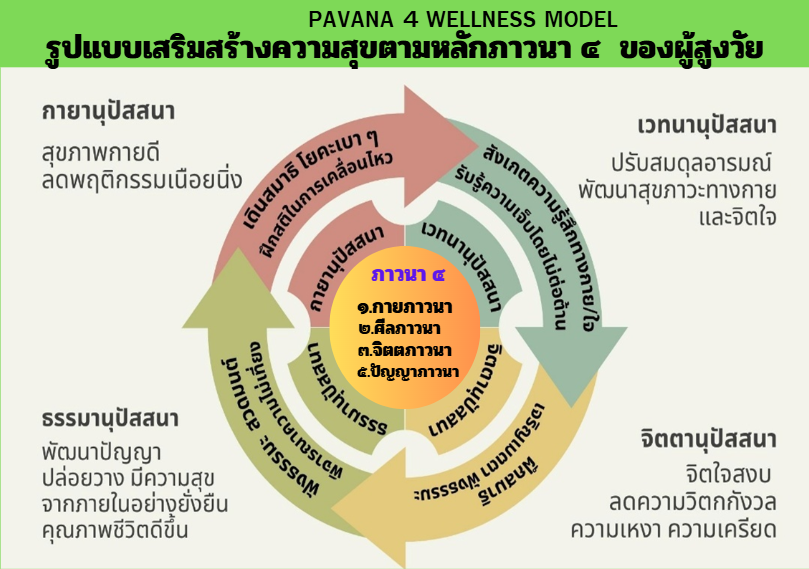
Research findings indicate that happiness in the elderly encompasses more than just physical well-being; it includes a calm, peaceful mind and a sense of contentment with both oneself and the external world without attachment. This integrated happiness can be promoted through activities aligned with the Four Foundations of Mindfulness (Bhāvanā 4), particularly for seniors exhibiting sedentary behaviors due to repetitive daily routines and physical mobility limitations. Based on this empirical evidence, the researcher developed the "PAVANA 4 WELLNESS MODEL," a framework for promoting happiness grounded in the Four Foundations of Mindfulness through creative activities tailored to the elderly lifestyle. The model begins with Kayanupassana (Contemplation of the Body), focusing on physical health through appropriate light activities, complemented by Vedananupassana (Contemplation of Feelings) to balance emotions by mindfully observing physical and mental sensations—whether suffering, happiness, or equanimity.
Furthermore, the model emphasizes Cittanupassana (Contemplation of the Mind) to foster mental tranquility and reduce anxiety, sadness, and stress through meditation and loving-kindness practices. Finally, Dhammanupassana (Contemplation of Dhamma) develops wisdom through listening to teachings, engaging in Dhamma discussions, and sharing life experiences to cultivate an understanding of the nature of the world, leading to sustainable happiness in old age.
Article Details

This work is licensed under a Creative Commons Attribution-NonCommercial-NoDerivatives 4.0 International License.
บทความนี้เป็นความคิดเห็นส่วนผู้แต่ง กองบรรณาธิการไม่จำเป็นต้องเห็นด้วยเสมอไป
References
๑.ภาษาไทย:
ก.ข้อมูลปฐมภูมิ
มหาจุฬาลงกรณราชวิทยาลัย. พระไตรปิฎกภาษาไทย.ฉบับมหาจุฬาลงกรณราชวิทยาลัย.กรุงเทพมหานคร: โรงพิมพ์
มหาจุฬาลงกรณราชวิทยาลัย,๒๕๓๙.
ข.ข้อมูลทุติยภูมิ
(๑) หนังสือ :
การศึกษาพฤติกรมการฟังวิทยุพระพุทธศาสนา, วิทยาลัยสงฆ์พุทธชินราชของพระสงฆ์และประชาชนมหาวิยาลัยมหาจุฬาลงกรณราชวิทยาลัย,[ออนไลน์],แหล่งที่มา: https://urban.cpe.ku.ac.th [๑๔ พฤศจิกายน ๒๕๖๗].
ดาณุภา ไชพรธรรม,การต่อสู้ยังไม่สิ้นสุด, (กรุงเทพมหานคร: กอแก้ว,๒๕๖๐).
พระครูสังฆรักษ์สาธร บุญเอก, พุทธวิธีการเผยแผ่พระพุทธศาสนาของพระสงฆ์ไทยในสมัยปัจจุบัน ปีที่ ๑ ฉบับที่ ๑: วารสารนิตยสารเสียงธรรมจากมหายาน ฉบับที่ ๑ เดือน กรกฎาคม - ธันวาคม ๒๕๘๘.
พระครูสุวิธานพัฒนบัณฑิต,รูปแบบการสร้างเครือขายการเผยแผ่พระพุทธศาสนาเชิงรุก,มหาวิทยาลัยมหาจุฬาลงกรณราช่วิทยาลัย วิทยาเขตขอินแก่น, ๒๕๕๕.
พระธรรมปิฎก (ป.อ. ปยุตโต) , พุทธวิธีในการสอน, (กรุงเทพมหานคร : ธรรมสภาและสถาบันบันลือธรรม, ๒๕๔๗).
