การจัดการขยะชุมชนเมืองโดยใช้พลังบวรเป็นฐาน เพื่อการพัฒนาอย่างยั่งยืน
Article Sidebar
Main Article Content
บทคัดย่อ
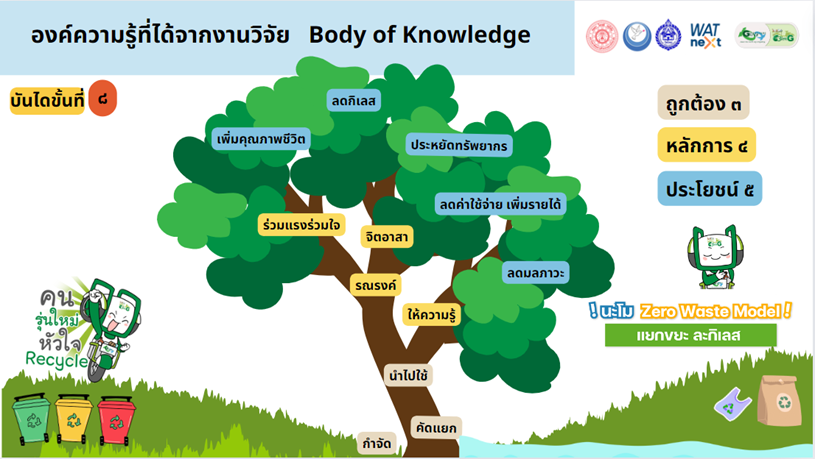
บทความวิจัยเรื่อง "การจัดการขยะชุมชนเมืองโดยใช้พลังบวรเป็นฐาน เพื่อการพัฒนาอย่างยั่งยืน" มีวัตถุประสงค์เพื่อศึกษาบริบทปัญหาและความต้องการในการจัดการขยะในชุมชนวัดใหม่ (ยายแป้น) วิเคราะห์หลักพุทธธรรมที่เอื้อต่อการจัดการขยะชุมชนเมือง และพัฒนากระบวนการนำเสนอองค์ความรู้ใหม่ ระเบียบวิธีวิจัยแบบผสานวิธีเชิงปฏิบัติการ ตามแนวคิดอริยสัจโมเดล ผลการศึกษาพบว่าชุมชนวัดใหม่ (ยายแป้น) ขาดความรู้ในการจัดการขยะและขาดระบบจัดการขยะอย่างเหมาะสม การใช้หลักพุทธธรรมสังคหวัตถุ 4 ช่วยพัฒนากระบวนการจัดการขยะ โดยใช้พลังบวร (ชุมชน วัด ราชการ) เป็นฐาน ได้แบบจำลอง "นะโม ซีโร่เวสต์ โมเดล-แยกขยะ ละกิเลส" ผลการดำเนินพบว่าชุมชนมีความรู้และตระหนักรู้เพิ่มขึ้น การจัดกิจกรรมต่างๆ โดยเฉพาะตลาดนัดรีไซเคิล ลดปริมาณขยะ ๖,๓๔๕.๓ กิโลกรัม และสร้างรายได้ ๒๕,๓๑๕.๔๐ บาท ลดการปลดปล่อยคาร์บอนไดออกไซด์เทียบเท่า (CO₂e) จำนวน ๖,๔๔๑.๕ กิโลกรัมคาร์บอน มีวิธีการวัดผลโดยใช้ ESG Index ที่เป็นดัชนีชี้วัดความยั่งยืนทั้งด้านสิ่งแวดล้อม สังคมและความโปร่งใส เพิ่มเติมจากด้านเศรษฐกิจ ช่วยในการติดตามและประเมินผลกระทบ ผลการวิจัยแสดงให้เห็นว่าการจัดการขยะในชุมชนมีประสิทธิภาพมากขึ้นและเป็นต้นแบบในการจัดการขยะชุมชนเมืองที่เหมาะสมได้
Article Details

อนุญาตภายใต้เงื่อนไข Creative Commons Attribution-NonCommercial-NoDerivatives 4.0 International License.
บทความนี้เป็นความคิดเห็นส่วนผู้แต่ง กองบรรณาธิการไม่จำเป็นต้องเห็นด้วยเสมอไป
เอกสารอ้างอิง
กรมควบคุมมลพิษ, กระทรวงทรัพยากรธรรมชาติและสิ่งแวดล้อม. (๒๕๖๔). รายงานประจำปี.
กองยุทธศาสตร์และแผนงาน, กรมทรัพยากรทางทะเลและชายฝั่ง. (๒๕๖๓) รายงานประจำปี
กรองจิต กิติกาศ และผกามาศ ถิ่นพังงา. (๒๕๖๔). การเปลี่ยนแปลงสภาพภูมิอากาศของประเทศไทย. งานวิจัย, สถาบันสิ่งแวดล้อมไทย.
ณกมล ปุญชเขตต์ทิกุล. (๒๕๖๖). การพัฒนาที่ยั่งยืนและการจัดการขยะ. กรุงเทพฯ: สำนักพิมพ์วิชาการแห่งประเทศไทย.
สุรพงษ์ เล็กสมบูรณ์. (๒๕๕๗). การจัดการขยะในชุมชนเมือง. กรุงเทพฯ: สำนักพิมพ์แห่งจุฬาลงกรณ์มหาวิทยาลัย.
พระใบฎีกานพดล ธีรปญฺโญ, และคณะ. (๒๐๒๒). การจัดการขยะในชุมชนโดยใช้หลักพุทธธรรม. กรุงเทพฯ: มหาวิทยาลัยมหาจุฬาลงกรณราชวิทยาลัย.
พระพรหมคุณาภรณ์ (ป.อ. ปยุตฺโต). (๒๕๕๗). พุทธธรรม ฉบับปรับขยาย. พิมพ์ครั้งที่ ๔๐. กรุงเทพมหานคร: มูลนิธิธรรมทานกุศลจิต.
มหาจุฬาลงกรณราชวิทยาลัย. (๒๕๓๙). พระไตรปิฎกภาษาไทย ฉบับมหาจุฬาลงกรณราชวิทยาลัย. กรุงเทพมหานคร: โรงพิมพ์มหาจุฬาลงกรณราชวิทยาลัย.
ปรัชญา นพคุณ. (๒๕๖๓). ทัศนคติและพฤติกรรมของคนไทยต่อการจัดการขยะ. วารสารวิจัยและพัฒนา, ๑๐(๒), ๕๖-๗๒.
สุนิสา พงศ์อรุณรัตน์. (๒๕๖๑). การวัดผลการจัดการขยะโดยใช้เกณฑ์ ESG. วารสารการจัดการสิ่งแวดล้อม, ๑๒(๑), ๓๔-๔๙.
อารยา จินดาพล. (๒๕๖๐). บทบาทของภาครัฐในการจัดการขยะชุมชน. วารสารนโยบายสาธารณะ, ๙(๓), ๒๓-๓๘.
แม่ชีกฤษณา รักษาโฉม, อรชร ไกรจักร์, และ กรรณิการ์ ขาวเงิน. (๒๐๒๒). แพลตฟอร์มดิจิทัลเพื่อการขับเคลื่อนชุมชนปลอดขยะวิถีพุทธ ภายใต้แนวคิดเศรษฐกิจหมุนเวียน. บทความวิจัยhttps://banpom.go.th/public/list/data/showdetail/id/2151/menu/1559
ภาษาอังกฤษ
Joan Marc Simon. (๒๐๑๓). "From the 3Rs to the Zero Waste hierarchy". Retrieved from https://zerowasteeurope.eu
Nongluck Ajanapanya. (๒๐๒๒). "Focus on renewable energy, waste management critical, says Deloitte, as report lauds Thailand’s BCG model". Retrieved from https://www.nationthailand.com/thailand/economy/40020547
UNEP. (๒๐๒๔). Global Waste Management Outlook 2024. Retrieved from https://www.unep.org/resources/report/global-waste-management-outlook-2024
World Bank. (๒๐๒๓). Global Waste to Grow by 70 Percent by 2050 Unless Urgent Action is Taken. Retrieved from https://www.worldbank.org/en/news/press-release/2018/09/20/global-waste-to-grow-by-70-percent-by-2050-unless-urgent-action-is-taken-world-bank-report
