An analysis on the productive achievement of the Buddhist integrated organic rice process
Article Sidebar
Main Article Content
Abstract
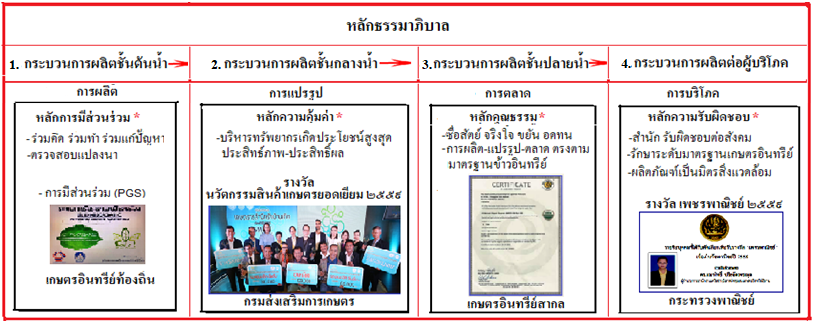
This Article aimed to (1) study the process in producing the organic rice in Thai society (2) study the integrated Buddhist model on the process in producing the organic rice, and (3) Analyze the productive achievement of the Buddhist integrated organic rice process. This research employed the qualitative methodology done through the in-depth interview of the Isan organic farming community enterprise network groups 13 persons. The research results were found as follows; 1) The process in producing the organic rice appeared in the Isan organic farming community enterprise network groups is mainly based on the utilization of the principle of sufficiency economy, self-reliance, and the organic rice production (Upstream-Middle stream -Downstream-Customer), where the stable income including the sustainable organization and the vitality of organization are practically upheld. 2) The quality of life and morality of the organic farming community should comply with the concept of Buddhism-based self-reliance Sufficiency economy principle where ways of life are properly followed by the cultivation of morality, concentration and wisdom whereby the Buddhist principles are applied. In this respect, the principle of Yonisomanasikãra is utilized to meet the production, right likelihood the marketing, Bhojane-mattaññutã the consumption, the four virtues of Diṭṭhadhammikattha, seven kinds of Sappurisa-Dhamma are used to harmonize the community economic enterprise where the unity is met with. It can be claimed that the community economic enterprise network of the Organic Agriculture Community always follow the principle of Sappurisa-Dhamma. 3) The productive achievement of the Buddhist integrated organic rice process is concerned, it clearly shows that the evaluation made from the agriculturists (producers), community enterprises (community), consumers and people who were affected (society), was accorded with both theories and Dhamma principles being used. Apart from this, the additional Dhamma principle should be the principle of good governance whereby the achievement expected by the community enterprise network could be provided
Article Details

This work is licensed under a Creative Commons Attribution-NonCommercial-NoDerivatives 4.0 International License.
บทความนี้เป็นความคิดเห็นส่วนผู้แต่ง กองบรรณาธิการไม่จำเป็นต้องเห็นด้วยเสมอไป
References
มหาจุฬาลงกรณราชวิทยาลัย. พระไตรปิฎกภาษาไทย ฉบับมหาจุฬาลงกรณราชวิทยาลัย. กรุงเทพมหานคร : โรงพิมพ์มหาจุฬาลงกรณราชวิทยาลัย, ๒๕๓๙.
บรรเทา จันทร์พุ่ม. เกษตรยั่งยืน : ความหมาย รูปแบบ และการพัฒนา. กรุงเทพฯ: กรมวิขาการเกษตร กระทรวงเกษตรและสหกรณ์, ๒๕๔๘.
พระพรหมคุณาภรณ์ (ป.อ. ปยุตฺโต). พุทธธรรม ฉบับปรับขยาย. พิมพ์ครั้งที่ ๔๐. กรุงเทพมหานคร : มูลนิธิธรรมทานกุศลจิต, ๒๕๕๗.
______. วิธีคิดตามหลักพุทธธรรม. พิมพ์ครั้งที่ ๙. กรุงเทพฯ: โรงพิมพ์เคล็ดไทย, ๒๕๕๑.
______. เศรษฐศาสตร์แนวพุทธ. พิมพ์ครั้งที่ ๙. กรุงเทพฯ: โรงพิมพ์สหธรรมิก.๒๕๔๘.
______. ธรรมนูญชีวิตฉบับปรับปรุง. นครปฐม: วัดญานเวศกวัน. ๒๕๕๒.
คณะเกษตรศาสตร์ มหาวิทยาลัยขอนแก่น. “การจัดการความรู้ด้าน Smart Farming ของผลิตภัณฑ์ข้าวหอมมะลิ เครือข่ายวิสาหกิจชุมชนเกษตรอินทรีย์อีสาน. รายงานผลการวิจัย, ทุนวิจัยสำนักงานคณะกรรมการวิจัยแห่งชาติ ๒๕๖๑.
ศูนย์จัดการทรัพยากรเพื่อท้องถิ่น มหาวิทยาลัยสุโขทัยธรรมาธิราช, “การทำเกษตรอินทรีย์ของ เครือข่ายวิสาหกิจชุมชนเกษตรอินทรีย์อีสาน”, รายงานผลการศึกษา. ทุนสำนักงานกองทุนการสร้างเสริมสุขภาพและภาคีเครือข่าย, ๒๕๕๗.
สุเมธ ตันติเวชกุล. “การดำเนินชีวิตในระบบเศรษฐกิจพอเพียงตามแนวพระราชดำริ”. วารสารข้าราชการ. ปีที่ ๔๕ ฉบับที่ ๒ (มีนาคม-เมษายน ๒๕๔๓): ๑-๖.
สัมภาษณ์ ถวิล คงศรีรอด. รักษาการประธานวิสาหกิจชุมชนเกษตรอินทรีย์หนองพอกร้อยเอ็ด. สัมภาษณ์. ๗ ธันวาคม ๒๕๖๔.
สัมภาษณ์ ประดิษฐ์ ทุมรินทร์. นักวิชาการส่งเสริมการเกษตรปฏิบัติการ เกษตรตำบลหนองพอก จังหวัดร้อยเอ็ด, ๒๔ พฤศจิกายน ๒๕๖๔.
สัมภาษณ์ พระครูธรรมธรวรเดชา อคฺคเตโช (พรหมเสนา). ผู้เชี่ยวชาญเกษตรอินทรีย์ วิทยาลัยพระธรรมทูต มหาวิทยาลัยมหาจุฬาลงกรณ์ราชวิทยาลัย, ๒๗ ธันวาคม ๒๕๖๔.
สัมภาษณ์ พระครูปลัดปัญญาวรวัฒน์ (พระมหาหรรษา ธมฺมหาโส).ประธานโครงการโคกหนองนาสันติศึกษาโมเดล จังหวัดศรีสะเกษ, ๙ ธันวาคม ๒๕๖๔.
สัมภาษณ์รณวริทธิ์ ปริยฉัตรตระกูล. ผู้อำนวยการสำนักงานเครือข่ายวิสาหกิจชุมชนเกษตรอินทรีย์อิสาน. ๘ กรกฎาคม ๒๕๖๔.
สัมภาษณ์ โกสินทร์ ศรีสิทธิ์. ประธานสมาคมวิสาหกิจเกษตรอินทรีย์มุกดาหาร. ๙ ธันวาคม ๒๕๖๔.
สัมภาษณ์ สมร ทิพย์บุญชู. ข้าราชการบำนาญ หัวหน้ากลุ่มยุทธศาสตร์และพัฒนาการเกษตรสำนักงานเกษตรและสหกรณ์จังหวัดร้อยเอ็ด, ๒๔ ธันวาคม ๒๕๖๔.
สัมภาษณ์.สายันต์ รัตนศรี. ประธานวิสาหกิจชุมชนเกษตรอินทรีย์รักอำนาจเจริญ ๑๑ ธันวาคม ๒๕๖๔.
ทัศนีย์ เศรษฐ์บุญสร้าง, ระบบเกษตรกรรมยั่งยืน, [ออนไลน์]. แหล่งที่มา:http:// www. Nawa chione.org/2012/10/29/sustainable-agriculture. [๑๘ เมษายน ๒๕๖๒].
