
Effect of Literature-based Learning Management on Preschool Children’s Executive Functions, Ban Koh Lae Nang School, Songkhla Province
Article Sidebar
Main Article Content
Abstract
Abstract
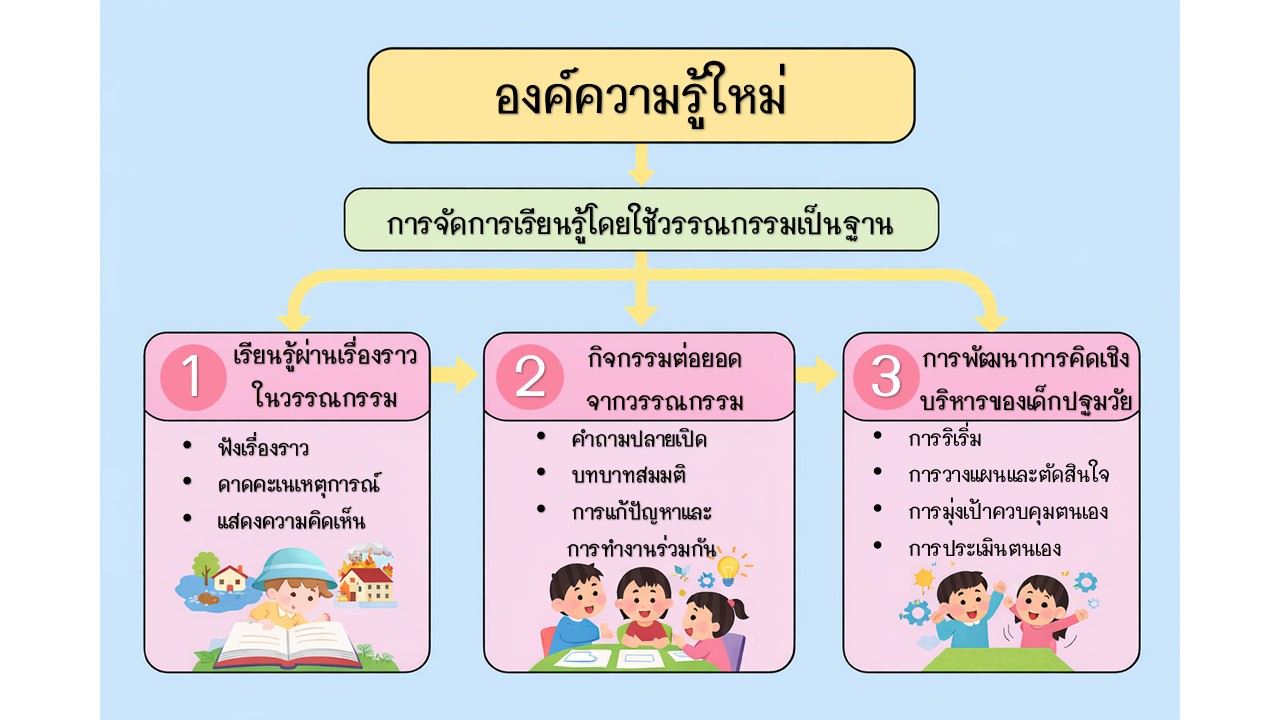
This research aimed to 1) study the correlation between preschool children’s executive functions before and after implementing literature-based learning management, and 2) compare preschool children’s executive functions before and after implementing literature-based learning management. The population consisted of 10 preschool children, boys and girls, aged 5–6 years, who studied in Kindergarten 3 in the second semester of the academic year 2024. This quasi-experimental research employed a one–group pretest–posttest design. The research instruments included 32 literature-based learning management lesson plans and a preschool children’s executive functions test consisting of 16 items. The statistics used for data analysis were mean, standard deviation, differences, and chi-square.
The research findings revealed that 1) preschool children’s executive functions before and after implementing literature-based learning management were correlated at the statistically significant level of .05; and 2) preschool children’s executive functions after implementing literature-based learning management were higher than before the experiment, both overall and each aspect: initiation (D = 2.10), planning (D = 2.40), goal-directed persistence (D = 2.20), and self-monitoring (D = 2.20).
Article Details

This work is licensed under a Creative Commons Attribution-NonCommercial-NoDerivatives 4.0 International License.
บทความนี้เป็นความคิดเห็นส่วนผู้แต่ง กองบรรณาธิการไม่จำเป็นต้องเห็นด้วยเสมอไป
References
บรรณานุกรม
ภาษาไทย
กระทรวงศึกษาธิการ. หลักสูตรการศึกษาปฐมวัย พุทธศักราช ๒๕๖๐ (สำหรับเด็กปฐมวัยอายุ ๓ –๖ ปี). กรุงเทพมหานคร: โรงพิมพ์ชุมนุมสหกรณ์การเกษตรแห่งประเทศไทย, ๒๕๖๐.
เกดิษฐ์ จันทร์ขจร. “การบริหารจัดการของสมองขั้นสูง: แนวคิดและแนวทางประยุกต์เพื่อพัฒนาการเรียนรู้ของผู้เรียน.” วารสารวิชาการศึกษาศาสตร์ ๒๐, ๒ (๒๕๖๒): ๑๑๓–๑๑๔.
นริศรา ยืนยง. “ผลการจัดกิจกรรมการเรียนรู้โดยใช้วรรณกรรมเป็นฐานที่มีต่อ ความสามารถในการแก้ปัญหาของเด็กปฐมวัย.” ออนไลน์. เข้าถึงได้จาก https://anyflip.com/hvqau/mdil, สืบค้นเมื่อ ๑๓ กันยายน ๒๕๖๗.
นวลจันทร์ จุฑาภักดีกุล และคณะ. การพัฒนาและหาเกณฑ์มาตรฐานเครื่องมือประเมินการคิดเชิงบริหารในเด็กปฐมวัย. กรุงเทพมหานคร: มหาวิทยาลัยมหิดล, ๒๕๖๐.
นิตยา วรรณกิตร์. วรรณกรรมสำหรับเด็ก. พิมพ์ครั้งที่ ๒. นนทบุรี: อินทนิล, ๒๕๖๒.
ประเสริฐ ผลิตผลการพิมพ์. EF สำหรับพ่อแม่และครู. กรุงเทพฯ: มูลนิธิศาลาเฉลิมพระเกียรติ, ๒๕๖๑.
โรงเรียนบ้านเกาะแลหนัง. รายงานการประเมินตนเองของสถานศึกษา ปีการศึกษา ๒๕๖๖ โรงเรียนบ้านเกาะแลหนัง. สงขลา: โรงเรียนบ้านเกาะแลหนัง, ๒๕๖๗.
ศรัณย์ ขนอม. “ผลการจัดกิจกรรมการเรียนรู้ตามแนวคิดวรรณกรรมเป็นฐานที่มีต่อผลสัมฤทธิ์ทางการเรียนวรรณคดีไทยของนักเรียนชั้นมัธยมศึกษาปีที่ ๓.” วารสารมนุษยศาสตร์ สังคมศาสตร์ และศิลปะ ๑, ๑ (๒๕๖๔): ๒๐–๓๒.
สำนักงานกองทุนสนับสนุนการสร้างเสริมสุขภาพ (สสส.). พัฒนาทักษะสมอง EF Executive Functions. เอกสารประกอบการบรรยาย, ๒๕๖๑.
สำนักงานสภาพัฒนาการเศรษฐกิจและสังคมแห่งชาติ. แผนแม่บทภายใต้ยุทธศาสตร์ชาติ พ.ศ. ๒๕๖๖–๒๕๘๐ (ฉบับแก้ไขเพิ่มเติม). กรุงเทพมหานคร: สำนักงานสภาพัฒนาการเศรษฐกิจและสังคมแห่งชาติ, ๒๕๖๖.
สถาบันพัฒนาอนามัยเด็กแห่งชาติ. แนวทางการตรวจราชการกระทรวงสาธารณสุข ประจำปีงบประมาณ พ.ศ. ๒๕๖๗ . กรุงเทพมหานคร: กรมอนามัย, ๒๕๖๗.
สุนิษา ภารตระศรี. “การพัฒนาทักษะการคิดของเด็กปฐมวัยผ่านกิจกรรมการเรียนรู้.” วารสารศึกษาศาสตร์ ๑๖, ๒ (๒๕๖๕): ๓๖๖–๓๖๗.
สุภาวดี หาญเมธี, ธิดา พิทักษ์สินสุข และภาวนา อร่ามฤทธิ์. คู่มือพัฒนาทักษะสมอง EF Executive Functions สำหรับครูปฐมวัย. พิมพ์ครั้งที่ ๒. กรุงเทพฯ: เอกพิมพ์ไท, ๒๕๖๒.
สุพัตรา สาริพันธ์. “รูปแบบการเล่านิทานเพื่อเสริมสร้าง EF สำหรับเด็กเล็ก.” วารสารวิจัยและพัฒนาเชิงพื้นที่ ๘, ๑ (๒๕๖๔): ๗๕–๗๖.
หนึ่งฤทัย พาภักดี. “การพัฒนาความสามารถด้านการฟังเพื่อความเข้าใจภาษาไทยโดยใช้วรรณกรรมเป็นฐานร่วมกับเทคนิคการเล่าเรื่องของนักเรียนชั้นอนุบาล ๓.” วิทยานิพนธ์ศึกษาศาสตรมหาบัณฑิต มหาวิทยาลัยธุรกิจบัณฑิตย์, ๒๕๖๔.
อารียา ถิ่นวงษ์ม่อม. “การจัดการเรียนรู้โดยใช้วรรณกรรมเป็นฐานเพื่อส่งเสริมทักษะการเรียนรู้ของเด็กปฐมวัย.” วารสารวิชาการศึกษาศาสตร์ ๒๒, ๒ (๒๕๖๔): ๑๐๕.
วิมล นิราพาธ. “ผลการจัดประสบการณ์ทางภาษาโดยใช้วรรณกรรมเป็นฐานเพื่อเสริมสร้างพฤติกรรมการอ่านสำหรับเด็กวัยอนุบาล.” วิทยานิพนธ์ศึกษาศาสตรมหาบัณฑิต มหาวิทยาลัยบูรพา, ๒๕๖๔.
ภาษาอังกฤษ
Barkley, Russell A. Executive Functions: What They Are, How They Work, and Why They Evolved. New York: Guilford Press, 2012.
Bruner, Jerome S. The Process of Education. Cambridge, MA: Harvard University Press, 1963.
Cherry, Kendra. “Piaget’s 4 Stages of Cognitive Development Explained.” Verywell Mind, May 1, 2024. Accessed April 13, 2023. https://www.verywellmind.com/piagets-stages-of-cognitive-development-2795457.
Dawson, Peg, and Richard Guare. Executive Skills in Children and Adolescents: A Practical Guide to Assessment and Intervention. 2nd ed. New York: Guilford Press, 2009.
Diamond, Adele. “Executive Functions.” Annual Review of Psychology 64 (2013): 135–168.
Flavell, John H. “Metacognition and Cognitive Monitoring: A New Area of Cognitive-Developmental Inquiry.” American Psychologist 34, 10 (1979): 906–911.
Zelazo, Philip D. “Executive Function: Reflection, Iterative Reprocessing, Complexity, and the Developing Brain.” Developmental Review 38 (2015): 34–50.
