
พุทธจิตวิทยา: กลไกการพัฒนาจิตและการหลุดพ้นจากความทุกข์
Article Sidebar
Main Article Content
บทคัดย่อ
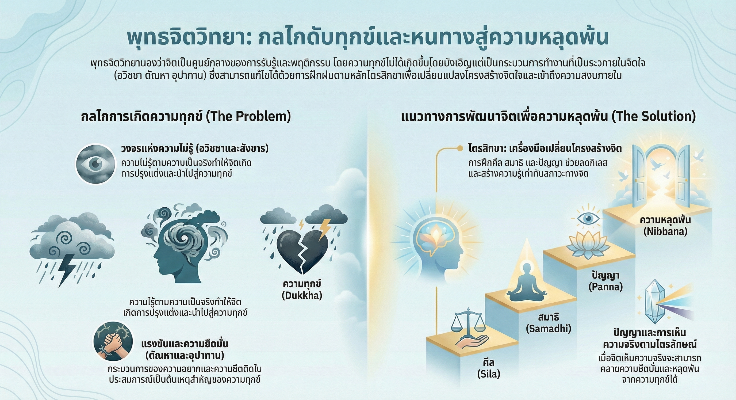
บทความวิชาการ นี้มีวัตถุประสงค์เพื่อศึกษาพุทธจิตวิทยาในฐานะเป็นศาสตร์ที่ศึกษาธรรมชาติและกระบวนการทำงานของจิตตามหลักพระพุทธศาสนา โดยมุ่งอธิบายกลไกการเกิดความทุกข์และแนวทางการพัฒนาจิตเพื่อการหลุดพ้นทุกข์ ผลการศึกษาพบว่าพระพุทธศาสนาถือว่าจิตเป็นศูนย์กลางของการรับรู้ ความคิด และพฤติกรรม ซึ่งคุณภาพของจิตเป็นปัจจัยสำคัญที่กำหนดคุณภาพชีวิต ความทุกข์เกิดจากกลไกภายในจิต โดยเฉพาะอวิชชา สังขาร ตัณหา และอุปาทาน ที่ทำงานเชื่อมโยงกันตามหลักเหตุและปัจจัย ส่งผลให้จิตเกิดการยึดมั่นถือมั่นและก่อให้เกิดความทุกข์ พระพุทธศาสนาเสนอแนวทางการพัฒนาจิตผ่านหลักไตรสิกขา ได้แก่ ศีล สมาธิ และปัญญา ซึ่งเป็นกระบวนการฝึกฝนที่ช่วยปรับเปลี่ยนโครงสร้างการทำงานของจิต ศีลช่วยควบคุมพฤติกรรมและลดกิเลส สมาธิช่วยให้จิตมั่นคงและเกิดความรู้เท่าทันสภาวะทางจิต ส่วนปัญญาทำหน้าที่ทำลายอวิชชาและทำให้จิตเห็นความจริงตามหลักไตรลักษณ์ เมื่อจิตเห็นความจริงตามสภาวะ จะสามารถคลายความยึดมั่นถือมั่นและหลุดพ้นจากความทุกข์ได้ ดังนั้นพุทธจิตวิทยาเป็นระบบการพัฒนาจิตที่อธิบายทั้งสาเหตุของความทุกข์และแนวทางการหลุดพ้นอย่างเป็นระบบ โดยมุ่งเน้นการพัฒนาปัญญาเพื่อขจัดอวิชชา อันนำไปสู่การลดความทุกข์และการพัฒนาคุณภาพชีวิตให้ดีขึ้น
Article Details

อนุญาตภายใต้เงื่อนไข Creative Commons Attribution-NonCommercial-NoDerivatives 4.0 International License.
บทความนี้เป็นความคิดเห็นส่วนผู้แต่ง กองบรรณาธิการไม่จำเป็นต้องเห็นด้วยเสมอไป
เอกสารอ้างอิง
๑. ข้อมูลปฐมภูมิ
มหาจุฬาลงกรณราชวิทยาลัย. พระไตรปิฎกภาษาไทย ฉบับมหาจุฬาลงกรณราชวิทยาลัย. กรุงเทพมหานคร: โรงพิมพ์มหาจุฬาลงกรณราชวิทยาลัย, ๒๕๓๙.
๒. ข้อมูลทุติยภูมิ
พระธรรมปิฎก (ป.อ. ปยุตฺโต). พจนานุกรมพุทธศาสตร์ ฉบับประมวลศัพท์. กรุงเทพมหานคร: มหาจุฬาลงกรณราชวิทยาลัย, ๒๕๔๖.
พระพรหมคุณาภรณ์ (ป.อ. ปยุตฺโต). พุทธธรรม ฉบับปรับปรุงและขยายความ. กรุงเทพมหานคร: ผลิธัมม์, ๒๕๖๔
_________. พุทธธรรม. (กรุงเทพมหานคร: ผลิธัมม์, ๒๕๕๙),
_________. พุทธธรรม ฉบับปรับขยาย. กรุงเทพมหานคร: โรงพิมพ์มหาจุฬาลงกรณราชวิทยาลัย, ๒๕๕๙.
๓. ภาษาอังกฤษ
Carl R. Rogers. On Becoming a Person: A Therapist’s View of Psychotherapy. Boston: Houghton Miffli, 1961
Gerald Corey. Theory and Practice of Counseling and Psychotherapy. 9th ed. Belmont CA: Brooks/Cole 2013.
Richard S. Lazarus and Susan Folkman Stress, Appraisal and Coping. New York: Springer Publishing. 1984
