A Model of Vipassanā Meditation Practice Activities for Early Older Adults to Reduce Age-Related Forgetfulness.
Article Sidebar
Main Article Content
Abstract
This research article aims to (1) explore the problems of early-stage elderly people with age-related forgetfulness, (2) develop a model of Vipassanā meditation activities for early-stage elderly people, and (3) present a model of Vipassanā meditation activities for early-stage elderly people. The research used a mixed methods research approach, consisting of quantitative research from a sample of 250 people and qualitative research from 50 informants through questionnaires and in-depth interviews. The results were then analyzed using descriptive analysis.
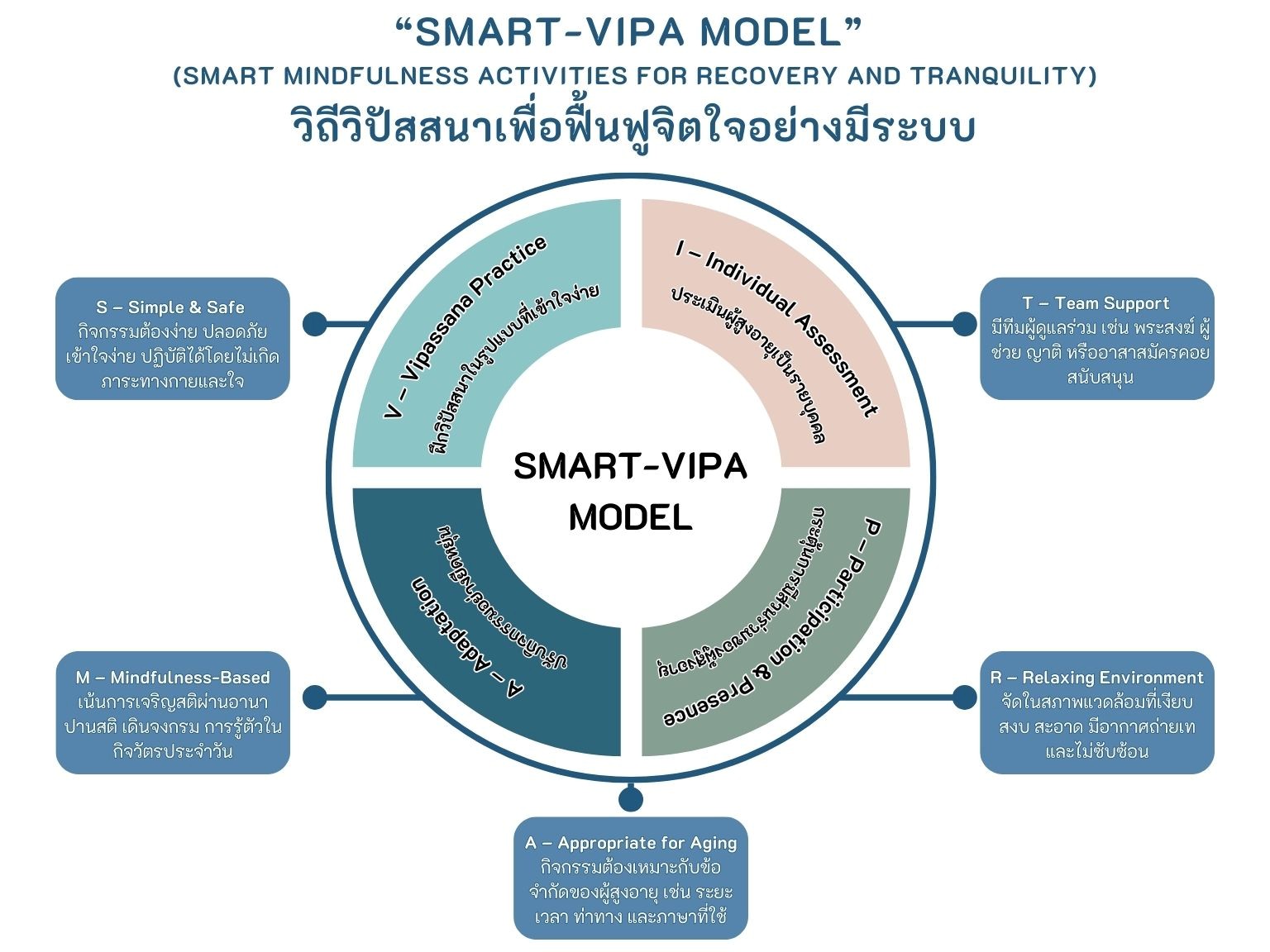
The research results found that many early-stage elderly people experience forgetfulness, anxiety, and low self-confidence, leading them to tend to avoid activities that require memory or continuous concentration. Vipassanā practices based on the Threefold Training, such as mindfulness of breathing, walking meditation, listening to sermons, and mindfulness in daily life, are appropriate approaches to developing the body, mind, and intellect. Furthermore, the developed and presented “SMART-VIPA Model” is a new conceptual framework for organizing Vipassanā meditation activities for early-stage elderly people. The SMART-VIPA Model comprises six elements: S (Simple), emphasizing simple, uncomplicated activities for easy accessibility and participation from the elderly; M (Mindfulness), focusing on mindfulness practice as the core of the activities to improve memory and reduce distractions; A (Adaptability), adapting to the physical and mental conditions of each individual; R (Routine), promoting consistent practice in daily life for lasting results; T (Togetherness), creating warm, interactive small group learning environments to foster encouragement; and VIPA (Vipassanā), utilizing Vipassanā principles, particularly mindfulness of breathing (ānāpānasati), combined with wisdom cultivation based on the Threefold Training (Trisikha). This model integrates the Threefold Training with knowledge of geriatric psychology to create sustainable, appropriate, and age-friendly activities for the elderly, focusing on improving quality of life in physical, mental, and intellectual dimensions. It can also be effectively applied in meditation centers, communities, or other senior care centers.
Article Details

This work is licensed under a Creative Commons Attribution-NonCommercial-NoDerivatives 4.0 International License.
บทความนี้เป็นความคิดเห็นส่วนผู้แต่ง กองบรรณาธิการไม่จำเป็นต้องเห็นด้วยเสมอไป
References
๑.ภาษาไทย:
ก.ข้อมูลปฐมภูมิ
มหาจุฬาลงกรณราชวิทยาลัย. พระไตรปิฎกภาษาไทย.ฉบับมหาจุฬาลงกรณราชวิทยาลัย.กรุงเทพมหานคร: โรงพิมพ์
มหาจุฬาลงกรณราชวิทยาลัย,๒๕๓๙.
ข.ข้อมูลทุติยภูมิ
(๑) หนังสือ :
พระเทพเวที (ประยุทธ์ ปยุตฺโต), การศึกษาที่สากลบนพื้นฐานแห่งภูมิปัญญาไทย, (กรุงเทพมหานคร: โครงการตําราและเอกสารทางวิชาการ คณะศึกษาศาสตร์ มหาวิทยาลัยเกษตรศาสตร์, ๒๕๓๒).
พระธรรมปิฎก (ป.อ.ปยุตฺโต). พุทธธรรม. พิมพ์ครั้งที่ ๘. ( กรุงเทพมหานคร : โรงพิมพ์มหาจุฬาลงกรณราชวิทยาลัย, ๒๕๔๒).
