an analysis of the four ɪddhipᾱda (paths of accomplishment) in the development of desirable personnel at the willpower institute of luangphor viriyang sirintharo
Article Sidebar
Main Article Content
Abstract
This research aimed to: (1) study the theoretical concepts related to the principles for developing desirable personnel at the Willpower Institute founded by Luangpor Viriyang Sirintharo; (2) examine the application of the Four Iddhipāda (Paths of Accomplishment) in the development of desirable personnel at the Institute; and (3) analyze the role of the Four Iddhipāda in developing such personnel. This was a qualitative study, involving content analysis of documents and in-depth interviews with 20 key informants (monks and laypersons). The main research instrument was a set of in-depth interview questions, and the collected data were analyzed and presented descriptively.
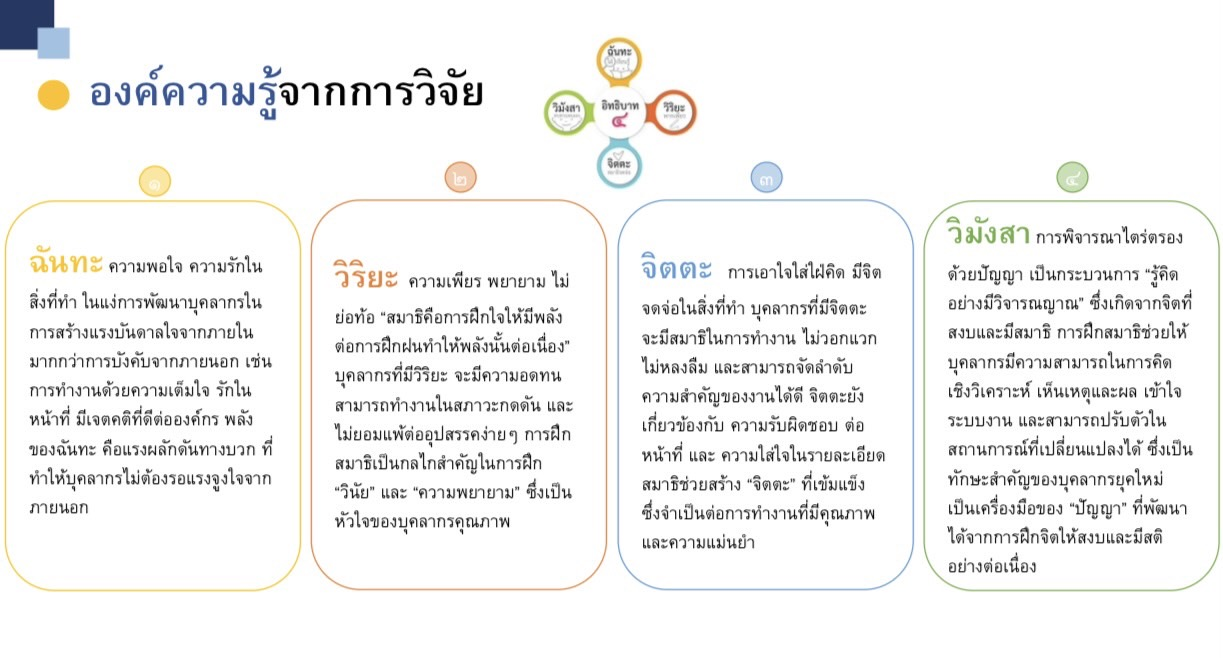
The research findings revealed that the personnel development principles of the Willpower Institute emphasize the holistic development of both body and mind, following the guidance of Luangpor Viriyang Sirintharo. This involves the practice of meditation, instilling moral values and ethics, and promoting qualities such as morality, compassion, and selflessness. The key Dhamma principle applied in developing desirable personnel is the Four Iddhipāda which serves as a guideline for mental development, resulting in tangible outcomes:Chanda (aspiration) emphasizes cultivating motivation toward serving the common good ; Viriya (effort) promotes diligence in meditation practice and dissemination of teachings ; Citta (concentration) focuses on mindfulness and unwavering intention ; Vīmaṃsā (investigation) involves self-assessment and continuous improvement.
Factors that enhance the effectiveness of applying the Four Iddhipāda include the leadership of administrators, the personnel's understanding of Dhamma principles, a system of continuous training, and an organizational atmosphere conducive to Dhamma practice. The Four Iddhipāda thus plays a crucial role in developing desirable personnel and is a key factor in enabling the Willpower Institute to grow and operate with stability and effectiveness.
To transmit the knowledge of meditation practice according to the teachings of Luangpor Viriyang Sirintharo, in conjunction with the principles of Buddhism. The goal is to cultivate an open-minded and adaptable attitude, a readiness to learn new things, a receptiveness to guidance and suggestions, an awareness of the organization's role, and the responsibility to be a positive role model for society. This is the primary objective of the Willpower Institute.
Article Details

This work is licensed under a Creative Commons Attribution-NonCommercial-NoDerivatives 4.0 International License.
บทความนี้เป็นความคิดเห็นส่วนผู้แต่ง กองบรรณาธิการไม่จำเป็นต้องเห็นด้วยเสมอไป
References
๑. ภาษาไทย
ก. ข้อมูลปฐมภูมิ
มหาจุฬาลงกรณราชวิทยาลัย. พระไตรปิฎกภาษาบาลี ฉบับมหาจุฬาเตปิฏกํ ๒๕๐๐. กรุงเทพมหานคร: โรงพิมพ์มหาจุฬาลงกรณราชวิทยาลัย, ๒๕๓๕.
ข. ข้อมูลทุติยภูมิ
(๑) หนังสือ:
ขันติพโลและศิษย์, ธรรมส่องโลก, (กรุงเทพมหานคร : บริษัทประชาชน จำกัด, ๒๕๕๕) หน้า ๓๘
พระมหาปกรณ์ กิตฺติธโร. ๒๕๖๕. บรรณานุสรณีย์งานออกเมรุพระราชทานเพลิงศพสมเด็จพระญาณวชิโรดม (วิริยังค์ สิรินฺธโร) วัดธรรมมงคล เถาบุญนนทวิหาร กรุงเทพมหานคร ณ เมรุหลวงหน้าพลับพลาอิศริยาภรณ์ วัดเทพศิรินทราวาส กรุงเทพมหานคร วันอาทิตย์ที่ ๑๙ เดือนมิถุนายน พุทธศักราช ๒๕๖๕. หน้า ๙๔-๑๑๖.
พระมหาสุพล ขนฺติพโล, ทางสู่ความสำเร็จ, พิมพ์ครั้งที่ ๕, (กรุงเทพมหานคร: บริษัท ประชาชน จำกัด, ๒๕๕๑), หน้า ๑๙-๒๐
พระธรรมปิฎก (ป.อ.ปยุตฺโต). (๒๕๖๒). พจนานุกรมพุทธศาสตร์ ฉบับประมวลธรรม. กรุงเทพฯ: มูลนิธิพุทธธรรม.
พระธรรมมงคลญาณ (วิริยังค์ สิรินฺธโร), คุณค่าของชีวิต, (กรุงเทพมหานคร : หจก. พิฆณีการพิมพ์, ม.ป.พ.), หน้า ๑๑๔.
พระเทพเจติยาจารย์ (หลวงพ่อวิริยังค์ สิรินฺธโร), หลักสูตรครูสมาธิ เล่ม ๓ พิมพ์ครั้งที่ ๖, (กรุงเทพมหานคร: หจก. พิฆณี, ๒๕๕๓), หน้า คำนำ.
สถาบันพลังจิตตานุภาพ. ๒๕๖๗. เกี่ยวกับสถาบันพลังจิตตานุภาพ. เข้าถึงวันที่ ๑๔ กุมภาพันธ์ ๒๕๖๘.
(๒) ดุษฎีนิพนธ์/วิทยานิพนธ์/สารนิพนธ์:
กุลนิษฐ์ ชาตินักรบ. “การส่งเสริมความเป็นพลเมืองตามแนวทางหลักสูตรครูสมาธิ ของสถาบันพลังจิตตานุภาพ วัดสิรินธรเทพรัตนาราม อำเภอสามพราน จังหวัดนครปฐม”. บัณฑิตวิทยาลัย: มหาวิทยาลัยมหามกุฏราชวิทยาลัย, ๒๕๖๗.
วชิราวัลย์ มหพรภัสสร์. “การพัฒนาคุณภาพชีวิตผ่านหลักสูตรครูสมาธิของสมเด็จพระญาณวชิโรดม (หลวงพ่อวิริยังค์) เชิงพุทธบูรณาการ”. ดุษฎีนิพนธ์. บัณฑิตวิทยาลัย: มหาวิทยาลัยมหาจุฬาลงกรณราชวิทยาลัย, ๒๕๖๖.
วรรณพร ฮอฟมันน์. “ศึกษาผลสัมฤทธิ์วิธีการสอนครูสมาธิ เพื่อนำไปใช้ในชีวิตประจำวันของ”. วิทยานิพนธ์มหาบัณฑิต. บัณฑิตวิทยาลัย: มหาวิทยาลัยมหาจุฬาลงกรณราชวิทยาลัย, ๒๕๖๒.
(๓) บทความ:
สิริวดี ชูเชิด. “การพัฒนาสมรรถนะบุคลากรในการปฏิบัติงานให้มีประสิทธิภาพ”. วารสารวไลยอลงกรณ์ปริทัศน์ (มนุษยศาสตร์และสังคมศาสตร์). ปีที่ ๑๒ ฉบับที่ ๑ ( มกราคม-เมษายน ๒๕๖๕): ๒๒๓-๒๓๘
