buddhist methods for conducting creative business in charoenkrung, yan nawa subdistrict, sathon district, Bangkok.
Article Sidebar
Main Article Content
Abstract
In this research, three main objectives were purposely made: 1) to study the business operations of the community in the Charoenkrung area, Yannawa Sub-district, Sathorn District, Bangkok; 2) to examine the application of Buddhist principles in creative business practices within the Charoenkrung community; and 3) to propose a creative business development model for the community. This qualitative study is based on document analysis, interviews, and content analysis, with findings presented descriptively.
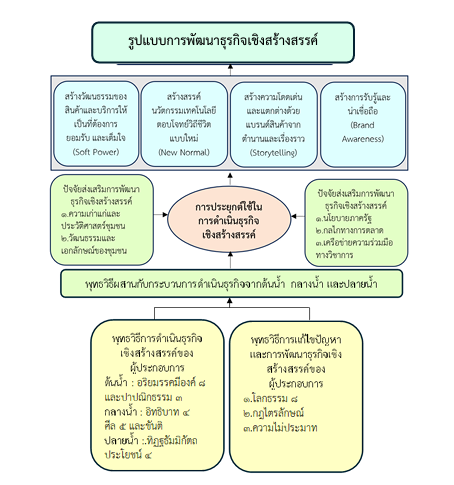
The results showed that: 1) businesses in the Charoenkrung community are typically small, family-run enterprises passed down through generations. They employ household accounting, operate through both physical storefronts and online platforms, and accept payments via cash, bank transfers, and credit cards. Most customers are regulars, and business owners maintain long-standing, mutually beneficial partnerships with suppliers, 2) the application of Buddhist principles shows that entrepreneurs establish their businesses in accordance with the Eightfold Path (Ariya Magga) and the Three Marks of a Good Merchant (Papannika Dhamma). During operation, they apply the Four Bases of Success (Iddhipãda), the Five Precepts (Sĩla), and patience (Khanti). The outcomes of their business operations correspond to the Four Advantages Attainable in this Present Life (Diṭṭhadhammikattha-saṃvattanika-dhamma), and 3) the study identifies four creative business development models for the Charoenkrung community: (1) producing desirable and acceptable goods and services through cultural soft power; (2) developing technological innovations that meet the demands of new lifestyles (the New Normal); (3) building a distinct and unique brand identity through legends and storytelling; and (4) fostering brand awareness and credibility to enhance the value of goods and services, thereby contributing to sustainable economic and social development.
Article Details

This work is licensed under a Creative Commons Attribution-NonCommercial-NoDerivatives 4.0 International License.
บทความนี้เป็นความคิดเห็นส่วนผู้แต่ง กองบรรณาธิการไม่จำเป็นต้องเห็นด้วยเสมอไป
References
ภาษาไทย
จินดา หวังวรวงศ์ และคณะ, “แนวทางพุทธวิธีอาหารปลอดภัยที่ยั่งยืนด้วยสัมมาอาชีวะสำหรับสังคมไทย”, วารสารบัณฑิตศึกษาปริทรรศน์, ปีที่ ๑๔ ฉบับที่ ๑ (มกราคม-เมษายน ๒๕๖๑): ๒๙-๓๐.
จิรภา สุขนวณิช, “เศรษฐกิจสร้างสรรค์เพื่อการพัฒนาที่ยั่งยืน”, วารสารสหวิทยาการทางสังคมศาสตร์, ปีที่ ๑ ฉบับที่ ๓ (พฤษภาคม-มิถุนายน ๒๕๖๖): ๙-๑๑.
ณัฏฐวิชฌ์ ราชแก้ว และคณะ, “เศรษฐกิจสร้างสรรค์ อำนาจละมุน: การกระตุ้นเศรษฐกิจไทยในอนาคต”, วารสารรัฐศาสตร์ มหาวิทยาลัยมหามกุฏราชวิทยาลัย, ปีที่ ๔ ฉบับที่ ๑ (มกราคม-กุมภาพันธ์ ๒๕๖๗): ๑๓๑-๑๔๒.
ณัฐธีร์ คีรีกมลพัฒน์, “ศึกษาแนวทางการใช้วาจาเชิงพุทธเพื่อส่งเสริมการค้าขาย”, วารสารบัณฑิตศึกษา, ปีที่ ๑๕ ฉบับที่ ๖๘ (มกราคม-มีนาคม ๒๕๖๑): ๑๙๙.
ทับทิม ทัฬหกรณ์ และคณะ, “ปัจจัยสู่ความสำเร็จของผู้ประกอบการเชิงสร้างสรรค์ในยุคเศรษฐกิจสร้างสรรค์”, Veridian E-Journal, Silpakorn University, ปีที่ ๑๑ ฉบับที่ ๑ (มกราคม-เมษายน ๒๕๖๑): ๔๐๑-๔๐๖.
นิธิ เอี้ยวศรีวงศ์, การศึกษาของชาติกับภูมิปัญญาท้องถิ่น, (กรุงเทพมหานคร: อมรินทร์พริ้นติ้ง, ๒๕๓๖.
พระอธิการโสฬสมงคล อินฺโชโต, “พุทธจริยศาสตร์ในการประกอบธุรกิจ”, วารสารเสฏฐวิทย์ปริทัศน์, ปีที่ ๑ ฉบับที่ ๓ (กันยายน-ธันวาคม ๒๕๖๔): ๑๔-๑๖.
พิริยะ ผลพิรุฬห์, “เศรษฐกิจสร้างสรรค์กับการพัฒนาประเทศไทย”, วารสารเศรษฐศาสตร์ปริทรรศน์ สถาบันพัฒนศาสตร์, ปีที่ ๗ ฉบับที่ ๑ (มกราคม ๒๕๖๖): ๒๗-๓๑.
สมชาย เบ็ญจวรรณ์, “แนวทางการบริหารจัดการธุรกิจตามหลักพุทธจริยศาสตร์”, สักทอง: วารสารมนุษยศาสตร์และสังคมศาสตร์ (สทมส.), ปีที่ ๒๕ ฉบับที่ ๑ (มกราคม-มีนาคม ๒๕๖๒): ๙-๑๐.
อัจฉราพรรณ ตั้งจาตุรโสภณ และคณะ, “การจัดกลุ่มผู้บริโภคตามปัจจัยส่วนประสมทางการตลาดบริการที่มีต่อพฤติกรรมการตัดสินใจใช้บริการรับส่งอาหาร ในช่วงสถานการณ์การแพร่ระบาดของ COVID 19 ระบาดรอบ ๒”, วารสารวิชาการสมาคมสถาบันอุดมศึกษาเอกชนแห่งประเทศไทย (สสอท), ปีที่ ๒๗ ฉบับที่ ๑ (มกราคม-มิถุนายน ๒๕๖๔): ๑๓๔-๑๓๘.
อาทิพร ผาจันดา, “๑๐๐ ปี ถนนเจริญกรุงกับการเปลี่ยนแปลงเศรษฐกิจและสังคม (พ.ศ. ๒๔๑๑ -๒๕๑๑)”, วิทยานิพนธ์ศิลปศาสตรมหาบัณฑิต สาขาวิชาประวัติศาสตร์ คณะสังคมศาสตร์, (บัณฑิตวิทยาลัย: มหาวิทยาลัยศรีนครินทร์วิโรจน์, ๒๕๖๔.
DDproperty, “รู้จักย่านเจริญกรุงแบบเจาะลึก”, [ออนไลน์], ๕ ย่อหน้า, แหล่งที่มา: https://www. ddproperty.com/areainsider/เจริญกรุง/article/รู้จักย่านเจริญกรุงแบบ-3540 [๑๕ พฤษภาคม ๒๕๖๗].
groundcontrolth.com, “แรกเริ่มที่ ‘เจริญกรุง’ สำรวจ ‘แห่งแรกในสยาม’ ที่เกิดขึ้นที่เจริญกรุงย่านที่ได้ชื่อว่าเป็นต้นกำเนิด ‘ความสร้างสรรค์ของไทย’”, [ออนไลน์], แหล่งที่มา: https://groundcontrolth. com/blogs/history-of-charoenkrung [๑๕ พฤษภาคม ๒๕๖๗].
