The Practice of Moral Precepts and Maintaining a Balanced Life for the New Generation in Modern Society
Article Sidebar
Main Article Content
Abstract
The objectives of this research article are as follows:1.to study the significance of Sīla (morality) in Buddhism and the impact of moral observance on the balanced lifestyle of the younger generation in Thai society; 2To develop activities that promote the observance of Sīla in alignment with the current lifestyle of the younger generation; and 3.to propose a model of Sīla observance that can be applied to create a balanced life for the younger generation In modern society.This study is a qualitative research employing both document analysis and in-depth interviews with 25 key informants (monks and laypersons). Data were analyzed using descriptive analysis.
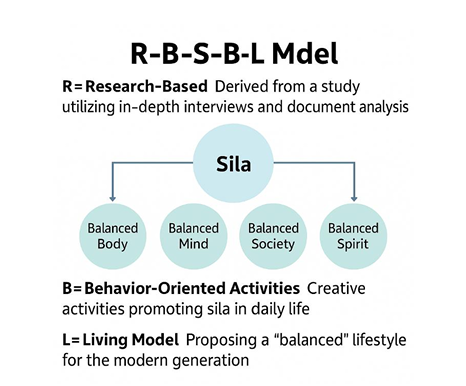
The research findings reveal that Sīla is a fundamental basis of ethics that enables individuals to live a meaningful and balanced life. Observing Sīla is not merely a religious rule but a practical guideline that helps reduce stress, enhance mental health, strengthen family and community relationships, and lead to peace and harmony at both personal and societal levels.Activities that promote the observance of Sīla and the model of Sīla observance suitable for the balanced lifestyle of the younger generation can be explained through the
Article Details

This work is licensed under a Creative Commons Attribution-NonCommercial-NoDerivatives 4.0 International License.
บทความนี้เป็นความคิดเห็นส่วนผู้แต่ง กองบรรณาธิการไม่จำเป็นต้องเห็นด้วยเสมอไป
References
๑.ภาษาไทย:
ก.ข้อมูลปฐมภูมิ
มหาจุฬาลงกรณราชวิทยาลัย. พระไตรปิฎกภาษาไทย.ฉบับมหาจุฬาลงกรณราชวิทยาลัย.กรุงเทพมหานคร: โรงพิมพ์มหาจุฬาลงกรณราชวิทยาลัย,๒๕๓๙.
ข.ข้อมูลทุติยภูมิ
(๑) หนังสือ :
จีรชัย วงศ์ชารี, การศึกษาวิเคราะห์แนวทางการส่งเสริมการรักษาศีล ๕ ของหมู่บ้านรักษาศีล ๕ในอำเภอคำเขื่อนแก้ว จังหวัดยโสธร,วารสาร มจร อุบลปริทรรศน์ ปีที่ ๗ ฉบับที่ ๒ (พฤษภาคม-สิงหาคม ๒๕๖๕, หน้า ๘๙๖-๘๙๙.
นฤมล มารคแมน, มนุษย์และความเป็นจริงของชีวิตในทัศนะของพุทธศาสนา, พิมพ์ครั้งที่ ๒, (กรุงเทพมหานคร: มหาวิทยาลัยรามคำแหง, ๒๕๔๓), หน้า ๑.
มั่นเกียติ โกศลนิรัติวงษ์, ทฤษฎีและเทคนิคในกำรให้คำปรึกษำพุทธธรรม, พิมพ์ครั้งที่ ๑, (กรุงเทพมหานคร: สุวีริยาสาส์น, ๒๕๔๑), หน้า ๒๘ ๒๙.
พระพรหมคุณาภรณ์ (ป.อ.ปยุตฺโต), พุทธธรรม ฉบับปรับปรุงและขยายความ, พิมพ์ครั้งที่ ๓๙, (กรุงเทพมหานคร: มหาวิทยาลัยมหาจุฬาลงรณราชวิทยาลัย, ๒๕๕๗), หน้า ๙๑๔.
พระมหานิกร ปลัดสังข์, “การรักษาศีล ๕ กับการสร้างสันติสุขในสังคมไทยให้ยั่งยืนกรณีศึกษา หมู่บ้านรักษาศีล๕ในจังหวัดขอนแก่น”, วารสารบัณฑิตศึกษาปริทรรศน์, ปีที่ ๑๓ ฉบับที่ ๓ (กันยายน-ธันวาคม ๒๕๖๐): ๓-๖.
พระมหามนัส ทับประโมง, “การศึกษาความรู้และพฤติกรรมการักษาศีล ๕ ของนักศึกษา ระดับอุดมศึกษาในจังหวัดมหาสารคาม”, วิทยานิพนธ์สังคมศาสตรมหาบัณฑิต, (สังคมศาสตรเพื่อการพัฒนา: มหาวิทยาลัยราชภัฏมหาสารคาม, ๒๕๕๔), หน้า ๗.
วิไลพร อุ่นเจ้าบ้าน, “ศึกษาพฤติกรรมการนำศีล ๕ ไปใช้ในชีวิตประจำวันของผู้บริหารและสมาชิกองค์การบริหารส่วนตำบลในอำเภอตะพานหิน จังหวัดพิจิตร”, พุทธศาสตรมหาบัณฑิต สาขาวิชาพระพุทธศาสนา, (บัณฑิตวิทยาลัย: มหาวิทยาลัยจุฬาลงกรณราชวิทยาลัย, ๒๕๕๙).
อธิษฐาน พูลศิลป์ศักดิ์กุล, “การรักษาศีลห้าของพุทธศาสนิกชนวัยแรงงาน: กรณีศึกษาเขตสวนหลวงกรุงเทพมหานคร”,ปัญหาพิเศษ, บัณฑิตวิทยาลัย:มหาวิทยาลัยบูรพา.๒๕๔๘,หน้า ๓๒.
