Broadcasting Format of The Chiang Rai Buddhist Radio Station For Integrated Buddhism
Article Sidebar
Main Article Content
Abstract
The objectives of this research article are as follows: 1. To study the current problems of the radio broadcasting format of the Chiang Rai Buddhist Radio Station, 2. To develop the radio broadcasting format of the Chiang Rai Buddhist Radio Station in an integrated Buddhist way, 3. To present the radio broadcasting format of the Chiang Rai Buddhist Radio Station in an integrated Buddhist way that can effectively disseminate the principles of Dhamma to the public. This is qualitative research conducted through in-depth interviews with 23 key informants from the target group. The research tool used was an in-depth interview guide, and the collected data were analyzed and presented descriptively.
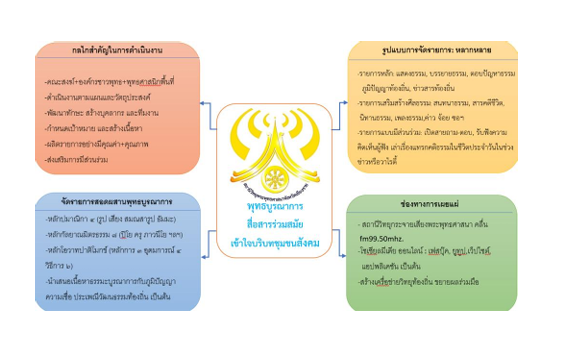
The research findings revealed that current radio programming still faces several problems, including shortages of personnel, limited budgets, technical and signal limitations, and a decline in audience numbers in the digital era—particularly among younger generations. Furthermore, program content lacks variety and connection to modern lifestyles. The development of the integrated Buddhist radio programming model emphasizes applying Buddhist principles—specifically the Four Standards for Judging (Pamanika) the Seven Qualities of a Good Friend (Kalyanamitradham) and The Three Principles, Four Ideals, and Six Methods (Ovadapatimokkha)—integrated with local culture, while expanding communication channels through community radio and online media such as Facebook and YouTube.This integrated Buddhist model aims to enhance the potential for disseminating Buddhism, promoting morality and ethics via radio broadcasting in a systematic and contemporary manner according to the B-RADIO Model: B – Buddhist Principles at the Core: Placing Buddhist teachings as the central foundation. R – Religious Stakeholders as Drivers: Operational mechanisms driven by Buddhist networks. A – Audience-Centered Programming: Programs designed with the audience at the center. D – Digital & Local Distribution: Diverse dissemination channels, including community radio. I -Inspiration: Creating motivation inspiration and Design creative content. O - Organization Development: Develop and improve yourself and operate your business according to your goals.
Article Details

This work is licensed under a Creative Commons Attribution-NonCommercial-NoDerivatives 4.0 International License.
บทความนี้เป็นความคิดเห็นส่วนผู้แต่ง กองบรรณาธิการไม่จำเป็นต้องเห็นด้วยเสมอไป
References
๑.ภาษาไทย:
ก.ข้อมูลปฐมภูมิ
มหาจุฬาลงกรณราชวิทยาลัย. พระไตรปิฎกภาษาไทย. ฉบับมหาจุฬาลงกรณราชวิทยาลัย. กรุงเทพมหานคร : โรงพิมพ์มหาจุฬาลงกรณราชวิทยาลัย, ๒๕๓๙.
ข.ข้อมูลทุติยภูมิ
(๑) หนังสือ:
พระครูโสภณธรรมวิภัช เอี่ยมบึงลำ, การพัฒนาการการจัดรายการวิทยุเพื่อเผยแผ่พระพุทธศาสนาของนักจัดรายการวิทยุชุมชนในเขตภาคเหนือตอนล่าง, ดุษฎีบัณฑิต คณะศึกษาศาสตร์, มหาวิทยาลัยนเรศร, ๒๕๖๐, บทคัดย่อ.
พระมหาสุเทพ ฉนฺทสุทฺโธ (มะแป้นไพร), ปมาณิกา ๔ ของพระเถระผู้เป็นเอตทัคคะด้านการเผยแผ่, พุทธศาสตรมหาบัณฑิต (พระพุทธศาสนา), (บัณฑิตวิทยาลัย: มหาวิทยาลัยมหาจุฬาลงกรณราชวิทยาลัย, ๒๕๖๐), บทคัดย่อ.
อชิรญา สุภาเดช, การพัฒนารูปแบบการจัดรายการวิทยุกระจายเสียงเพื่อส่งเสริมการเผยแผ่พระพุทธศาสนาจังหวัดนครราชสีมา, ปรัชญาดุษฏีบัณฑิต สาขาวัฒนธรรมศาสตร์, มหาวิทยาลัยมหาสารคาม, ๒๕๖๔, บทคัดย่อ.
ราชกิจจานุเบกษา. รัฐธรรมนูญแห่งราชอาณาจักรไทย. พ.ศ.๒๕๔๐. เล่ม ๑๑๔ ตอนที่ ๕๕ ก.
(๒) บทความวารสาร:
ประทีป พืชทองหลาง. รูปแบบการปรึกษาเชิงพุทธตามหลักกัลยาณมิตร. วารสารปรัชญาและศาสนา. กลุ่มวิชาสังคมศาสตร์และมนุษยศาสตร์ คณะบริหารธุรกิจและศิลปศาสตร์ มหาวิทยาลัยเทคโนโลยีราชมงคลล้านนาเชียงใหม่. ปีที่ ๓ ฉบับที่ ๒ ก.ค. - ธ.ค. ๒๕๖๑.
(๓) สื่ออิเล็กทรอนิกส์:
Mediathailand, สื่อเสียงและรายการวิทยุ, [ออนไลน์], แหล่งที่มา : https://www.mediathailand.org/2012/06/blog-post_03.html# [๒๕ กรกฎาคม ๒๕๖๘].
