การยกระดับกระบวนการบริหารจัดการกิจการคณะสงฆ์ในเขตปกครองคณะสงฆ์ จังหวัดเชียงรายเชิงพุทธบูรณาการ
Article Sidebar
Main Article Content
บทคัดย่อ
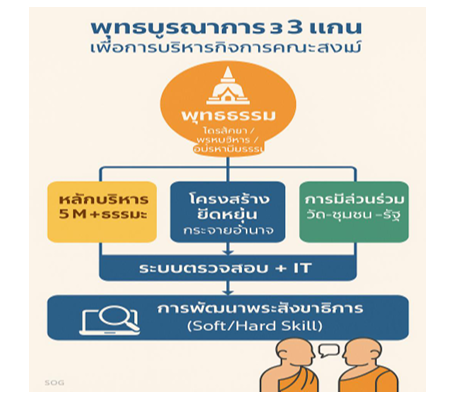
บทความวิจัยนี้มีวัตถุประสงค์ดังนี้ ๑) เพื่อศึกษาปัจจุบันปัญหาเกี่ยวกับกระบวนการบริหารจัดการกิจการคณะสงฆ์ในเขตปกครองคณะสงฆ์จังหวัดเชียงราย ๒) เพื่อศึกษาการยกระดับกระบวนการบริหารจัดการกิจการคณะสงฆ์ในเขตปกครองคณะสงฆ์จังหวัดเชียงรายตามหลักพุทธธรรม และ ๓) เพื่อนำเสนอการยกระดับกระบวนการบริหารจัดการกิจการคณะสงฆ์ในเขตปกครองคณะสงฆ์จังหวัดชียงรายตามหลักพุทธธรรม ซึ่งเป็นการวิจัยเชิงคุณภาพ โดยผู้วิจัยได้ทำการศึกษาค้นคว้าข้อมูลในด้านเนื้อหาเอกสารและสัมภาษณ์ กับผู้ให้ข้อมูลสำคัญเชิงลึกกับกลุ่มเป้าหมาย จำนวน ๒๕ รูป/คน เครื่องมือที่ใช้ในการวิจัยคือแบบสัมภาษณ์เชิงลึก และนำข้อมูลมาวิเคราะห์โดยเรียบเรียงเชิงพรรณนา
ผลการวิจัยพบว่า การบริหารกิจการคณะสงฆ์ในจังหวัดเชียงรายเผชิญกับปัญหาหลายประการที่ส่งผลต่อประสิทธิภาพและความโปร่งใสในการดำเนินงาน โดยเฉพาะการรวมศูนย์อำนาจไว้ที่ระดับมหาเถรสมาคมและเจ้าคณะระดับสูง ทำให้พระสังฆาธิการในพื้นที่มีบทบาทจำกัดในการตัดสินใจ ส่งผลให้การบริหารขาดความคล่องตัวและไม่สามารถตอบสนองต่อปัญหาเฉพาะพื้นที่ได้อย่างทันท่วงทีเพื่อแก้ไขปัญหาดังกล่าว จำเป็นต้องผสานหลักพุทธธรรมเข้ากับแนวทางการบริหารสมัยใหม่ให้สามารถรองรับการเปลี่ยนแปลงของสังคมอย่างยั่งยืนผ่านองค์ความรู้ที่ยึดหลักธรรมเป็นองค์ความรู้นี้ สามารถแก้ปัญหาการรวมศูนย์อำนาจได้หรือ เพราะปัญหาที่ตั้งไว้ หลักใหญ่ คือเรื่องรวมศูนย์อำนาจ
Article Details

อนุญาตภายใต้เงื่อนไข Creative Commons Attribution-NonCommercial-NoDerivatives 4.0 International License.
บทความนี้เป็นความคิดเห็นส่วนผู้แต่ง กองบรรณาธิการไม่จำเป็นต้องเห็นด้วยเสมอไป
เอกสารอ้างอิง
๑.ภาษาไทย:
ก.ข้อมูลปฐมภูมิ
มหาจุฬาลงกรณราชวิทยาลัย. พระไตรปิฎกภาษาไทย.ฉบับมหาจุฬาลงกรณราชวิทยาลัย.กรุงเทพมหานคร: โรงพิมพ์มหาจุฬาลงกรณราชวิทยาลัย,๒๕๓๙.
ข.ข้อมูลทุติยภูมิ
(๑) หนังสือ :
กองแผนงาน กรมการศาสนา กระทรวงศึกษาธิการ, คู่มือพระสังฆาธิการว่าด้วยพระราชบัญญัติ กฎ ระเบียบ และคำสั่งของคณะสงฆ์, (กรุงเทพมหานคร: โรงพิมพ์การศาสนา, ๒๕๔๒).
กองแผนงาน กรมการศาสนา กระทรวงศึกษาธิการ, คู่มือพระสังฆาธิการว่าด้วยพระราชบัญญัติ กฎ ระเบียบ และคำสั่งของคณะสงฆ์.๒๕๖๓.
นิสิตหลักสูตรพุทธศาสตรดุษฏีบัณฑิต สาขาวิชาพระพุทธศาสนา บัณฑิตวิทยาลัย มหาวิทยาลัยมหาจุฬาลงกรณราชวิทยาลัย
พระครูโพธิกิตติคุณ(กิตติพงษ์ สุปญฺโญ), การบริหารกิจการคณะสงฆ์ตามหลักธรรมาภิบาลเชิงพุทธของคณะสงฆ์ภาค ๓ , ปริญญาพุทธศาสตรดุษฎีบัณฑิต, (บัณฑิตวิทยาลัย: มหาวิทยาลัยมหาจุฬาลงกรณ์ราชวิทยาลัย),๒๕๖๑.
พระมหาสุรศักดิ์ สุรสกฺโก, “การบริหารกิจการคณะสงฆ์วัดแคนอก อ.เมือง จ.สุรินทร์”, วิทยานิพนธ์พุทธศาสตรมหาบัณฑิต, (บัณฑิตวิทยาลัย: มหาวิทยาลัยมหาจุฬาลงกรณราชวิทยาลัย, ๒๕๔๙).
พระครูวิสุทธิสีลาภิวัฒน์ (เมธาภิวัฒน์ ฐิติโก) และคณะ. (๒๕๖๓) ,การขับเคลื่อนแผนยุทธศาสตร์การปฏิรูปกิจการพระพุทธศาสนาการปกครองของคณะสงฆ์จังหวัดสระบุรี,พุทธศาสตรดุษฏีบัณฑิต : มหาวิทยาลัยมหาจุฬาลงกรณราชวิทยาลัย, ๒๕๖๓ ,วารสาร มจร. สังคมปริทรรศน์.
พระศรีสัจญาณมุนี (สุมินทร์ ยติกโร) , การพัฒนารูปแบบการบริหารงานกิจการคณะสงฆ์ในจังหวัดชัยภูมิ”, พุทธศาสตรดุษฏีบัณฑิต : มหาวิทยาลัยมหาจุฬาลงกรณราชวิทยาลัย, ๒๕๖๒.
ราชกิจจานุเบกษา.“พระราชบัญญัติ คณะสงฆ์ (ฉบับที่ ๔) พ.ศ. ๒๕๖๑”, [ออนไลน์] แหล่งที่มา:http://www.ratchakitcha.soc.go.th/ [๔ มกราคม ๒๕๖๘].
