A Buddhist Approach for Health Promotion Through Food Consumption of Elderly in Sathorn District Bangkok
Article Sidebar
Main Article Content
Abstract
This Research article, three objectives were set: (1) to study the problems and health impacts related to food consumption among the elderly in the Sathorn district of Bangkok; (2) to study the health promotion methods associated with food consumption among the elderly in the same area; and (3) to study the Buddhist approaches to food consumption among the elderly, based on Theravãda Buddhist principles. A qualitative research methodology was employed, incorporating documentary research and in-depth interviews. Data were collected from the Tipiṭaka, commentaries, relevant documents, and research works.
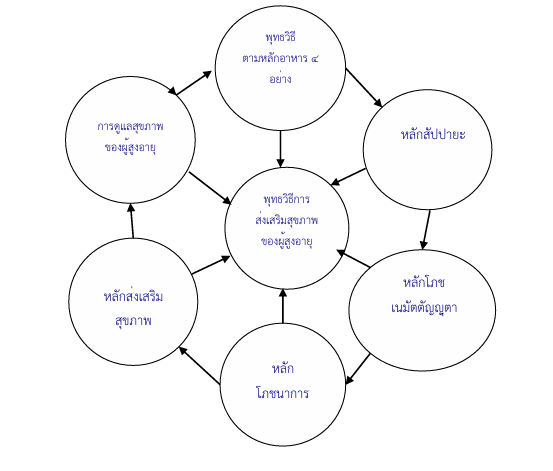
The findings revealed that the elderly participants commonly suffered from periodontal disease, diabetes, and high blood pressure, with the latter two posing significant challenges to their daily lives. The Buddhist approach to promoting health through food consumption among the elderly can be categorized into two key aspects. First, physical health promotion should be grounded in nutritional principles, such as consuming a balanced diet that includes the five food groups, ensuring food cleanliness and safety, and choosing food appropriate to individual health conditions. Additional recommended practices include regular medical check-ups, consistent physical exercise, and adherence to prescribed medication schedules. Second, mental health promotion involves applying the principles of Sappãya (suitable food that does not harm the body) and Bhojanemattaññutã (moderation in eating). These principles emphasize consuming food in moderation—neither excessively nor insufficiently—practicing mindfulness during meals, and avoiding attachment to the sensory pleasures of taste and smell. Such practices contribute to a balanced and contented life.ส่วนบนของฟอร์ม
New knowledge gained indicates that elderly individuals with chronic diseases must practice self-care and attend regular medical check-ups. Health promotion methods include adhering to the principles of nutrition by consuming all five food groups, and following health promotion guidelines by eating clean, safe, and disease-appropriate foods, as well as engaging in regular physical exercise. The Buddhist approach to food consumption for the elderly, according to the Theravāda Buddhist tradition, involves applying the principles of Bhojana-sappāya (wholesome or suitable food) and Bhojane-mattaññutā (moderation in eating).
Article Details

This work is licensed under a Creative Commons Attribution-NonCommercial-NoDerivatives 4.0 International License.
บทความนี้เป็นความคิดเห็นส่วนผู้แต่ง กองบรรณาธิการไม่จำเป็นต้องเห็นด้วยเสมอไป
References
๑. ภาษาไทย
ก. ข้อมูลปฐมภูมิ
มหาจุฬาลงกรณราชวิทยาลัย. พระไตรปิฎกภาษาไทย ฉบับมหาจุฬาลงกรณราชวิทยาลัย. กรุงเทพมหานคร: โรงพิมพ์มหาจุฬาลงกรณราชวิทยาลัย. ๒๕๓๙.
ข. ข้อมูลทุติยภูมิ
(๑) หนังสือ:
สุปราณี แจ้งบำรุง. ปริมาณสารอาหารอ้างอิงที่ควรได้รับประจำวัน สำหรับคนไทย พ.ศ. ๒๕๖๓. (กรุงเทพมหานคร โรงพิมพ์องค์การรับส่งสินค้า และพัสดุภัณฑ์(รสพ), ๒๕๕๖). หน้า ๑๙-๒๐.
สิริมา มงคลสัมฤทธิ์ และคณะ. คู่มือการบริโภคอาหารเพื่อสุขภาพผู้สูงอายุ. (ปทุมธานี:
โรงพิมพ์มหาวิทยาลัยธรรมศาสตร์. ๒๕๖๐). หน้า ๑-๔.
(๒.) บทความ:
ภาณุวัฒก์ ว่องตระกูลเรือง. “ภาวะทุพโภชนาการในผู้สูงอายุ ภัยร้ายที่อาจซ่อนเร้นอยู่”. วารสาร
การแพทย์โรงพยาบาลนครธน. ปีที่ ๒๘ ฉบับที่ ๖ (มิถุนายน ๒๕๖๗): ๑-๓.
สมนึก โตมะสูงเนิน. “ประสิทธิผลของการส่งเสริมการบริโภคอาหารวัยสูงอายุในคลินิกผู้สูงอายุ
โรงพยาบาลสุรินทร์”. วารสารการแพทย์โรงพยาบาลศรีสะเกษ สุรินทร์ บุรีรัมย์. ปีที่ ๒๖ ฉบับที่ ๒ (พฤษภาคม-สิงหาคม ๒๕๕๔): ๘-๙.
