แนวทางการดูแลสุขภาพตนเองของพระสงฆ์เชิงพุทธ BUDDHIST APPROACHES TO MONASTIC SELF-CARE
Article Sidebar
Main Article Content
Abstract
The research on “Buddhist Approaches to Monastic Self-care” has three objectives: 1) to study the health problems of monks in Bang Rakam Subdistrict, Phitsanulok Province, 2) to study the self-care of monks in Bang Rakam Subdistrict, and 3) to propose Buddhist self-care approaches for monks. The study is qualitative research, which employed in-depth interviews. with fifteen key informants in Bang Rakam Subdistrict.
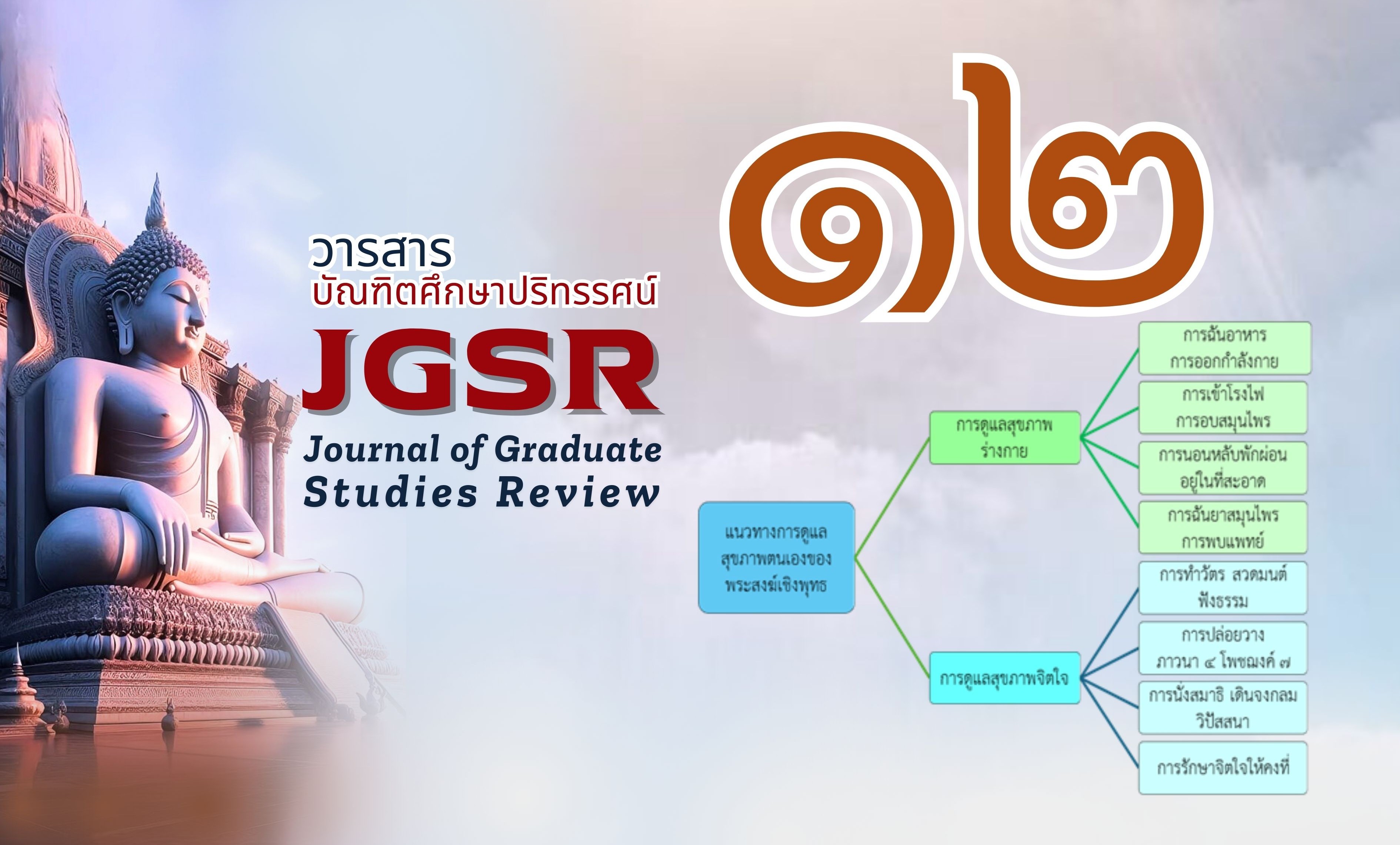
The results of the study revealed the followings: First, the most common health problems among monks in Bang Rakam Subdistrict were diabetes, hypertension, and high cholesterol. The main causes of these health problems were habits, age-related risks, overweight, and the lack of physical activities. Second, the current self-care of monks in Bang Rakam Subdistrict could be categorized into physical health care and mental health care. For the physical health care of monks in Bang Rakam Subdistrict, an interdisciplinary team provided medical cares for the monks by equipping them the knowledge about diseases and associated risk factors. The team designed a care plan through the monks' activities. As for taking care of the mental health of monks in Bang Rakam Subdistrict, monks performed chanting, performing duties, meditation, and walking meditation to exercise mindfulness and maintain stable emotions. Finally, Buddhist self-care guidelines for monks focuses on mental health as a way to take care of physical health. The uses of Bhesaj Five (five medicine), therapeutic steaming, herbal essential oil and herbal tea brewing to reduce fever and internal heat. The monks must maintain good resting habit. Additional practices include performing monastic duties, praying, meditation, and walking meditation. Insight meditation can help one examine their relationship with illness, allowing them to develop body awareness and cultivate mindfulness around consumption while complementing conventional medical treatment
Article Details

This work is licensed under a Creative Commons Attribution-NonCommercial-NoDerivatives 4.0 International License.
บทความนี้เป็นความคิดเห็นส่วนผู้แต่ง กองบรรณาธิการไม่จำเป็นต้องเห็นด้วยเสมอไป
References
ก. ข้อมูลปฐมภูมิ
องฺ.ปญจก (ไทย) ๒๒/๔๗/๙๙-๑๐๐.
ข. ข้อมูลทุติยภูมิ
(๑) หนังสือ:
พระธรรมปิฎก (ป. อ. ปยุตฺโต). การแพทย์ยุคใหม่ในพุทธทัศน์. กรุงเทพมหานคร : บริษัทธรรมสาร จำกัด, ๒๕๒๗.
เพ็ญ สุขมาก. หลักคิด : สุขภาพ สุขภาวะ ปัจจัยกำหนดสุขภาพการสร้างเสริมสุขภาพ. เอกสารประกอบการประชุมเชิงปฏิบัติการ : การประเมินผลงานสร้างเสริมสุขภาพเครือข่ายนักประเมินผลงานสร้างเสริมสุขภาพภาคเหนือ, (ม.ป.ป.).
(๒) วิทยานิพนธ์:
พระมหาไกรวรรณ์ ชินทตฺติโย. “กระบวนการเสริมสร้างสุขภาวะผู้สูงอายุ”. วารสารศิลปการจัดการ.ปีที่ ๓ ฉบับที่ ๓ (๓๐ พฤษภาคม ๒๕๖๗): ๑๙๐.
พระครูวิทิตธรรมวงศ์ (วรรณชัย ติสฺสวฺโส). “รูปแบบการรักษาสุขภาวะองค์รวมของพระสงฆ์ตามแนวพระพุทธศาสนา”. ดุษฎีนิพนพุทธศาสตรดุษฎีบัณฑิต สาขาวิชาพระพุทธศาสนา. บัณฑิตวิทยาลัย: มหาวิทยาลัยมหาจุฬาลงกรณราชวิทยาลัย, ๒๕๖๑.
พระครูไพโรจน์ธรรมคุณ. “กระบวนการพัฒนาสุขภาวะเชิงพุทธบูรณาการของชุมชนในจังหวัดปทุมธานี”, วารสาร มจร การพัฒนาสังคม, ปีที่ ๕ ฉบับที่ ๒ (พฤษภาคม-สิงหาคม ๒๕๖๓): ๓๑.)
พระครูวิทิตธรรมวงศ์ (วรรณชัย ติสฺสวฺโส). “รูปแบบการรักษาสุขภาวะองค์รวมของพระสงฆ์ตามแนวพระพุทธศาสนา”, ดุษฎีนิพนพุทธศาสตรดุษฎีบัณฑิต สาขาวิชาพระพุทธศาสนา, บัณฑิตวิทยาลัย: มหาวิทยาลัยมหาจุฬาลงกรณราชวิทยาลัย, ๒๕๖๑, หน้า ก.
(๓) บทความ:
พระมหาเชาวฤทธิ์ นรินโท (ทรัพย์สวัสดิ์). “การศึกษาแนวทางการพัฒนาคุณภาพชีวิตผู้สูงอายุตามหลักภาวนา ๔ กรณีศึกษา : ผู้สูงอายุบ้านห้วยหอย ตำบลธาตุทอง อำเภอภูเขียว จังหวัดชัยภูมิ”. วารสารบัณฑิตศึกษามหาจุฬาขอนแก่น, ปีที่ ๖ ฉบับที่ ๑ (มกราคม-มีนาคม ๒๕๖๒): หน้า ๕๙.
(๔)การสัมภาษณ์
สัมภาษณ์. แพทย์ประจำตำบลบางระกำ, ๕ พฤษภาคม ๒๕๖๘.
