APPLICATION OF BUDDHIST PRINCIPLES TO ENHANCE THE HUMAN RIGHTS IN THAI SOCIETY
Article Sidebar
Main Article Content
Abstract
This research article entitled “Application of Buddhist Principles to Enhance the Human Rights in Thai Society” have 3 main objectives that are 1) to study the context of human rights problems in Thai society; 2) to study Buddhist principles that facilitate the promotion of human rights in Thai society; 3) to apply Buddhist principles to promote human rights in Thai society. The research was conducted using a field-based qualitative research format. The research tools were in-depth interviews and observations. Key informants were divided into 4 groups: (1) a group of 10 executives from the Department of Rights and Liberties Protection, (2) a group of 6 government agency executives from government enterprises, private sector, (3) a group of 5 experts in Buddhism, (4) a group of 3 participants of various ages, in total of 24 participants who provided relevant information, analyzed by inductive method.
The research results found that:
(1) Thai society has different perceptions of human rights principles which still lack of proper knowledge for understanding and live in a limited circle. The problem in applying human rights principles in Thai society is the justice process in Thai society that is Inequality and discrimination. There is a generational gap in the perception of human rights. And beliefs from consuming online medias which causes distortion, leading to rights violations.
(2) The principles of Buddhism that clearly reflect and facilitate the promotion of human rights in Thai society are the Five Precepts because they are the basic principles that everyone practices as a guideline to reduce the problem of rights violations and make people respect human dignity.
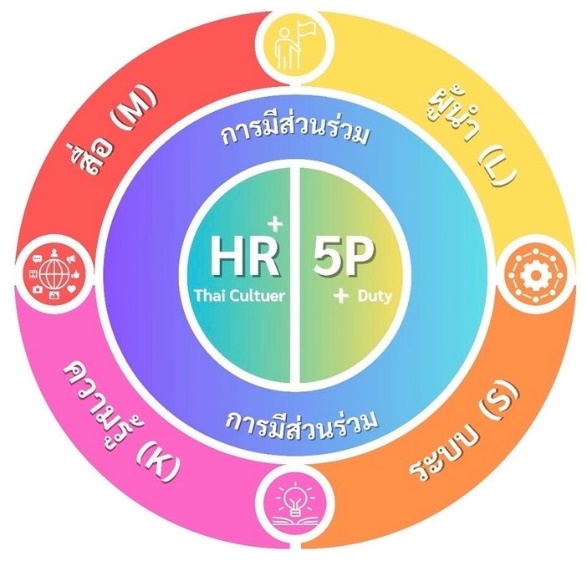
(3) The application of Buddhist principles, namely the 5 precepts, can be applied using the participation of all sectors, with success factors including leaders, systems and mechanisms, knowledge and media. Knowledge obtained from this research article is “HR+ Model for a society of happiness and respect for rights”.
Article Details

This work is licensed under a Creative Commons Attribution-NonCommercial-NoDerivatives 4.0 International License.
บทความนี้เป็นความคิดเห็นส่วนผู้แต่ง กองบรรณาธิการไม่จำเป็นต้องเห็นด้วยเสมอไป
References
ทวีป กรวยทอง, “กระบวนการยุติธรรมตามหลักพุทธศาสนากับแนวคิดสิทธิมนุษยชน”, คณะ
มนุษยศาสตร์และสังคมศาสตร์
มหาวิทยาลัยศรีสะเกษ, ปีที่ ๒ (กรกฎาคม - ธันวาคม ๒๕๖๑): ๘๕-๑๐๑.
ดิเรก ควรสมาคม, “สิทธิมนุษยชน: ศึกษาเปรียบเทียบในทางพระพุทธศาสนา”, วารสารนิติ รัฐ
กิจ และสังคมศาสตร์, ปีที่ ๔ ฉบับที่ ๒ (กรกฎาคม – ธันวาคม ๒๕๖๓): ๑๓๓-๑๖๐.
ณฤณีย์ ศรีสุข และคณะ, “หลักสิทธิมนุษยชนที่ปรากฏในหลักธรรมทางพระพุทธศาสนาเถรวาท”,
วารสารวิทยาลัยสงฆ์นครลำปาง, ปีที่ ๙ ฉบับที่ ๑ (มกราคม – เมษายน ๒๕๖๓):
๑๑๔-๑๒๗.
พระมหาจีรวัฒน์ กนฺตวณฺโณ, “หลักสิทธิมนุษยชนตามหลักธรรมในคัมภีร์พุทธศาสนาเถรวาท”,
วารสาร มจร. การพัฒนาสังคม, ปีที่ ๓ ฉบับที่ ๑ (มกราคม - เมษายน ๒๕๖๑):
๙๘-๑๐๘.
BBC NEWS ไทย, รายงานพบผู้เสียชีวิต ๓ รายในเหตุยิงกลางพารากอน, [ออนไลน์],
แหล่งที่มา: https://www.bbc.com/thai/articles/c๐kxql๐ggwro [๓ ตุลาคม
๒๕๖๖].
ไทยรัฐ ออนไลน์, รายงานครบรอบ ๑ ปี เหตุการณ์กราดยิงโคราช, [ออนไลน์], แหล่งที่มา:
https://www.thairath.co.th/news/politic/๒๐๒๘๒๓๑ [๘ กุมภาพันธ์ ๒๕๖๔].
กรมราชทัณฑ์, รายงานสถิติผู้ต้องราชทัณฑ์ทั่วประเทศ, [ออนไลน์], แหล่งที่มา:
http://www.correct.go.th, [๑ พฤศจิกายน ๒๕๖๕].
