
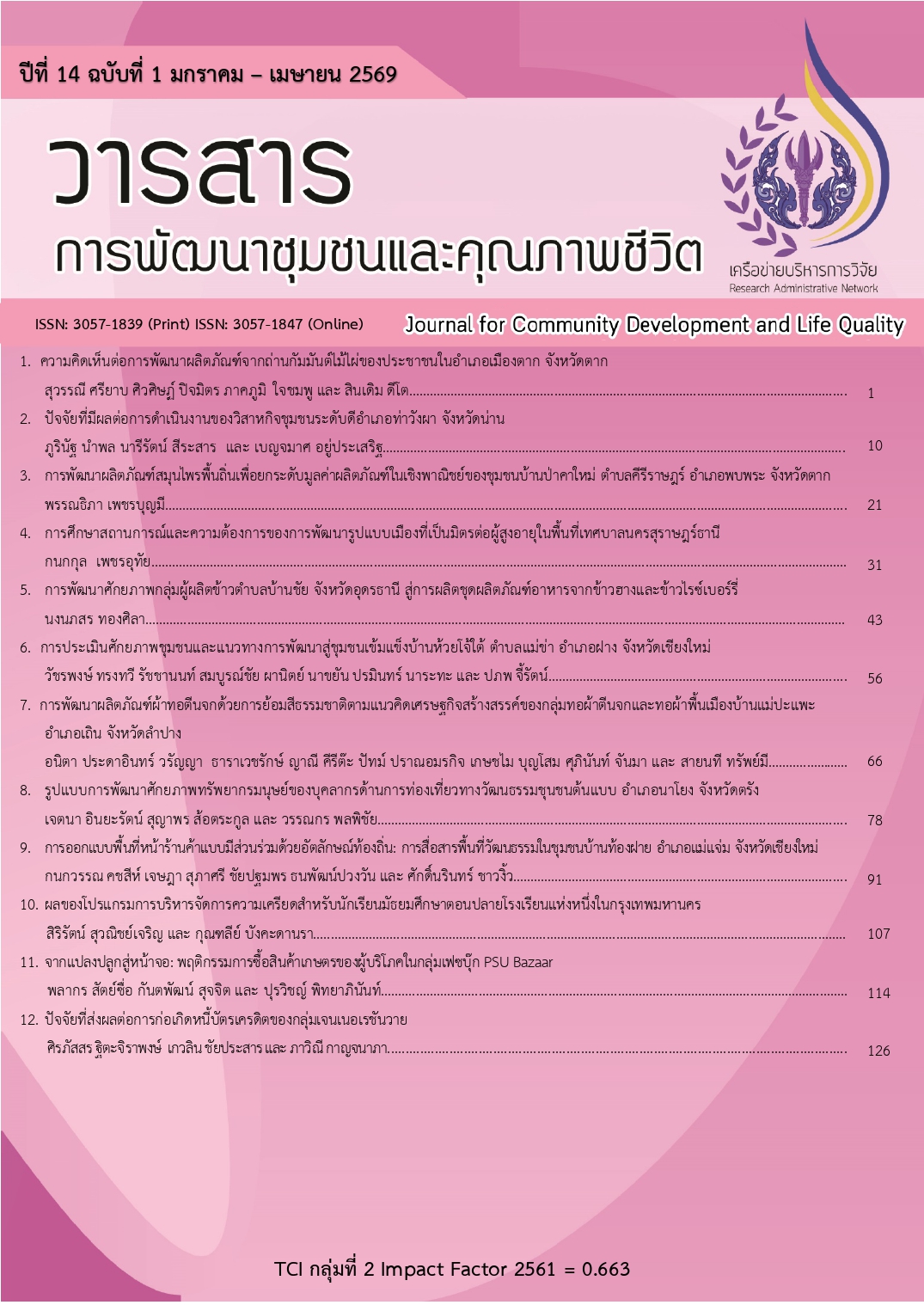
การประเมินศักยภาพชุมชนและแนวทางการพัฒนาสู่ชุมชนเข้มแข็งบ้านห้วยโจ้ใต้ ตำบลแม่ข่า อำเภอฝาง จังหวัดเชียงใหม่
คำสำคัญ:
ศักยภาพชุมชน, ชุมชนเข้มแข็ง, ชุมชนบ้านห้วยโจ้ใต้บทคัดย่อ
การศึกษานี้มีวัตถุประสงค์เพื่อ 1) ประเมินศักยภาพของชุมชน และ 2) ศึกษาแนวทางการพัฒนาสู่ชุมชนเข้มแข็งบ้านห้วยโจ้ใต้ ตำบลแม่ข่า อำเภอฝาง จังหวัดเชียงใหม่ ประชากรในการวิจัยคือตัวแทนครัวเรือน จำนวน 206 คน และกลุ่มตัวอย่างแบบเจาะจง จำนวน 40 คน เก็บรวบรวมข้อมูลโดยใช้แบบสอบถามและสนทนากลุ่ม วิเคราะห์ข้อมูลโดยใช้ ค่าเฉลี่ยและส่วนเบี่ยงเบนมาตรฐาน และการวิเคราะห์เชิงเนื้อหา ผลการวิจัยการประเมินศักยภาพชุมชน 4 ด้าน พบว่า ด้านการบริหารและการจัดการชุมชนอยู่ในระดับมากที่สุด ด้วยค่าเฉลี่ย 4.45 รองลงมาด้านภูมิปัญญาท้องถิ่น อยู่ในระดับดี ด้วยค่าเฉลี่ย 3.98 ด้านความน่าอยู่ระดับดี ด้วยค่าเฉลี่ย 3.96 และด้านการเพิ่มรายได้และการมีงานทำ ระดับดี ด้วยค่าเฉลี่ย 3.51 แนวทางการพัฒนาสู่ชุมชนเข้มแข็ง ควรส่งเสริมการนำขยะปฏิกูลทำปุ๋ยอินทรีย์เพื่อใช้ในการเกษตร และส่งเสริมการทำเกษตรอินทรีย์เพื่อสร้างมูลค่าเพิ่ม การยกระดับผลิตภัณฑ์ทั้งด้านคุณภาพและการตลาดเพื่อเสริมเศรษฐกิจฐานรากของชุมชน การนำเทคโนโลยีเข้าสู่ระบบออนไลน์หรือผ่านเทคโนโลยีสมัยใหม่ที่ประชาชนเข้าถึงง่าย เร่งพัฒนาการถ่ายทอดความรู้ด้านภูมิปัญญาท้องถิ่นจากผู้สูงอายุไปยังกลุ่มคนรุ่นผ่านศูนย์การเรียนรู้ภายในชุมชน
เอกสารอ้างอิง
Butterfoss, F. D. 2007. Coalitions and Partnerships in Community Health. Jossey-Bass, San Francisco. 608 p.
Hanchana, C. 2020. Applied conduct on philosophy of sufficient economy for families of Muang Nongbua Lamphu district in Nongbua Lamphu province. Academic MCU Buriram Journal 5(1): 74-83. (in Thai)
Office of the National Economics and Social Development Council (NESDC). 2022. The Thirteenth National Economic and Social Development Plan (2023-2027). NESDC, Bangkok. 129 p.
Phanthali, P. 2020. Social changes in the 21st century. Buddhism in Mekong Region Journal 3(2): 44-55. (in Thai)
Phetlomthong, K., S. Eamsakul and T. Rojanatrakul. 2021. Self-reliant sustainable community building process. Journal of Roi Kaensarn Academi 6(12): 354-368. (in Thai)
Pornsuttichaipong, A., A. Srichad and S. Phutchu. 2022. Strengthening economic foundations to enhance the economy, society and to secure income. Journal of Arts Management 6(2): 932-948. (in Thai)
Siriwan, P. 2008. Statistics for Research. Text and Journal Publication, Bangkok. (in Thai)
Suridechakul, W. 2021. Sustainable development of quality of life of agriculture farmers by organic agriculture: A case study of organic agriculture community, Khlongyong subdistrict, Phutthamonthon district, Nakhonpathom province. Academic Journal for the Humanities and Social Sciences Dhonburi Rajabhat University 4(3): 7-21. (in Thai)
Thanavaro T. and P.K. Siripunnyapiwat. 2024. Participation of people in community and social development. Journal of Modern Buddhist Studies (3)1: 66-77. (in Thai)
Thongyindee P. 2025. Philosophy and principles of community development. Journal of Political Science and Public Administration, Kasetsart University (3)1: 227-252. (in Thai)
Wongcha-um, S. 2011. National Development Planning. Petchrung Print Center, Nonthaburi. 115 p. (in Thai)
Yamaqupta, N. and K. Kaewninprasert. 2021. Sense of belonging and organizational citizenship behavior of Trang province residents. Journal of Accountancy and Management 13(3): 55-69. (in Thai)
Yeemareb, M., P. Maramat, P. Onchan, D. Khaenamkhaew and C. Muhamad. 2023. Improving the quality of life with a self-sufficiency economy in urban home communities Moo 12, La Ngu subdistrict, La Ngu district, Satun province. Journal of Spatial Development and Policy 1(4): 47-58. (in Thai)
ดาวน์โหลด
เผยแพร่แล้ว
รูปแบบการอ้างอิง
ฉบับ
ประเภทบทความ
สัญญาอนุญาต
ลิขสิทธิ์ (c) 2025 วารสารการพัฒนาชุมชนและคุณภาพชีวิต

อนุญาตภายใต้เงื่อนไข Creative Commons Attribution-NonCommercial-NoDerivatives 4.0 International License.
กองบรรณาธิการขอสงวนสิทธิ์ในการตรวจและแก้ไขบทความที่เสนอเพื่อตีพิมพ์ในวารสารการพัฒนาชุมชนและคุณภาพชีวิต
บทความหรือข้อความคิดเห็นใด ๆ ที่ปรากฏในวารสารการพัฒนาชุมชนและคุณภาพชีวิต เป็นวรรณกรรมของผู้เขียนโดยเฉพาะคณะผู้จัดทำไม่จำเป็นต้องเห็นด้วย และไม่ใช่ความรับผิดชอบของมหาวิทยาลัยและคณะผู้จัดทำ / บรรณาธิการ


