
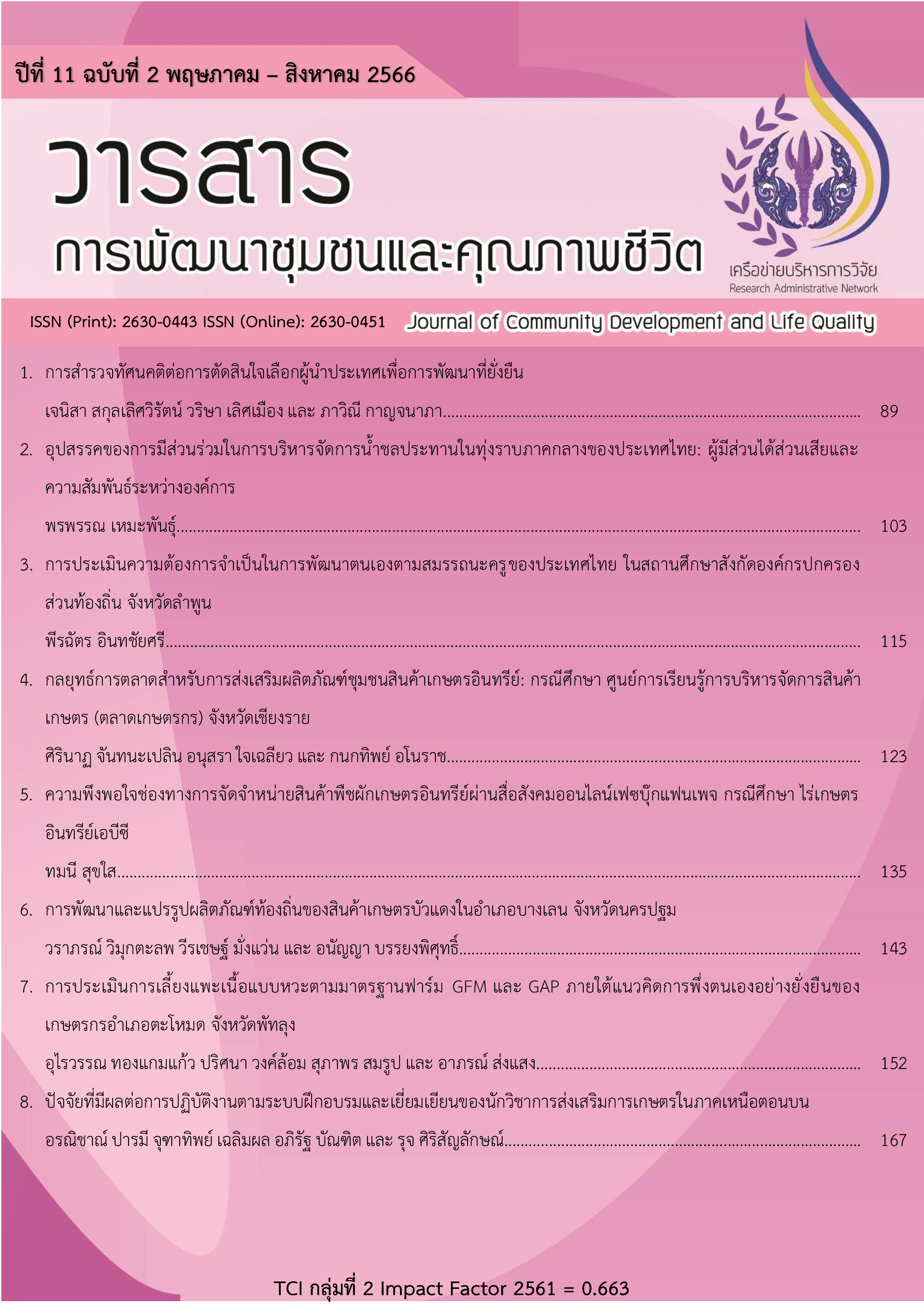
การสำรวจทัศนคติต่อการตัดสินใจเลือกผู้นำประเทศเพื่อการพัฒนาที่ยั่งยืน
คำสำคัญ:
ผู้นำ, ทัศนคติต่อการตัดสินใจ , การเลือกผู้นำบทคัดย่อ
การวิจัยนี้มีวัตถุประสงค์เพื่อศึกษาทัศนคติต่อการตัดสินใจเลือกผู้นำประเทศโดยการสุ่มตัวอย่างแบบบังเอิญ (Accidental sampling) เครื่องมือที่ใช้คือแบบสอบถามออนไลน์ ขนาดกลุ่มตัวอย่างจำนวน 402 คน ผลการศึกษาพบกลุ่มตัวอย่างแสดงความเห็นด้วยในระดับมากที่สุดด้านการคิดวิเคราะห์ของผู้นำ ด้านคุณสมบัติและพฤติกรรมของผู้นำ ด้านการวางแผนกลยุทธ์ของผู้นำ และด้านประชากรศาสตร์และบุคลิกภาพของผู้นำตามลำดับ โดยแสดงระดับความเห็นด้วยในระดับมากที่สุด (1) ด้านการคิดวิเคราะห์ของผู้นำว่าต้องเป็นผู้ฟังที่ดี ใฝ่รู้ มีวิสัยทัศน์ คุณธรรม วินัย (2) ด้านคุณสมบัติและพฤติกรรมของผู้นำว่า ควรมีความรับผิดชอบ สามารถใช้วิจารณญาณในการตัดสินใจ เป็นผู้ฟังที่ดี ไม่ใช้อำนาจในทางที่ผิด (3) ด้านการวางแผนกลยุทธ์ของผู้นำว่าควรมีความพร้อมในการเรียนรู้ การตัดสินใจอย่างเหมาะสม มีทักษะการคาดการณ์และการบริหารจัดการทีมงาน (4) ด้านประชากรศาสตร์และบุคลิกภาพของผู้นำ ระดับการศึกษามีผลต่อความสามารถในการบริหาร กลุ่มตัวอย่างแสดงระดับความเห็นด้วยในระดับปานกลางว่า อายุของผู้นำที่มากกว่าจะทำหน้าที่เป็นผู้นำได้ดีกว่า และแสดงระดับความเห็นด้วยในระดับน้อยต่อเพศชายเป็นผู้นำได้ดีกว่าเพศหญิง ผลการศึกษาวิจัยคาดหวังว่าจะให้แนวทางการพัฒนาผู้นำที่มีประสิทธิภาพเพื่อให้เกิดการพัฒนาที่ยั่งยืนในสังคมสืบไป
เอกสารอ้างอิง
Alawode, A. O. 2022. Leadership development: Effective tool for urban Christian missions in the 21st century in Nigeria. HTS: Theological Studies 78(4): a6937, doi:10.4102/hts.v78i4.6937.
Arslan, H. M., Y. Chengang, B. Komal and S. Chen. 2023. Nexus between environmental disclosures and top management team characteristics: a systematic review. Environmental Science and Pollution Research 30:9763–9781, doi.org/10.1007/s11356-022-22615-7.
Bunnag, M. 2012. Statistics for Research and Decision Making. Chulalongkorn University Press, Bangkok. 585 p. (in Thai)
Cochran, W.G. 1953. Sampling Techniques. John Wiley & Sons, New York. 330 p.
Decuypere, A. and A. P. Verdorfer. 2022. Leader attentive communication: A new communication concept, validation and scale development. Journal of Leadership and Organizational Studies 29(4): 424-442.
Denise, S. 2020. Competent or considerate? The persistence of gender bias in evaluation of leaders. Nordic Journal of Working Life Studies 10(1): 59-79.
Famakinwa, M., B. O. Adisa and D. L. Alabi. 2019. Factors influencing role performance of community leaders in rural development activities in Southwestern Nigeria. Acta Universitatis Agriculturae et Silviculturae Mendelianae Brunensis 67(2): 473-483.
Ibiapina, I., M. H. Cunha, M. B. M. Paiva and C. B. Romero. 2020. Consumer myopia: A cross-cultural study about the attitude and sustainable behavior of the university students. Brazilian Journal of Management 13(5): 959-976.
Hair, J., M. Page and N. Brunsveld. 2019. Essentials of Business Research Methods. Routledge, New York. 520 p.
Kalyanamitra, P. 2015. The sustainable development of Nordic countries group. Governance Journal 4(2): 17-37. (in Thai)
Kafetzopoulos, D. and K. Gotzamani. 2022. The effect of talent management and leadership styles on firms’ sustainable performance. European Business Review 34(6): 837-857.
Khokhar, A. M., Z. Nas and M. Zia-ur-Rehman. 2020. Role of ethical leaders in creating ethical climate in public sector. Abasyn Journal of Social Sciences 13(2): 472-484.
Kulich, C., M. K. Ryan and S. A. Haslam. 2007. Where is the romance for women leaders? The effects of gender on leadership attributions and performance-based pay. Applied Psychology: An International Review 56(4): 582-601.
Laustsen, L. 2017. Choosing the right candidate: Observational and experimental evidence that conservatives and liberals prefer powerful and warm candidate personalities, respectively. Political Behavior 39(4) 883-908.
Lewis, B. J. 1999. Do you have these four critical leadership characteristics. Journal of Management in Engineering 15(3): 10.
Manmee, T. and K. Kunungkaro. 2021. Thailand Democratic: Problems and Solutions (Reverse Float the Coup to Power to Administration the Country). Journal of Legal Entity Management and Local Innovation 7(11): 411-424. (in Thai)
Martinez-Leon, I. M., I. Olmedo-Cifuentes, M. C. Martinez-Victoria and N. Arcas-Lario. 2020. Leadership style and gender: A study of Spanish cooperatives. Sustainability 12(12): 5107, doi:10.3390/su12125107.
Moura, G. M. S. S., A. M. M. Magalhaes, C. M. Dall’agnol, B. C. Juchem and D. S. Marona. 2010. Leadership in nursing: Analysis of the process of choosing the heads. Revista Latino-Americana de Enfermagem 18(6): 1099-1106.
Muna, A. N. 2022. Examining the importance of leadership skills in todays life. International Journal of Social Service and Research 2(10): 977-982.
Pantouvakis, A. and I. Vlachos. 2020. Talent and leadership effects on sustainable performance in the maritime industry. Transportation Research Part D: Transport and Environment 86: 102440, doi:10.1016/j.trd.2020.102440.
Phayoonpun, T., N. Kosiyaporn and S. Suttiyapiwat. 2021. Product development, marketing channel development and community enterprise management of container from betel husk producer group: A case study of Chaw Phron’s lifestyle women power group. Journal of Community Development and Life Quality 9(3): 452-464.
Piwowar-Sulej, K. and Q. Iqbal. 2023. Leadership styles and sustainable performance: A systematic literature review. Journal of Cleaner Production 382: 134600, doi.org/10.1016/j.jclepro.2022.134600.
Teerasantikul, P., K. Rithmun, Y. Kim, N. Chaiyai, A. Arrahimee and K. Janyam. 2022. Training of people with disabilities: New presentation through innovation leadership. Journal of Community Development and Life Quality 10(1): 106-116.
Tinga, I. W. K., N. A. B. Azizanb and Q. L. Kweh. 2015. Upper echelon theory revisited: The relationship between CEO personal characteristics and financial leverage decision. Procedia-Social and Behavioral Sciences 195, 686-694.
Toleikiene, R., D. Saparniene, W. Sroka and V. Jukneviciene. 2022. The role of the leader in the integral system of ethics management in municipalities. Transylvanian Review of Administrative Sciences 65E: 129-148.
Yamim, S., C. Phuakkhong and P. Nilaake. 2019. People's attitude in local elections Case study of Khun Thale subdistrict, Mueang district, Surat Thani province. Journal of MCU Haripunchai Review 3(3): 10-19. (in Thai)
Yousfi, H. M. M., B. H. Din and R. B. Omar. 2021. The role of strategic leaders, in building smart sustainable cities in the United Arab Emirates. International Journal of Entrepreneurship 25(Special issue 1): 1-14.
ดาวน์โหลด
เผยแพร่แล้ว
รูปแบบการอ้างอิง
ฉบับ
ประเภทบทความ
สัญญาอนุญาต
ลิขสิทธิ์ (c) 2023 วารสารการพัฒนาชุมชนและคุณภาพชีวิต

อนุญาตภายใต้เงื่อนไข Creative Commons Attribution-NonCommercial-NoDerivatives 4.0 International License.
กองบรรณาธิการขอสงวนสิทธิ์ในการตรวจและแก้ไขบทความที่เสนอเพื่อตีพิมพ์ในวารสารการพัฒนาชุมชนและคุณภาพชีวิต
บทความหรือข้อความคิดเห็นใด ๆ ที่ปรากฏในวารสารการพัฒนาชุมชนและคุณภาพชีวิต เป็นวรรณกรรมของผู้เขียนโดยเฉพาะคณะผู้จัดทำไม่จำเป็นต้องเห็นด้วย และไม่ใช่ความรับผิดชอบของมหาวิทยาลัยและคณะผู้จัดทำ / บรรณาธิการ


