
Farmer’s Problem and Solution Model in Thailand
Article Sidebar
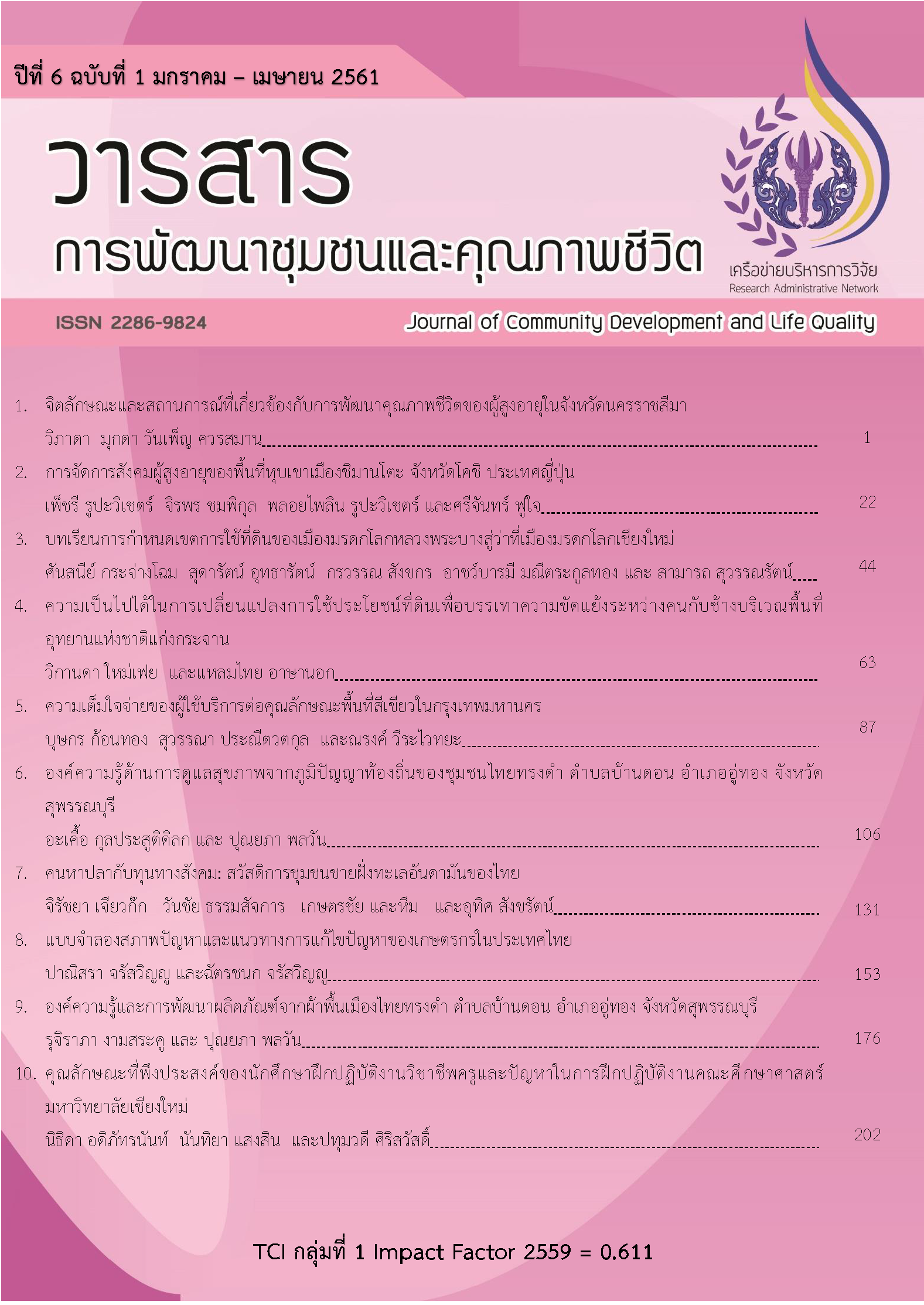
Main Article Content
Abstract
This research aims to develop farmer problems and solutions model using qualitative research methods. The primary data was collected from 13 local intellectuals from the North, the Northeast and the Central and Eastern regions through in-depth structured interview. The grounded theory was used to analyze qualitative data. The results showed that the farmer problems and solutions models are best explained by an integration of resource based view and core values theory. The models showed core values (lack of pursuit of knowledge, greed and overspending, and less willingness to work hard) are the key driving factors causing problems, and leading to process problems (high input, chemically based monoculture systems). Inappropriate governmental policies and poor physical capitals are identified as resources problems. The resulting economic outcome of farmer debt is due to high production cost and low product price. Therefore, the solutions to farmer problems must be deployed in systematic operations by paying attention to all interconnected factors.
Article Details
The Editorial Board claims a right to review and correct all articles submitted for publishing
References
นิตยา สามปาละ. 2554. การประเมินผลกระทบสุขภาพเบื้องต้นจากการใช้สารเคมีกำจัดศัตรูพืชของเกษตรกรสวนลำไยและผู้มีส่วนเกี่ยวข้องตำบลชมภู อำเภอสารภี จังหวัดเชียงใหม่. วารสารบัณฑิตวิจัย 1(2): 5-12.
บังอร ศิริสัญลักษณ์. 2558. รูปแบบการทำการเกษตรกับการเปลี่ยนแปลงทางวัฒนธรรม. วารสารการพัฒนาชุมชนและคุณภาพชีวิต 3(3): 319-330.
พงษ์ศักดิ์ อ้นมอย และพีรญา อึ้งอุดรภักดี. 2559. การประเมินผลกระทบทางสุขภาพและพฤติกรรมการป้องกันตนเองจากการใช้สารเคมีกำจัดศัตรูพืชในเกษตรกรผู้ปลูกหอมแดง ตำบลชัยจุมพล อำเภอลับแล จังหวัดอุตรดิตถ์. วารสารการพัฒนาชุมชนและคุณภาพชีวิต 4(3): 417-428.
มูลนิธิสถาบันวิจัยเพื่อการพัฒนาประเทศไทย. 2558. โครงการศึกษาภาวะหนี้สินเกษตรกรและแนวทางการปรับปรุงศักยภาพการดำเนินงานกองทุนในกำกับดูแลของกระทรวงเกษตรและสหกรณ์. (ระบบออนไลน์). แหล่งข้อมูล: https://www.tdri.or.th/wp-content/uploads/2016/06/หนี้สินเกษตรกร.pdf (19 กรกฎาคม 2559).
สมนึก ปัญญาสิงห์ เศกสรรค์ ยงวณิชย์ และพุทธรักษ์ ปราบนอก. 2557. ตัวแบบการจัดการการพัฒนาความอยู่ดีมีสุขของครอบครัวเกษตรกรที่ใช้ปรัชญาของเศรษฐกิจพอเพียงในพื้นที่ภาคตะวันออกเฉียงเหนือ. วารสารการพัฒนาชุมชนและคุณภาพชีวิต 2(1): 11-22.
สำนักวิชาการ สำนักงานเลขาธิการสภาผู้แทนราษฎร. 2559. ประเทศไทย 4.0. (ระบบออนไลน์). แหล่งข้อมูล: https://library2.parliament.go.th/ejournal/content_af/2559/jul2559-5.pdf (25 กรกฎาคม 2559).
Amit, R. and P. J. Schoemaker. 1993. Strategic assets and organizational rent. Strategic Management Journal 14(1): 33-46.
Barney, J. B. 1986. Strategic factor markets: Expectations, luck, and business strategy. Management Science 32(10): 1231-1241.
Barney, J. 1991. Firm resources and sustained competitive advantage. Journal of Management 17(1): 99-120.
Barney, J. B. 2001. Resource-based theories of competitive advantage: A ten-year retrospective on the resource-based view. Journal of Management 27(6): 643-650.
Evans, B. 2005. Best way to improve your performance: improve how you impart core values. Handbook of Business Strategy 6(1): 315-319.
Henderson, R. and I. Cockburn. 1994. Measuring competence? Exploring firm effects in pharmaceutical research. Strategic Management Journal 15(S1): 63-84.
Miles, M. B., A. M. Huberman and J. Saldaña. 2013. Qualitative Data Analysis: A Methods Sourcebook. SAGE, London. 381 p.
Miller, D. and J. Shamsie. 1996. The resource-based view of the firm in two environments: The Hollywood film studios from 1936 to 1965. Academy of Management Journal 39(3): 519-543.
Schroeder, R. G., K. A. Bates and M. A. Junttila. 2002. A resource‐based view of manufacturing strategy and the relationship to manufacturing performance. Strategic Management Journal 23(2): 105-117.
Talwar, B. 2009. Comparative study of core values of excellence models vis-à-vis human values. Measuring Business Excellence 13(4): 34-46.
Wernerfelt, B. 1984. A resource‐based view of the firm. Strategic Management Journal 5(2): 171-180.
