
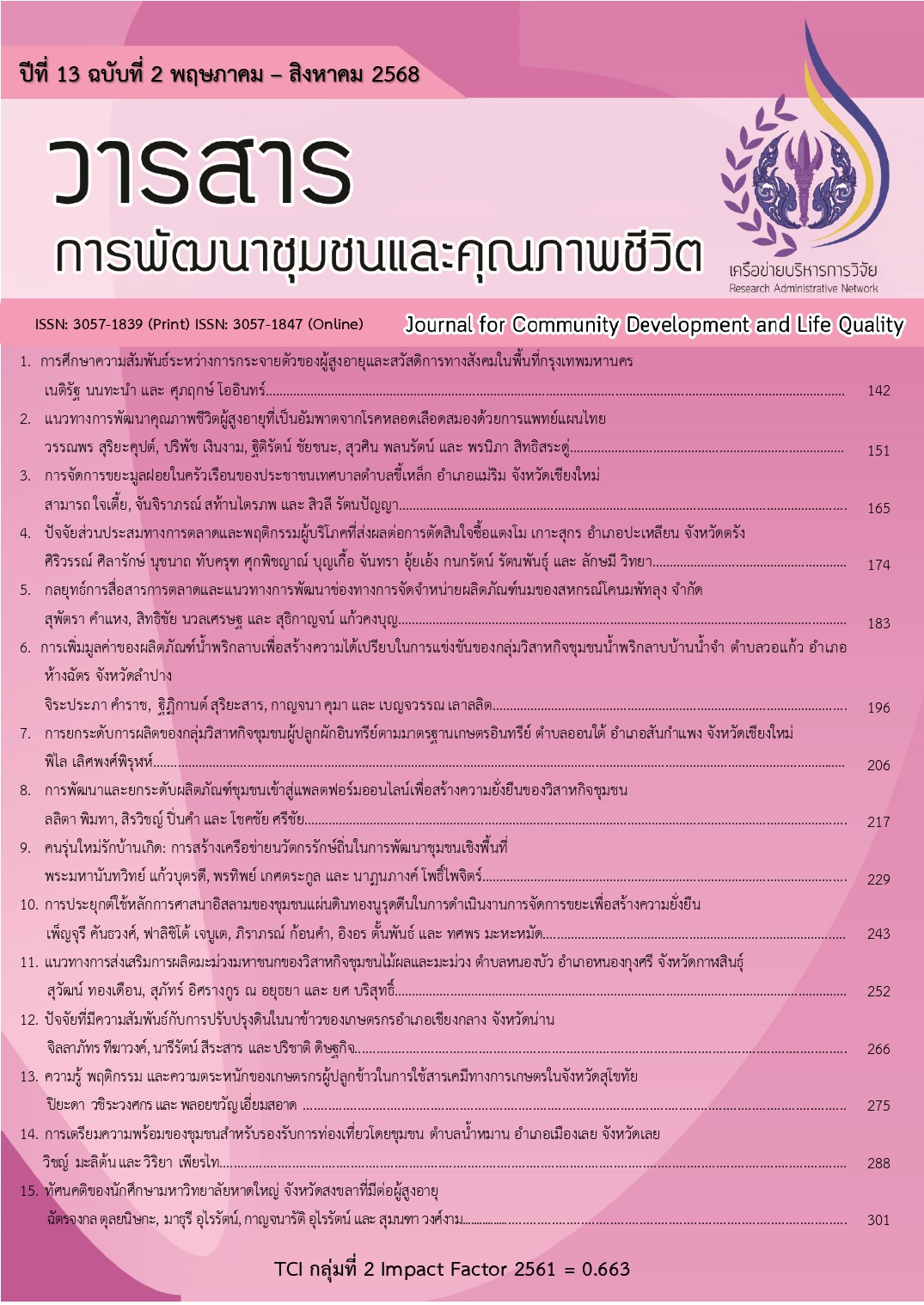
การประยุกต์ใช้หลักการศาสนาอิสลามของชุมชนแผ่นดินทองนูรุดดีน ในการดำเนินงานการจัดการขยะเพื่อสร้างความยั่งยืน
คำสำคัญ:
การจัดการขยะ, หลักการศาสนาอิสลาม, ความยั่งยืนบทคัดย่อ
การวิจัยนี้มีวัตถุประสงค์เพื่อศึกษาการประยุกต์ใช้หลักการศาสนาอิสลามในการจัดการขยะของชุมชนแผ่นดินทองนูรุดดีน โดยมุ่งเน้นการสร้างความยั่งยืนทางสิ่งแวดล้อมและการลดปริมาณขยะที่ส่งผลกระทบต่อชุมชน การวิจัยนี้เป็นการวิจัยเชิงปฎิบัติการ ใช้วิธีการสัมภาษณ์เชิงลึก การสนทนากลุ่ม และการสังเกตการณ์เพื่อเก็บข้อมูลเกี่ยวกับการจัดการขยะในชุมชน ผลการวิจัยพบว่าชุมชนสามารถนำหลักการศาสนาอิสลาม เช่น Khalifah (การเป็นผู้ดูแลโลก) และ Ihsan (การทำความดี) มาประยุกต์ใช้ในการแยกขยะ การลดการใช้ทรัพยากรอย่างสิ้นเปลือง และการนำขยะกลับมาใช้ใหม่ ทำให้ปริมาณขยะในชุมชนลดลงและการรีไซเคิลขยะเพิ่มขึ้นประมาณ 20% นอกจากนี้ การมีส่วนร่วมของสมาชิกในชุมชนในการจัดการขยะและ การประยุกต์ใช้หลักการศาสนาอิสลามในการจัดการขยะในชุมชนแผ่นดินทองนูรุดดีนเป็นกลไกที่มีประสิทธิภาพในการส่งเสริมความยั่งยืนด้านสิ่งแวดล้อมของชุมชน สมาชิกในชุมชนสามารถนำหลักการทางศาสนามาประยุกต์ใช้ในการปฏิบัติงานจริง และสามารถส่งเสริมการมีส่วนร่วมและการอนุรักษ์สิ่งแวดล้อมได้อย่างยั่งยืน
เอกสารอ้างอิง
Achmad, F. S. 2022. Waste management an Islamic perspective. Journal of Advanced Research in Social Sciences and Humanities 7(4): 164-174.
Foltz, R.C. 2003. Does nature have historical agency? World history, environmental history, and how historians can help save the planet. The History Teacher 37(1): 9-28
Ismail, A. 2016. Islamic approach on public awareness campaign of solid waste management. Journal of Contemporary Islamic Studies 2(2): 55-74.
Kula, E. 2001. Islam and environmental conservation. Environmental Conservation 28(1): 1-9.
Nusran, M., H. Hasibuddin, A. Darmawangsa, A. Ardi, A. Henny, Y. Herdianzah and N. I. Safutra. 2023. Halal aware community model based on Masjid: Analysis of level of care, awareness, and satisfaction of Muslim tourists in Makassar. Journal of Industrial Engineering Management 8(1): 79-85.
Pollution Control Department. 2021 Thailand state of pollution report 2019. (Online). Available: https://www.pcd.go.th/publication/10650/(April 4, 2024) (in Thai)
Saniotis, A. 2012. Muslims and ecology: Fostering Islamic environmental ethics. Contemporary Islam 6(2): 155-171.
Sirisawat, K.M and S. Suwan. 2024. Developing community learning resources in the modern world. Journal of community development and life Quality 12(3): 201-211. (in Thai)
Tucker, M. E., and J. A. Grim. 2001. Introduction: the emerging alliance of world religions and ecology. Daedalus 130(4): 1-22.
Yahprung, M.I. 2022. The constitutional process in the conflict resolution between state and minority: A study of the role of religious leaders in the democratic process in the southern border provinces of Thailand. Journal of Humanities and Social Sciences Prince of Songkla University 18(1): 10-47. (in Thai)
ดาวน์โหลด
เผยแพร่แล้ว
รูปแบบการอ้างอิง
ฉบับ
ประเภทบทความ
สัญญาอนุญาต
ลิขสิทธิ์ (c) 2025 วารสารการพัฒนาชุมชนและคุณภาพชีวิต

อนุญาตภายใต้เงื่อนไข Creative Commons Attribution-NonCommercial-NoDerivatives 4.0 International License.
กองบรรณาธิการขอสงวนสิทธิ์ในการตรวจและแก้ไขบทความที่เสนอเพื่อตีพิมพ์ในวารสารการพัฒนาชุมชนและคุณภาพชีวิต
บทความหรือข้อความคิดเห็นใด ๆ ที่ปรากฏในวารสารการพัฒนาชุมชนและคุณภาพชีวิต เป็นวรรณกรรมของผู้เขียนโดยเฉพาะคณะผู้จัดทำไม่จำเป็นต้องเห็นด้วย และไม่ใช่ความรับผิดชอบของมหาวิทยาลัยและคณะผู้จัดทำ / บรรณาธิการ


