The Influence of Key Audit Matters on Audit Risk: The Moderating Role of Sustainable Growth and Financial Performance in Thai Listed Companies
Keywords:
Key Audit Matters, Audit Risk, Sustainable Growth Rate, Financial PerformanceAbstract
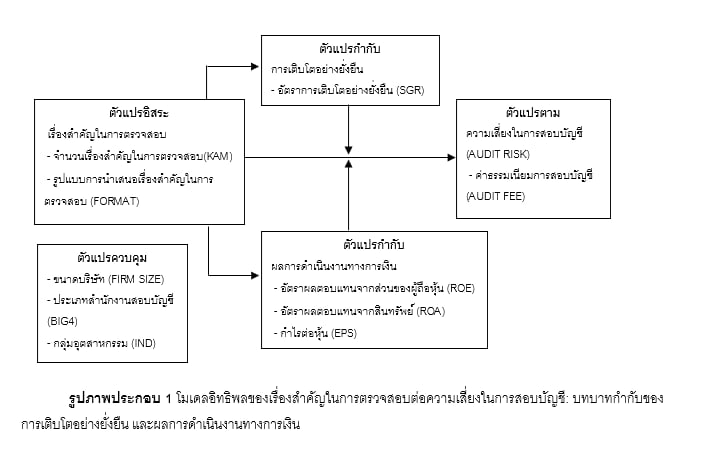
The purpose of this study was to study the influence of the number of key audit matters to review and the presentation format of key audit matters to audit risk of firms listed on the Stock Exchange of Thailand (SET), as well as to study the relationship between sustainable growth and financial performance. Furthermore, it tests the governance role of sustainable growth, return on equity, return on assets, and earnings per share. The secondary data were collected from financial statements and annual information disclosure reports of companies registered on the Stock Exchange of Thailand between 2022 and 2024, totaling 723 samples. The data were analyzed using descriptive statistics, Pearson correlation analysis, and multiple regression analysis.
The findings reveal that both the number and the presentation format of key audit matters were significantly positively correlated with audit risk. Furthermore, the presentation format of key audit matters was negatively and significantly correlated with the sustainable growth rate. Regarding financial performance, the number of key audit matters was negatively and significantly correlated with earnings per share, and return on equity had a significantly positive moderating effect on the relationship between the presentation format of key audit matters and audit risk, while the sustainable growth, return on assets, and earnings per share did not show a moderator role. The study results indicated that the number of key audit matters and their presentation format are crucial for explaining and understanding the level of audit risk, and provide useful information for auditors, management, and investors in assessing risk and making effective investment decisions.
Downloads
References
กัณฐีรัตน์ บุญยืน, จอมใจ แซมเพชร และกุลสิรี โค้วสุวรรณ์. (2564). คุณค่าด้านการสื่อสารเรื่องสำคัญในการตรวจสอบของบริษัทจดทะเบียนในตลาดทางเลือกในการระดมทุนในตลาดหลักทรัพย์. วารสารมนุษยศาสตร์และสังคมศาสตร์ มหาวิทยาลัยนครพนม, 11(1), 218–233.
กฤตยกมล ธานิสพงศ์, พัชราวดี กุลบุญญา และอรพิน บุญพงศ์. (2567). ความสัมพันธ์ระหว่างเรื่องสำคัญจากการสอบบัญชีกับค่าธรรมเนียมการสอบบัญชีของบริษัทจดทะเบียนในตลาดหลักทรัพย์แห่งประเทศไทย กลุ่มเกษตรและอุตสาหกรรมอาหาร. วารสารการจัดการและการพัฒนา มหาวิทยาลัยราชภัฏอุบลราชธานี, 11(2), 85–100.
จิรัชญา ศีลสัตยาวงศ์. (2566). เรื่องสำคัญในการตรวจสอบของการบริหารสินทรัพย์ต่อผลการดำเนินงานของบริษัทจดทะเบียนในตลาดหลักทรัพย์แห่งประเทศไทย (SET 100). วารสารดุษฎีบัณฑิตทางสังคมศาสตร์, 13(3), 788–803.
จิรารัช พิพัฒน์นราพงศ์ และศิริพรรณ เขื่อนข่ายแก้ว. (2567). การใช้อัตราส่วนทางการเงินเพื่อพยากรณ์บริษัทที่ถูกสั่งแก้ไขงบการเงิน: สัญญาณเตือนการทุจริตในงบการเงิน. วารสารวิชาการ มหาวิทยาลัยหอการค้าไทย มนุษยศาสตร์และสังคมศาสตร์, 44(3), 92–120.
ชนัญชิดา สองศรี และศิริลักษณ์ บางโชคดี. (2567). ความสัมพันธ์ระหว่างคุณลักษณะคณะกรรมการบริษัทและระดับของการเปิดเผยข้อมูลตามเป้าหมายการพัฒนาที่ยั่งยืนที่เกี่ยวข้องกับอุตสาหกรรมของบริษัทที่จดทะเบียนในตลาดหลักทรัพย์แห่งประเทศไทย. วารสารวิชาชีพบัญชี, 20(68), 5–38.
ณัฐระดา รัตนสิงห์, พิธาน แสนภักดี และปฐมพงค์ กุกแก้ว. (2567). ปัจจัยเชิงสาเหตุที่มีอิทธิพลต่อคุณภาพการตรวจสอบบัญชีของผู้สอบบัญชีรับอนุญาตแห่งประเทศไทย. วารสารศิลปการจัดการ, 8(4), 128–140.
นันทวัจน์ ปัญญายศธนากรณ์ และทาริกา แย้มขะมัง. (2565). การเปิดเผยเรื่องสำคัญในการตรวจสอบกับอัตราผลตอบแทนสะสมผิดปกติของหุ้น: กรณีศึกษา บริษัทที่จดทะเบียนในตลาดหลักทรัพย์แห่งประเทศไทย กลุ่มดัชนีหลักทรัพย์ (SETHD). วารสารศิลปศาสตร์และอุตสาหกรรมบริการ, 5(1), 154–167.
พัชรีพร ทองแจ้ง และษิรินุช นิ่มตระกูล. (2565). ความสัมพันธ์ระหว่างโครงสร้างความเป็นเจ้าของและโครงสร้างเงินทุนกับการเติบโตของบริษัทจดทะเบียนในตลาดหลักทรัพย์แห่งประเทศไทย. วารสารวิชาชีพบัญชี, 18(60), 61–80.
พิชชาพร เทศฤทธิ์, ถิรวุฒิ ยังสุข, และดารณี เอื้อชนะจิต. (2567). ประสิทธิภาพการดำเนินงานที่ส่งผลต่อการประเมินมูลค่าหุ้นและมูลค่าหลักทรัพย์ ของบริษัทจดทะเบียนในตลาดหลักทรัพย์แห่งประเทศไทย กลุ่มหุ้นยั่งยืน THSI. วารสารวิทยาการจัดการ มหาวิทยาลัยราชภัฏสกลนคร, 5(1), 172–185.
พรพิมล อิฐรัตน์, ญาณินท์ ตั้งภิญโญพุฒิคุณ และธีรพรรณ อึ๊งภาภรณ์. (2566). ปัจจัยที่ส่งผลต่อการเปิดเผยเรื่องสำคัญในการตรวจสอบบัญชี. วารสารสังคมศาสตร์และวัฒนธรรม, 7(2), 35–48.
มาริษา นุ้ยเลิศ, นภัสสร เมฆเรือง, นวภัทร แก้วกำเนิด, ศุภากร วิฑูรชวลิตวงษ์, สุภัสสรา จีนแก้ว, ทิพากร จันทรโชติ และธนาวุธ แสงกาศนีย์. (2567). ผลกระทบของการกำกับดูแลกิจการต่อการเติบโตอย่างยั่งยืนของกิจการ: กรณีศึกษาหุ้นยั่งยืน (Thailand Sustainability Investment: THSI) ในตลาดหลักทรัพย์แห่งประเทศไทยและตลาดหลักทรัพย์ เอ็ม เอ ไอ. วารสารวิจัยสหวิทยาการ, 2(10), 1–14.
วัสสรา หัตถะกิจ, จตุร์วิทย์ เขียวชะอุ่ม, และภูมิฐาน รังคกูลนุวัฒน์. (2567). ความสัมพันธ์ระหว่างประเภทของเรื่องสำคัญในการตรวจสอบในรายงานของผู้สอบบัญชีและค่าธรรมเนียมการสอบบัญชี: หลักฐานเชิงประจักษ์จากบริษัทจดทะเบียนในตลาดหลักทรัพย์แห่งประเทศไทย (SET). วารสารวิชาชีพบัญชี, 20(65), 28–49.
วิราวรรณ นระมาตย์, กนกนภัส โสเขียว และมณฑิรา กิจสัมพันธ์วงศ์. (2568). ผลกระทบของการถือหุ้นของผู้บริหารที่มีต่อความสัมพันธ์ระหว่างการเปิดเผยเรื่องสำคัญในการตรวจสอบกับผลตอบแทนหลักทรัพย์ของบริษัทจดทะเบียนในตลาดหลักทรัพย์แห่งประเทศไทย. วารสารสหวิทยาการวิจัยและวิชาการ, 5(6), 1201–1216.
ศศิมา สีเจริญ และศิรดา จารุตกานนท์. (2566). การตอบสนองของนักลงทุนต่อการสื่อสารเรื่องสำคัญในการตรวจสอบในรายงานของผู้สอบบัญชี. วารสารการจัดการธุรกิจ มหาวิทยาลัยบูรพา, 12(1), 96–118.
ศิริรัตน์ ถึงการ, ปานฉัตร อาการักษ์, และอัครเดช ฉวีรักษ์. (2568). ความสัมพันธ์ระหว่างเรื่องสำคัญในการตรวจสอบกับผลการดำเนินงานของบริษัทจดทะเบียนในตลาดหลักทรัพย์แห่งประเทศไทย กลุ่มอสังหาริมทรัพย์และก่อสร้าง. วารสารมหาวิทยาลัยคริสเตียน, 31(2), 1–15.
สภาวิชาชีพบัญชีในพระบรมราชูปถัมภ์ (2568) มาตรฐานการสอบบัญชีรหัส 700 (ปรับปรุง). https://www.tfac.or.th/upload/9414/HP9b0baev5.pdf
สิทธิ์ชัย ลิมาพร, สุจิรา มาแก้ว, สุดารัตน์ บิลังโหลด, สุภาพร พรมจุล, วันวิสา หนูนุ่น และมัทนชัย สุทธิพันธุ์. (2565). ความสัมพันธ์ระหว่างการรายงานเรื่องสำคัญในการตรวจสอบและความเสี่ยงในการตรวจสอบของบริษัทที่จดทะเบียนในตลาดหลักทรัพย์แห่งประเทศไทย. วารสารการบัญชีและการจัดการ มหาวิทยาลัยมหาสารคาม, 14(3), 159–173.
อรณัชชา อุไรเวศ, เปรมารัช วิลาลัย และอริสรา ธานีรณานนท์. (2565). ความเสี่ยงในการสอบบัญชีกับการจัดการกำไรของบริษัทจดทะเบียนในตลาดหลักทรัพย์ เอ็ม เอ ไอ. วารสารสุทธิปริทัศน์, 36(3), 100–116.
โอภาส กิจกำแหง, ธนกร พงษ์ภู่ และกฤษฎา เครือชาลี. (2567). การศึกษาเชิงเปรียบเทียบอัตราส่วนความสามารถในการทำกำไรของบริษัทที่มีรายชื่อหุ้นยั่งยืน THSI สำหรับบริษัทจดทะเบียนในตลาดหลักทรัพย์แห่งประเทศไทย กลุ่มอุตสาหกรรมบริการ หมวดธุรกิจพาณิชย์. Journal of Roi Kaensarn Academi, 9(7), 700–715.
Aini, F. A., & Ardini, L. (2025). Determinants of disclosure of key audit matters in the independent auditor's report. International Journal of Economics, Business and Management Research, 9(9), 8–26.
Al Lawati, H., & Hussainey, K. (2022). The determinants and impact of key audit matters disclosure in the auditor’s report. International Journal of Financial Studies, 10, 107.
Ahmeti, A., & Elshani, A. (2024). Analysis of Sustainable Growth Rate in Manufacturing and Construction Firms: Evidence from Selected Western Balkan Countries. Economic Alternatives, 4, 877–894.
Altahtamouni, F., Alhayani, A., Qazzaz, A., Alkhlaifia, A., Masfer, H., Almutawaa, R., & Alyousef, S. (2022). Sustainable growth rate and ROE analysis: An applied study on Saudi banks using the PRAT model. Economies, 10(7), 1–12.
Dungtripop, W., Lakkanawanit, P., Sawatdikun, T., Suttipun, M., & Surbakti, L. P. (2025). The impact of corporate reporting quality on sustainable growth through integrated reporting lens in Thai listed companies. Journal of Risk and Financial Management, 18(5), 248.
Francis, J. R. (2004). What do we know about audit quality? The British Accounting Review, 36(4), 345–368.
Hair, J. F., Black, W. C., Babin, B. J., & Anderson, R. E. (2010). Multivariate data analysis (7th ed.). Pearson.
Higgins, R. C. (1977). How much growth can a firm afford? Financial Management, 6(3), 7–16.
Jensen, M. C., & Meckling, W. H. (1976). Theory of the firm: Managerial behavior, agency costs, and ownership structure. Journal of Financial Economics, 3(4), 305–360.
Kosaiyakanont, A., Trakarnsirinont, W., Jitaree, W., & Sukthomyad, D. (2024). Enhancing communicative value in audit reports: The impact of key audit matters on report readability and tone in Thailand. Pakistan Journal of Life and Social Sciences, 22(2), 14850–14860.
Lin, J. (2023). Does the disclosure of key audit matters improve the audit quality for sustainable development: Empirical evidence from China. PLOS ONE, 18(5), 1–13.
Mahd, O., & Idris, M. (2024). Key audit matters between auditors and auditees in Middle East and North Africa. Journal of Risk and Financial Management, 17, 494.
Maroun, W., & Duboisée de Ricquebourg, A. (2024). How auditors identify and report key audit matters - An organizational routines perspective. The British Accounting Review, 56, 101263.
Perdana, L. I., & Raharja, S. (2024). The effect of key audit matters on audit quality, audit fee, and audit report lag (Empirical study on IDX listed company from 2021–2022). West Science Accounting and Finance, 2(3), 465–479.
Simunic, D. A. (1980). The pricing of audit services: Theory and evidence. Journal of Accounting Research, 18(1), 161–190.
Spence, M. (1973). Job market signaling. The Quarterly Journal of Economics, 87(3), 355–374.
Srisuwan, P., Swatdikun, T., Pathak, S., Surbakti, L. P., & Saramolee, A. (2024). Factors influencing key audit matter reporting in the Stock Exchange of Thailand: Empirical evidence from 2016–2020 data. Journal of Risk and Financial Management, 17, 512.
Venturini, L. D. B., Bianchi, M., Machado, V. N., & Paulo, E. (2022). Informational content of key audit matters and financial analysts’ forecasts. Revista Contabilidade & Finanças, 33(89), 281–299.
Downloads
Published
How to Cite
Issue
Section
License
Copyright (c) 2026 Journal of Accountancy and Management

This work is licensed under a Creative Commons Attribution-NonCommercial-NoDerivatives 4.0 International License.
บทความที่ได้รับการตีพิมพ์เป็นลิขสิทธิ์ของวารสารการบัญชีและการจัดการ
ข้อความที่ปรากฏในบทความแต่ละเรื่องในวารสารวิชาการเล่มนี้เป็นความคิดเห็นส่วนตัวของผู้เขียนแต่ละท่านไม่เกี่ยวข้องกับมหาวิทยาลัยมหาสารคาม และคณาจารย์ท่านอื่นๆในมหาวิทยาลัยฯ แต่อย่างใด ความรับผิดชอบองค์ประกอบทั้งหมดของบทความแต่ละเรื่องเป็นของผู้เขียนแต่ละท่าน หากมีความผิดพลาดใดๆ ผู้เขียนแต่ละท่านจะรับผิดชอบบทความของตนเองแต่ผู้เดียว