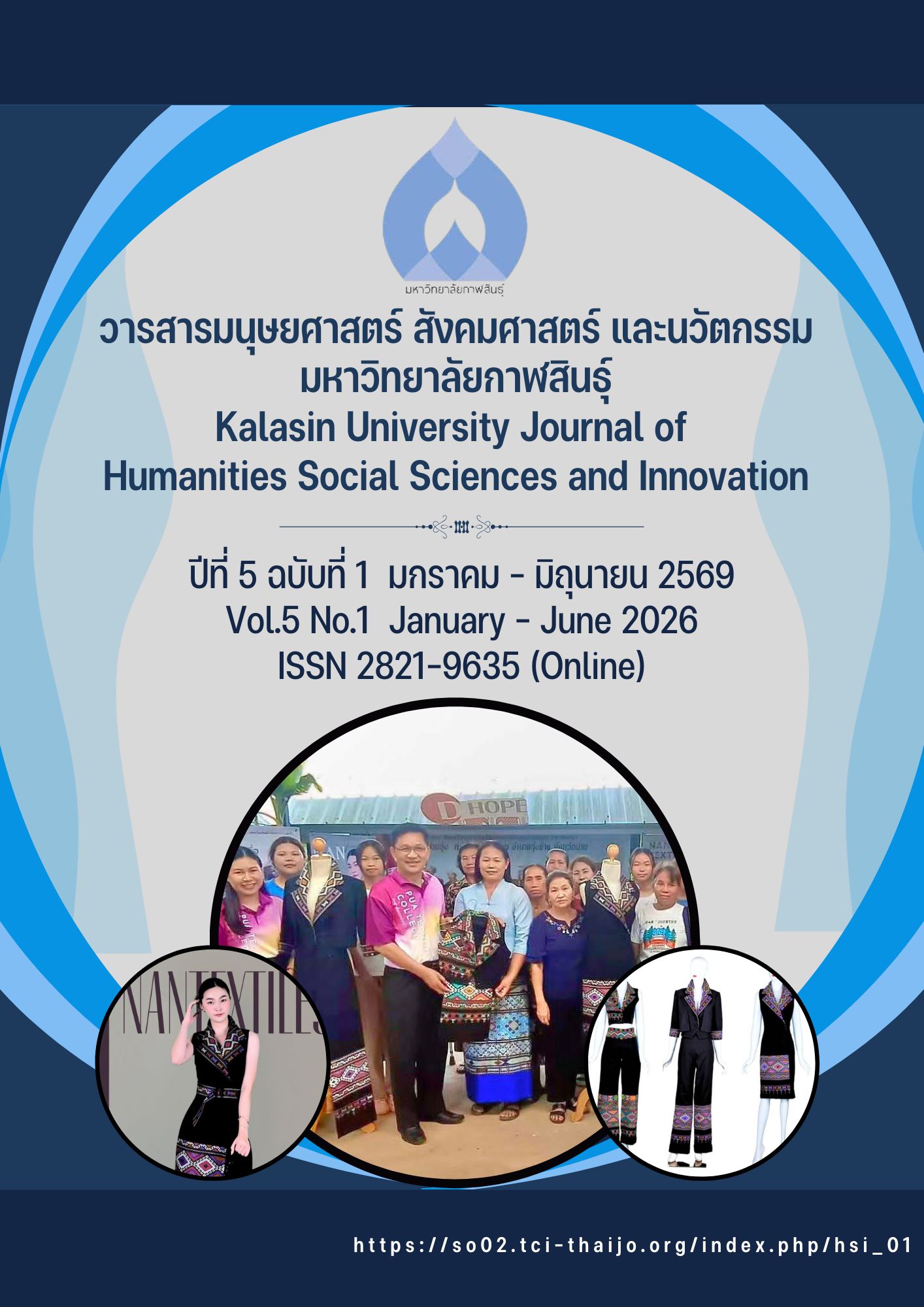
การยกระดับผลิตภัณฑ์ผ้าทอไทลื้อด้วยแนวคิดออกแบบแฟชั่น บ้านหล่ายทุ่ง อำเภอทุ่งช้าง จังหวัดน่าน
Article Sidebar
Main Article Content
บทคัดย่อ
การวิจัยครั้งนี้มีวัตถุประสงค์ 1) เพื่อสร้างองค์ความรู้ด้านการออกแบบแฟชั่นผลิตภัณฑ์ผ้าทอไทลื้อ บ้านหล่ายทุ่ง อำเภอทุ่งช้าง จังหวัดน่าน 2) เพื่อพัฒนาทักษะการออกแบบแฟชั่นและการตัดเย็บผลิตภัณฑ์ผ้าทอไทลื้อ และ 3) เพื่อถ่ายทอดองค์ความรู้และส่งมอบผลิตภัณฑ์แฟชั่นดังกล่าว กระบวนการวิจัยดำเนินการ 3 ขั้นตอน ได้แก่ (1) การศึกษาองค์ความรู้ด้านการออกแบบแฟชั่น ผ่านการวิเคราะห์เอกสารและสัมภาษณ์เชิงลึก ตัวแทนวิสาหกิจชุมชน 5 คน วิเคราะห์ข้อมูลเชิงเนื้อหา (2) การพัฒนาทักษะการออกแบบและตัดเย็บ โดยใช้โปรแกรม Procreate กลุ่มตัวอย่างสตรีอายุ 25–55 ปี จำนวน 200 คน แบบประเมินความพึงพอใจมีค่าความเชื่อมั่น 0.91 วิเคราะห์ด้วยค่าเฉลี่ยและส่วนเบี่ยงเบนมาตรฐาน (3) การถ่ายทอดองค์ความรู้แก่ผู้เข้าอบรม 20 คน และการส่งมอบผลิตภัณฑ์ โดยใช้แบบสังเกตพฤติกรรม ผลการวิจัยพบว่า 1) แนวคิดการออกแบบแฟชั่นคือ “การพลิกฟื้นวัฒนธรรม ผสมผสานความร่วมสมัย” นำการใช้เทคนิคการแต่งกายแบบแซนด์วิช ช่วยให้การออกแบบดูโดดเด่น 2) ผลการพัฒนาทักษะ ออกแบบผลิตภัณฑ์ด้วยโปรแกรม Procreate ช่วยออกแบบให้มีประสิทธิภาพสูง ผลิตภัณฑ์เรียบหรู กลุ่มตัวอย่างอายุ 41–55 ปี มีความพึงพอใจโดยรวมในระดับมาก 3) การถ่ายทอดองค์ความรู้ทำให้ผู้เข้าอบรมสามารถออกแบบและตัดเย็บชุดแฟชั่นผ้าทอไทลื้อได้ ผลิตภัณฑ์ที่ส่งมอบสามารถทดลองจำหน่ายได้ 28,985 บาท ได้ความรู้การสร้างแบรนด์ LOGO สามารถสร้างสื่อออนไลน์เป็นช่องทางจำหน่ายผลิตภัณฑ์และนำเข้าประกวดในเวทีระดับต่าง ๆ สรุปได้ว่า แนวคิดการออกแบบแฟชั่นผ้าทอไทลื้อมีศักยภาพในการยกระดับสู่เวทีสากล และสามารถต่อยอดสร้างอาชีพให้กับชุมชนได้อย่างยั่งยืน
Downloads
Article Details

อนุญาตภายใต้เงื่อนไข Creative Commons Attribution-NonCommercial-NoDerivatives 4.0 International License.
ข้อมูลภาพ เสียง วิดีโอ และข้อความที่ปรากฎบนเว็บไซต์นี้ ผู้นำไปใช้จะถูกอนุญาตให้นำไปใช้ได้ โดยจะต้องอ้างอิงแหล่งที่มา จะต้องไม่นำไปใช้เพื่อการค้า และจะต้องไม่ดัดแปลง (CC-BY-NC-ND)
เอกสารอ้างอิง
กิตติกรณ์ นพอุดมพันธุ์. (2559). การสร้างสรรค์เสื้อผ้าเครื่องแต่งกายจากทฤษฎีรื้อสร้าง (Deconstruction) : กรณีศึกษาผ้าไหมมัดหมี่พื้นบ้าน อำเภอปักธงชัย จังหวัดนครราชสีมา. วารสารสถาบันวัฒนธรรมและศิลปะ มหาวิทยาลัยศรีนครินทรวิโรฒ, 17 (2), 81-94. https://so02.tci-thaijo.org/index.php/jica/article/view/99315
กมลรัตน์ วันไชย, กัญญาลักษณ์ คำเงิน, ชลลดา พรสุขสมสกุล และ กัสมา กาซ้อน. (2564). แนวทางพัฒนาผลิตภัณฑ์ผ้าทอไทลื้อศรีดอนชัย อำเภอเชียงของ จังหวัดเชียงราย. รายงานการวิจัย. สำนักงานการวิจัยแห่งชาติ (วช.). https://doi.nrct.go.th/admin/doc/doc_605417.pdf
ณัฐวุฒิ เงาะหวาน. (2565). การศึกษาและพัฒนากระเป๋าสตรีจากผ้าทอไทลื้อในจังหวัดเชียงราย. [วิทยานิพนธ์ปริญญามหาบัณฑิต, มหาวิทยาลัยเทคโนโลยีราชมงคลพระนคร]. https://dk.rmutp.ac.th/thesis/detail/18
บุญชม ศรีสะอาด. (2556). การวิจัยเบื้องต้น (พิมพ์ครั้งที่ 9). สํานักพิมพ์สุวรีิยาสาส์น. 71, 42-43.
บุญชม ศรีสะอาด. (2560). การวิจัยเบื้องต้น (พิมพ์ครั้งที่ 10). สํานักพิมพ์สุวีริยาสาส์น. 103-104.
ประเวศ วะสี. (2545). การพัฒนาคนและสังคมแบบองค์รวม. กรุงเทพฯ: มูลนิธิพัฒนาชุมชนแห่งประเทศไทย.
สมคิด นันต๊ะ, อรพินท์ อินวงค์ และ สิทธิชัย อุ่นสวน. (2563). การยกระดับสินค้าและผลงานด้านศิลปะในเชิงพาณิชย์ของศิลปินในกลุ่มจังหวัดล้านนา (รายงานการวิจัย). มหาวิทยาลัยมหาจุฬาลงกรณราชวิทยาลัย วิทยาลัยสงฆ์นครน่านเฉลิมพระเกียรติสมเด็จพระเทพรัตนราชสุดาฯ สยามบรมราชกุมารี.
สำนักงานคณะกรรมการพัฒนาการเศรษฐกิจและสังคมแห่งชาติและศูนย์สร้างสรรค์และออกแบบ. (2552). เศรษฐกิจสร้างสรรค์. กรุงเทพ: สำนักงานคณะกรรมการพัฒนาการเศรษฐกิจและสังคมแห่งชาติ. วารสารเศรษฐศาสตร์ปริทรรศน์, สถาบันพัฒนศาสตร์, 7 (1), 7.
สุนิตา สุติยะ, ชนาภา โพธิ์ศรี, พัชรพล หงษ์เหาะ, คณิศร ตระกูลพิทักษ์กิจ และธนารัตน์ ธนะปัด. (2566). การยกระดับภูมิปัญญาผ้าทอชุมชนสู่การค้าเชิงพาณิชย์ (รายงานการวิจัย). มหาวิทยาลัยเทคโนโลยีราชมงคลธัญบุรี.
สุริยา วงค์ชัย (2566). กระบวนการสร้างสรรค์และสืบสานผ้าทอไทลื้อบ้านศรีดอนชัย อำเภอเชียงของ จังหวัดเชียงราย. วารสารการบริหารจัดการและนวัตกรรมท้องถิ่น, 5 (4), 13–28. https://cmudc.library.cmu.ac.th/frontend/Info/item/dc:171683
อัญชลี เท็งตระกูล, พัทธมน บุณยราศรัย, นิศารัตน์ ไชยวงศ์ศักดา และ ศรายุทธ สาคร (2566). การพัฒนาและออกแบบชุดแฟชั่นผ้าทอของกลุ่มชาติพันธุ์ไทลื้อ อำเภอเชียงของ จังหวัดเชียงราย.วารสารบัญชีปริทัศน์ มหาวิทยาลัยราชภัฏเชียงราย, 8 (1), 18–31. https://so02.tci-thaijo.org/index.php/JAR_CRRU/article/view/263930
Barthes, R. (1967). The fashion system. New York: Hill and Wang.
Kolb, D. A. (1984). Experiential learning: Experience as the source of learning and development. Prentice-Hall.
Krejcie, R. V., & Morgan, D. W. (1970). Determining sample size for research activities. Educational and Psychological Measurement, 30 (3), 607–610.
Wallace, A. F. C. (1956). Revitalization Movements, American Anthropologist, (58), 264-281.
Welsh, A., & Chadprajong-Smith, J. (2019). The Tai Lue Project: Embodying a Cultural Identity Within Cloth. Manchester Fashion Institute, British Council, & Bunka Gakuen University. https://fashioninstitute.mmu.ac.uk/research/the-tai-lue-project/
