
Middle School Female Student’s Perspective on a Sepak-Takraw
Article Sidebar
Main Article Content
Abstract
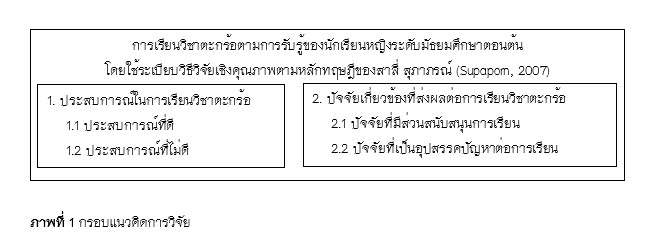
The objective of this research was to study learning experiences associated with Sepak Takraw and the factors influencing the learning process from the perspectives of 30 female secondary school students. Data was collected through observation, interviews, concept maps, and critical incidents. Data was analyzed inductively using the constant comparison method, and trustworthiness was established through triangulation.
The study revealed that students are positively affected by learning Sepak Takraw, as it helps them develop their movement skills. The learners acquired various skills, such as juggling with the inside of the foot, knee, and head. Despite this, the learners also experienced negative learning experiences, including injuries from juggling the Takraw ball. Students discussed the supporting factors in learning takraw, namely support from friends, parents, and teachers, which helped improve learning. Participation in enjoyable activities with fellow students significantly influenced students' attitudes and further reinforced female participants' motivation to take an active role in the sport. Another important factor that greatly influenced the process is the instruction methods used by educators. The learning challenges faced by Sepak Takraw include students' readiness to learn and the effects of menstruation on their ability and mood. Further, frequent injuries from juggling the Takraw ball to meet set standards were noted. The plastic Takraw balls were found to be too heavy for women, leading to bruising during juggling. The learning area was too spacious most of the time and not suitable for beginners who needed to pick up the Takraw balls. To conclude, Sepak Takraw skill acquisition is positively correlated with female students' health outcomes. Multidimensional activities and flexible methods based on the learners' needs can make the learning process enjoyable, even with the possible challenges of practice in skills. Using Takraw balls with the right weight for female students can prevent injury and foster a positive attitude toward physical education.
Downloads
Article Details

This work is licensed under a Creative Commons Attribution-NonCommercial-NoDerivatives 4.0 International License.
References
Akil, M., Tokay, B., & Güngör, M. G. (2014). Cognitive health outcomes of fundamental motor skill applications in children through cooperative learning methods. BMC Psychology, 12, 522. https://doi.org/10.1186/s40359-024-02006-y
Alcántara-Porcuna, V., Sánchez-López, M., Martínez-Vizcaíno, V., Martínez-Andrés, M., Ruiz-Hermosa, A., & Rodríguez-Martín. B. (2021). Parents’ perceptions on barriers and facilitators of physical activity among schoolchildren: A qualitative study. International Journal of Environmental Research and Public Health, 18(6), 3086. https://doi.org/10.3390/ijerph18063086
Alcántara-Porcuna, V., Sánchez-López, M., Martínez-Andrés, M., Martínez-Vizcaíno, V., Ruíz-Hermosa, A., & Rodríguez-Martín, B. (2022). Teachers’ perceptions of barriers and facilitators of the school environment for physical activity in schoolchildren: A qualitative study. Qualitative Research in Sport, Exercise and Health, 14(7), 1113–1137. https://doi.org/10.1080/2159676X.2022.2037696
Beseler, B., Plumb, M. S., Spittle, M., Johnson, N. F., Harvey, J. T., & Mesagno, C. (2024). Examining single session peer-teaching instructional approaches on pre-service physical education teachers' throwing techniques. Perceptual and Motor Skills, 131(1), 246-266. https://doi.org/10.1177/00315125231214126
Buosonte, R. (2013). Qualitative research in education. Bangkok: Chulalongkorn University Press. [In Thai]
Dane, K., Simms, C., Hendricks, S., West, S. W., Griffin, S., Nugent, F. J., Farrell, G., Mockler, D., & Wilson, F. (2022). Physical and technical demands and preparatory strategies in female field collision sports: A scoping review. International Journal of Sports Medicine, 43(14), 1173–1182. https://doi.org/10.1055/a-1839-6040
DeJonge, M. L., Vani, M. F., Zammitt, K., & Sabiston, C. M. (2023). One of these is not like the other: The retrospective experiences of girl athletes playing on boys’ sports teams during adolescence. Qualitative Research in Sport, Exercise and Health, 15(6), 742–755. https://doi.org/10.1080/2159676X.2023.2187444
Dueanphensi, R., Jupao, P., & Panitcharoen, K. (2017). Qualitative study on water POLO course of high school students: A case study in a demonstration school. Journal of Education and Social Development, 13(1), 46-56. Retrieved from https://ojs.lib.buu.ac.th/index.php/social/article/view/5088 [In Thai]
Elliott, S., Bevan, N., & Litchfield, C. (2019). Parents, girls’ and Australian football: A constructivist grounded theory for attracting and retaining participation. Qualitative Research in Sport, Exercise and Health, 12(3), 392–413. https://doi.org/10.1080/2159676X.2019.1602560
Eduard, D., Hurieieva, A., Symonik, A., Chernenko, O., Chernenko, A., Serdyuk, D., Svatiev, A., & Tsarenko, K. (2021). Differentiation of physical loads in female students of different motor ages. Theory and Methodology of Physical Education, 21(2), 158-166. https://doi.org/10.17309/TMFV.2021.2.09
Furusa, M. G., Knight, C. J., & Hill, D. M. (2020). Parental involvement and children’s enjoyment in sport. Qualitative Research in Sport, Exercise and Health, 13(6), 936–954. https://doi.org/10.1080/2159676X.2020.1803393
Harvey, J., Emm-Collison, L., & Sebire, S. (2020). “I feel proper self-conscious all the time”: A qualitative study of adolescent girls’ views of menstruation and physical activity. Wellcome Open Research, 5, 279. https://doi.org/10.12688/wellcomeopenres.16391.1
Harwood, C. G., & Knight, C. J. (2015). Parenting in youth sport: A position paper on parenting expertise. Psychology of Sport and Exercise, 16, 24–35. https://doi.org/10.1016/j.psychsport.2014.03.001
Horbacz, A., Majherová, M., Melichar, R., & Junger, J. (2024). Self-reported physical activity and aerobic endurance among female students of Pavol Jozef Šafárik University in Košice, Slovakia. Tourism and Recreation, 7(4), 149–162. http://dx.doi.org/10.16926/sit.2024.04.08
Kim, H. D., & Cruz, A. B. (2024). Leadership practices of physical education teachers and student-related outcomes: A systematic mixed method review and analysis. Frontiers in Psychology, 15, 1442014. https://doi.org/10.3389/fpsyg.2024.1442014
Kirch, A., Schnitzius, M., Spengler, S., Blaschke, S., & Mess, F. (2021). Knowing students' characteristics: Opportunities to adapt to physical education teaching. Frontiers in Psychology, 12, 619944. https://doi.org/10.3389/fpsyg.2021.619944
Knight, C. J., Little, G. C. D., Harwood, C. G., & Goodger, K. (2016). Parental involvement in elite junior slalom canoeing. Journal of Applied Sport Psychology, 28(2), 234–256. https://doi.org/10.1080/10413200.2015.1111273
Martínez-Andrés, M., Bartolomé-Gutiérrez, R., Rodríguez-Martín, B., Pardo-Guijarro, M. J., Garrido-Miguel, M., & Martínez-Vizcaíno, V. (2020). Barriers and facilitators to leisure physical activity in children: A qualitative approach using the socio-ecological model. International Journal of Environmental Research and Public Health, 17(9), 3033. https://doi.org/10.3390/ijerph17093033
Metcalf, B., Henley, W., & Wilkin, T. (2012). Effectiveness of intervention on physical activity of children: Systematic review and meta-analysis of controlled trials with objectively measured outcomes. BMJ, 345, e5888. https://doi.org/10.1136/bmj.e5888
Milkina, O. & Napalkova, T. (2022). Features of physical education classes and their effects on increase of physical workability of female students and the course. Scientific Journal National Pedagogical Dragomanov University, 9(154). https://doi.org/10.31392/npu-nc. series15.2022.9(154).02
Ministry of Education Thailand. (2008). Basic education core curriculum B.E. 2551 (A.D. 2008). Bangkok: Agricultural cooperative printing demonstrations of Thai Co., Ltd. [In Thai]
Neamphoka, G. (2021). Development of physical education instructional model using active learning and creativity-based learning to enhance physical fitness through system thinking of upper primary school students. (Doctor dissertation, Chulalongkorn University). Retrieved from https://doi.org/10.58837/CHULA.THE.2021.1093 [In Thai]
Owen, M. B., Curry, W. B., Kerner, C., Newson, L., & Fairclough, S. J. (2017). The effectiveness of school-based physical activity interventions for adolescent girls: A systematic review and meta-analysis. Preventive Medicine, 105, 237-249. https://doi.org/10.1016/j.ypmed.2017.09.018
Pagani, L. S., Haradian, K., Gauthier, B., Kosak, L. A., Necsa, B., & Tremblay, M. S. (2024). Middle childhood sport participation predicts timely long-term chances of academic success in boys and girls by late adolescence. Medicine & Science in Sports & Exercise, 56(11), 2182-2194. https://doi.org/10.1249/MSS.0000000000003511
Panitcharoen, K. & Dueanphensi, R. (2022). Experience and relevant factors influencing windsurfing learning as perceived by learner. Journal of Education Burapha University, 33(2), 30 – 42. Retrieved from https://ojs.lib.buu.ac.th/index.php/education2/article/view/8002/6474 [In Thai]
Peepathum, P. (2014). A qualitative study of Pilates learning of undergraduate students. Journal of faculty of physical education, 17(1), 233-241. Retrieved from https://ejournals.swu.ac.th/index.php/pe/article/view/4704 [In Thai]
Phatphong, C. (2017). Development basic skills in playing takraw of grade 5 students through games. (Master's thesis, Chiang Mai University). Retrieved from https://cmudc.library.cmu.ac.th/frontend/Info/item/dc:143279 [In Thai]
Pitangui, A. C., Gomes, M. R., Lima, A. S., Schwingel, P. A., Albuquerque, A. P., & de Araújo, R. C. (2013). Menstruation disturbances: Prevalence, characteristics, and effects on the activities of daily living among adolescent girls from Brazil. Journal of Pediatric and Adolescent Gynecology, 26(3), 148-152. https://doi.org/10.1016/j.jpag.2012.12.001
Poitras, V. J., Gray, C. E., Borghese, M. M., Carson, V., Chaput, J. P., Janssen, I., Katzmarzyk, P. T., Pate, R. R., Connor
Gorber, S., Kho, M. E., Sampson, M., & Tremblay, M. S. (2016). Systematic review of the relationships between objectively measured physical activity and health indicators in school-aged children and youth. Applied Physiology, Nutrition, and Metabolism, 41(6), S197-239. https://doi.org/10.1139/apnm-2015-0663
Pomsook, M., Supaporn S., & Punvanich, U. (2016). Attitude toward physical education activities as perceived by leaners. Journal of Faculty of Physical Education, 19(1), 167-182. Retrieved from
https://search.tcithailand.org/article.html? b3BlbkFydGljbGUmaWQ9MTk1MzQy [In Thai]
Punvanich, U. (2015). Learners’ perspective about learning a gymnastics course. Journal of Faculty of Physical Education, 18(1), 27–41. Retrieved from https://libdoc.dpu.ac.th/mtext/cont/104535.pdf [In Thai]
Salters, D. & Scharoun Benson, S. M. (2022). Perceptions and use of teaching strategies for fundamental movement skills in primary school physical education programs. Children, 9(2), 226. https://doi.org/10.3390/children9020226
Sawangwong, A. (2023). Effects of physical education learning management using active learning on learning achievement in fundamental movement skill on primary school students. Retrieved from https://doi.org/10.58837/CHULA.THE.2020.1268 [In Thai]
Solmaz, B., Bonab. S., & Rezaei, B. (2022). The role of general physical education classes on the characteristics, personality and mental well-being of female student. Depiction of Health, 13(1), 48-58. https://doi.org/10.34172/doh.2022.04
Supaporn, S. (2007). Qualitative research in physical education and sport. Bangkok: 3 Lada Limited. [In Thai]
Supaporn, S. (2010). Learners ‘perspective about tactical teaching style in physical education. Journal of Faculty of Physical Education, 13(1), 246-253. Retrieved from https://search.tci-thailand.org/article.html?b3BlbkFydGljbGUmaWQ9ODM5Nzk [In Thai]
Telford, R. M., Telford, R. D., Olive, L. S., Cochrane, T., & Davey, R. (2016). Why are girls less physically active than boys? Findings from the LOOK longitudinal study. PLoS One, 11(3), e0150041. https://doi.org/10.1371/journal.pone.0150041
Wellard, I. (2016). Gendered performances in sport: An embodied approach. Palgrave Communications, 2(1), 16003. https://doi.org/10.1057/palcomms.2016.3
Wong, J. B., McDonough, M. H., Bridel, W., & Culos-Reed, N. (2022). The role of peers and the recreational environment in adolescent emotional safety. Qualitative Research in Sport, Exercise and Health, 14(6), 916–932. https://doi.org/10.1080/2159676X.2022.2048058
Wu, D. Y., Tan, T. C., & Wang, Y. T. (2025). A new shortcut for competitive sports development? The purpose of and strategy for developing and introducing Sepaktakraw in Taiwan. PLoS One, 20(1), e0317451. https://doi.org/10.1371/journal.pone.0317451
Watchayakarn, K. (2017). Skills and instructional Sepaktakraw sport. Bangkok: Chulalongkorn University Press. [In Thai]
Zahra, J., Sebire, S. J., & Jago, R. (2015). “He’s probably more Mr. sport than Me” - A qualitative exploration of mothers’ perceptions of fathers’ role in their children’s physical activity. BMC Pediatrics, 15, 101. https://doi.org/10.1186/s12887-015-0421-9
