แนวทางการประพันธ์บทเพลงลูกทุ่งไทยเพื่อการเสริมสร้างพลังใจของผู้ฟังตามหลักพุทธจิตวิทยา
Article Sidebar
Main Article Content
บทคัดย่อ
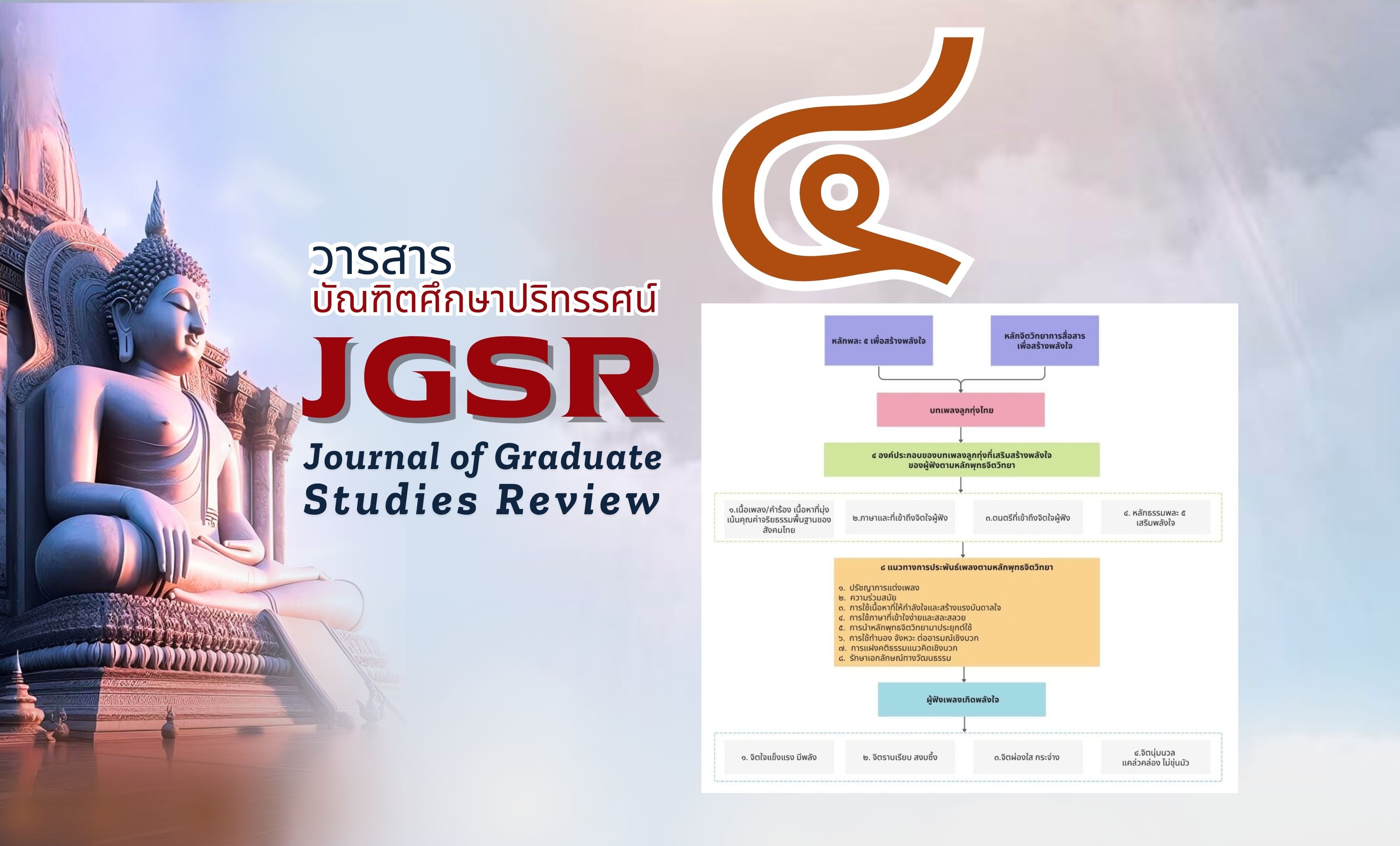
การวิจัยนี้มีวัตถุประสงค์ ๑) เพื่อศึกษาบริบท กรอบแนวคิด วิธีการประพันธ์เพลง และประโยชน์ของเพลงลูกทุ่งที่เสริมสร้างพลังใจของผู้ฟัง ๒) เพื่อวิเคราะห์องค์ประกอบของบทเพลงลูกทุ่งที่เสริมสร้างพลังใจของผู้ฟังตามหลักพุทธจิตวิทยา และ ๓) เพื่อเสนอแนวทางการประพันธ์เพลงลูกทุ่งเพื่อการเสริมสร้างพลังใจของผู้ฟังตามหลักพุทธจิตวิทยา ใช้วิธีวิจัยแบบผสานวิธี ๒ ระยะ ได้แก่ ระยะที่ ๑ วิธีเชิงปริมาณ เก็บข้อมูลจำนวน ๔๐๐ คน ด้วยแบบประเมิน วิเคราะห์ด้วยค่าเฉลี่ย และส่วนเบี่ยงเบนมาตรฐาน ระยะที่ ๒ วิธีเชิงคุณภาพ ใช้การสัมภาษณ์ การประชุมกลุ่มย่อย จำนวน ๒๕ รูป/คน ใช้การวิเคราะห์เนื้อหา ผลวิจัยพบว่า ๑.ผลศึกษาบริบท กรอบแนวคิด วิธีการประพันธ์เพลง และประโยชน์ในเชิงปริมาณพบว่า ผู้ฟังมีทัศนคติต่อเพลงลูกทุ่งในการสร้างพลังใจ อัตลักษณ์ด้านภาษาและวิถีชีวิต พัฒนาคุณธรรมในอนาคต อิทธิพลต่อความรู้สึก สร้างกำลังใจและทัศนคติเชิงบวก และอิทธิพลของภาษาและท่วงทำนองอยู่ในระดับมากที่สุด และผลเชิงคุณภาพ พบว่า เพลงลูกทุ่งพัฒนาจากเพลงพื้นบ้าน การประพันธ์และเนื้อร้องใช้ภาษาง่ายๆ ๒. ผลวิเคราะห์องค์ประกอบของบทเพลงลูกทุ่งที่เสริมสร้างพลังใจของผู้ฟังตามหลักพุทธจิตวิทยา ได้แก่ พละ ๕ ประกอบด้วย ๑) เนื้อเพลงมุ่งเน้นคุณค่าจริยธรรม ๒) ภาษาและทำนองที่เข้าถึงจิตใจ ๓) ดนตรีที่สื่อสารอารมณ์เชิงบวก ๔) การสอดแทรกหลักพุทธธรรมในการเสริมสร้างจิตใจ ๓. แนวทางการประพันธ์เพลงลูกทุ่งเพื่อการเสริมสร้างพลังใจของผู้ฟังตามหลักพุทธจิตวิทยา พบว่าเน้นมีความเกี่ยวข้องกับผู้ฟัง การเชื่อมโยงค่านิยมพุทธศาสนากับเพลงร่วมสมัย การใช้เนื้อหาสร้างกำลังใจ ภาษาเข้าใจง่าย ทำนองกระตุ้นอารมณ์เชิงบวก แฝงคติธรรมและรักษาเอกลักษณ์ทางวัฒนธรรม
Article Details

อนุญาตภายใต้เงื่อนไข Creative Commons Attribution-NonCommercial-NoDerivatives 4.0 International License.
บทความนี้เป็นความคิดเห็นส่วนผู้แต่ง กองบรรณาธิการไม่จำเป็นต้องเห็นด้วยเสมอไป
เอกสารอ้างอิง
กอบกุล ภู่ธราภรณ์. เพลงลูกทุ่งกับสังคมไทย. กรุงเทพมหานคร: สถาบันวิจัยสังคมจุฬาลงกรณ์ มหาวิทยาลัย, ๒๕๓๑.
จินตนา ดำรงเลิศ. ฐานะสตรีในเพลงลูกทุ่ง. กรุงเทพมหานคร: โรงพิมพ์มหาจุฬาลงกรณราชวิทยาลัย, ๒๕๓๘.
จำนงค์ ไชยมงคล. “พุทธจิตวิทยาการพัฒนาคุณธรรมและความสุขในบทเพลงลูกทุ่งไทย”, วิทยานิพนธ์ปริญญาพุทธศาสตรดุษฎีบัณฑิต สาขาวิชาพุทธจิตวิทยา. บัณฑิตวิทยาลัย: มหาวิทยาลัยมหาจุฬาลงกรณราชวิทยาลัย, ๒๕๖๑.
พันธกานต์ ทานนท์. “การสื่อสารภาพตัวแทนของผู้หญิงชนบทในเพลงลูกทุ่ง ที่ขับร้องโดย ตั๊กแตน ชลดา”. วิทยานิพนธ์ปริญญาวารสารศาสตรมหาบัณฑิต สาขาวิชาการบริหารสื่อสารมวลชน. บัณฑิตวิทยาลัย: มหาวิทยาลัยธรรมศาสตร์, ๒๕๕๙.
พีรพงษ์ เคนทรภักดิ์. “วาทกรรมความรักในบทเพลงลูกทุ่งอีสานร่วมสมัย”. วิทยานิพนธ์ปริญญาศิลปศาสตรมหาบัณฑิต สาขาวิชาภาษาไทย. บัณฑิตวิทยาลัย: มหาวิทยาลัยมหาสารคาม, ๒๕๖๔.
มหาจุฬาลงกรณราชวิทยาลัย. พระไตรปิฎกภาษาไทย ฉบับมหาจุฬาลงกรณราชวิทยาลัย. กรุงเทพมหานคร: โรงพิมพ์มหาจุฬาลงกรณราชวิทยาลัย, ๒๕๓๙.
ศิริวัฒน์ หวานฉ่ำ, พระมหาวีระศักดิ์ อภินนฺทเวที. “การพัฒนาบทเพลงเพื่อสร้างความสุขตามหลักพุทธสันติ”.วารสารสันติศึกษาปริทรรศน์ มจร. ปีที่ ๑๑ ฉบับที่ ๖ (กันยายน-ตุลาคม), ๒๕๖๖).
เอี่ยม อามาตย์มุลตรี. “กลวิธีทางภาษา : การสื่อความทางเพศในเพลงลูกทุ่งอีสาน”, วารสารมหาวิทยาลัยมหามกุฏราชวิทยาลัย วิทยาเขตร้อยเอ็ด, ปีที่ ๖ ฉบับที่ ๒ (กรกฎาคม – ธันวาคม), ๒๕๖๐.
