
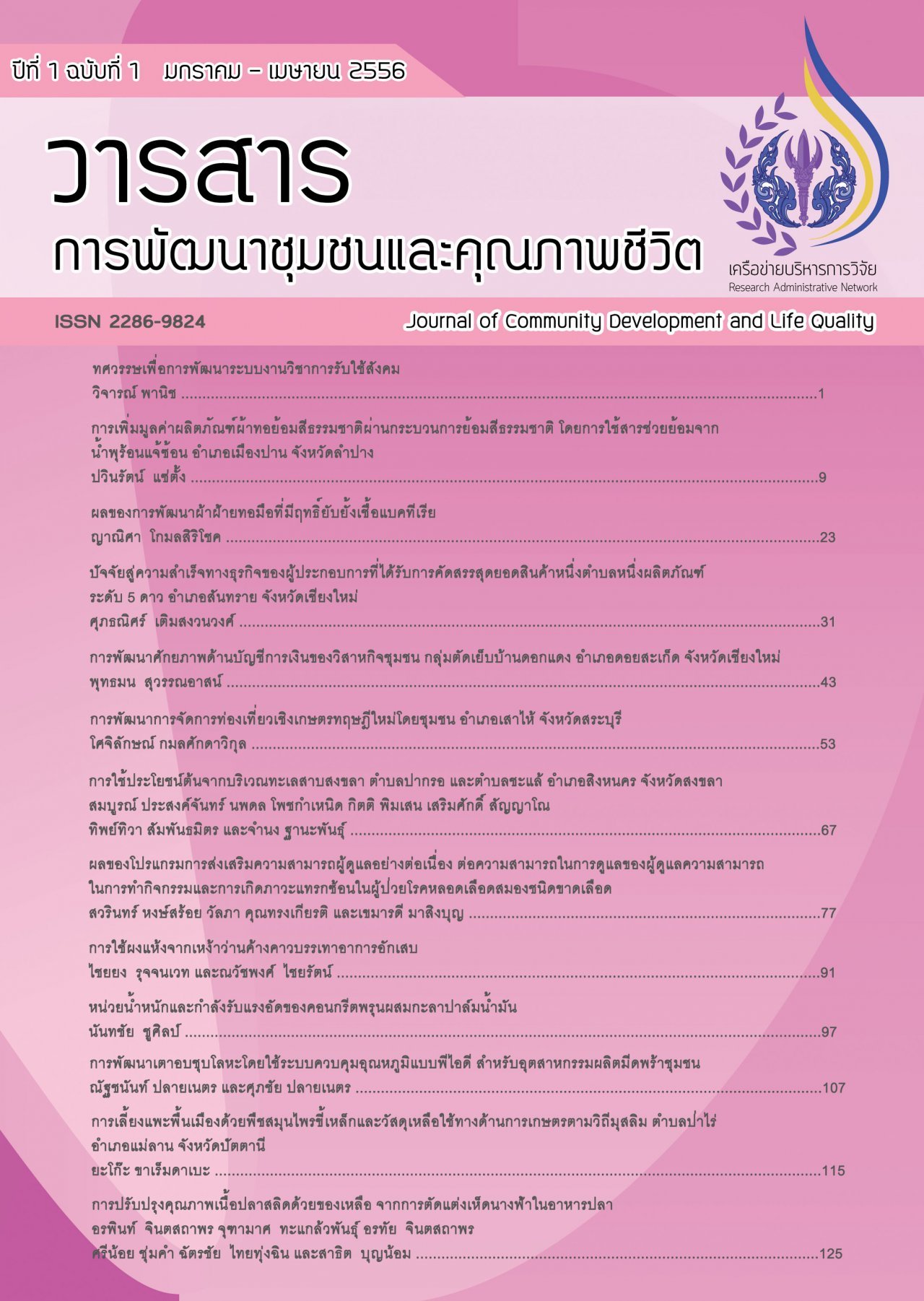
การเลี้ยงแพะพื้นเมืองด้วยพืชสมุนไพรขี้เหล็ก และวัสดุเหลือใช้ทางด้านการเกษตรตามวิถีมุสลิม กรณีศึกษา: ตำบลป่าไร่ อำเภอแม่ลาน จังหวัดปัตตานี
Article Sidebar
Main Article Content
บทคัดย่อ
การศึกษาครั้งนี้ มีวัตถุประสงค์เพื่อศึกษาผลของการใช้พืชสมุนไพรขี้เหล็ก และวัสดุเหลือใช้ทางด้านการเกษตรต่ออัตราการเจริญเติบโตของพยาธิภายใน และสมรรถนะการเจริญเติบโตของแพะพื้นเมือง ทำการเลี้ยงตามแบบวิถีมุสลิม โดยใช้แผนการทดลองแบบสุ่มตลอด (completely randomized design: CRD) ใช้แพะพื้นเมืองอายุ 6 - 7 เดือน จำนวน 20 ตัว แบ่งเป็น 4 กลุ่ม ๆ ละ 5 ตัว กลุ่มที่ 1 ให้หญ้ารูซี่อย่างเดียว กลุ่มที่ 2 ให้หญ้ารูซี่ร่วมกับใบขี้เหล็ก เสริมด้วยอาหารสำเร็จรูป 2 เปอร์เซ็นต์ของน้ำหนักตัว กลุ่มที่ 3 ให้หญ้ารูซี่ร่วมกับใบขี้เหล็ก เสริมด้วยอาหารสำเร็จรูป 1 เปอร์เซ็นต์ของน้ำหนักตัว กลุ่มที่ 4 ให้หญ้ารูซี่ร่วมกับวัสดุเหลือใช้ทางด้านการเกษตร เลี้ยงแพะตลอดระยะเวลา 120 วัน พบว่ากลุ่มที่ 1, 2, 3 และ 4 น้ำหนักเฉลี่ยเริ่มต้น 7.60 ± 1.08, 7.30 ± 1.20, 8.50 ± 1.66 และ 9.50 ± 1.58 กิโลกรัมต่อตัว ตามลำดับ และเมื่อสิ้นสุดการทดลองน้ำหนักเฉลี่ยแต่ละกลุ่ม เท่ากับ 8.80 ± 0.89, 10.06 ± 0.80, 11.06 ± 1.62, 11.50 ± 1.5 กิโลกรัมต่อตัว ตามลำดับ จากการตรวจสอบโรคพยาธิภายในก่อนและหลังการทดลอง พบว่ากลุ่มที่ 2 และกลุ่มที่ 3 มีพยาธิลดลง ซึ่งส่งผลทำให้น้ำหนักตัวเพิ่มขึ้นมากกว่ากลุ่มที่ 1 และกลุ่มที่ 2 เนื่องจากทั้งสองกลุ่มนี้ได้รับสมุนไพรใบขี้เหล็กเป็นอาหาร
Article Details
กองบรรณาธิการขอสงวนสิทธิ์ในการตรวจและแก้ไขบทความที่เสนอเพื่อตีพิมพ์ในวารสารการพัฒนาชุมชนและคุณภาพชีวิต
บทความหรือข้อความคิดเห็นใด ๆ ที่ปรากฏในวารสารการพัฒนาชุมชนและคุณภาพชีวิต เป็นวรรณกรรมของผู้เขียนโดยเฉพาะคณะผู้จัดทำไม่จำเป็นต้องเห็นด้วย และไม่ใช่ความรับผิดชอบของมหาวิทยาลัยและคณะผู้จัดทำ / บรรณาธิการ
เอกสารอ้างอิง
ซารีนา สือแม. 2550. การเลี้ยงแพะตามวิธีมุสลิม แนวทางสู่ความสำเร็จ. วารสารมหาวิทยาลัยราชภัฏยะลา (2)1: 72-81.
นันทวัน บุณยะประภัศร และ อรนุช โชคชัยเจริญพร. 2539. สมุนไพรไม้พื้นบ้าน เล่ม 1. สำนักพิมพ์ประชาชน, กรุงเทพฯ. 895 หน้า.
บุญล้อม ชีวอิสระกุล. 2546. ชีวเคมีทางสัตวศาสตร์. ภาควิชาสัตวศาสตร์ คณะเกษตรศาสตร์ มหาวิทยาลัยเชียงใหม่, เชียงใหม่.
ประมวล พิรัชพันธุ์. 2546. การฆ่าสัตว์เพื่อเป็นอาหารตามวิถีทางแห่งอิสลาม. อิสลามมิคอะเคเดมี, กรุงเทพฯ.
วินัย ดะห์ลัน สุภสร ชโยวรรณ และ อรชุดา สิมารักษ์. 2542. การวิเคราะห์อันตรายและจุดควบคุมวิกฤติ เพื่อจัดเตรียมอาหารฮาลาลในทางอุตสาหกรรมและพาณิชย์ (Halal-HACCP). สถาบันอาหาร กระทรวงอุตสาหกรรม, กรุงเทพฯ.
สมเกียรติ สายธนู. 2528. การเลี้ยงแพะ. ภาควิชาสัตวศาสตร์ คณะทรัพยากรธรรมชาติ มหาวิทยาลัย สงขลานครินทร์ วิทยาเขตหาดใหญ่, สงขลา.
สุรชน ต่างวิวัฒน์ และ สุวิทย์ อโณทัยสินทวี. 2547. เอกสารคำแนะนำการเลี้ยงแพะ. กลุ่มเผยแพร่ และประชาสัมพันธ์ สำนักพัฒนาการปศุสัตว์และถ่ายทอดเทคโนโลยี กรมปศุสัตว์. กรุงเทพฯ.
