
การพัฒนารูปแบบการจัดการเรียนรู้แบบโครงงานร่วมกับการจัดการเรียนรู้ แบบสืบเสาะหาความรู้โดยใช้บริบทเป็นฐาน เพื่อส่งเสริมทักษะการคิดเชิงคำนวณ ของนักเรียนชั้นมัธยมศึกษาปีที่ 1
Article Sidebar
Main Article Content
บทคัดย่อ
การวิจัยนี้มีวัตถุประสงค์เพื่อ 1) เพื่อศึกษาการจัดการเรียนรู้วิชาวิทยาการคำนวณ ชั้นมัธยมศึกษาปีที่ 1 ของนักเรียนชั้นมัธยมศึกษาปีที่ 1 2) สร้างและตรวจสอบคุณภาพของรูปแบบ 3) เพื่อศึกษาผลการใช้รูปแบบกับนักเรียนชั้นมัธยมศึกษาปีที่ 1 จำนวน 25 คน จากการสุ่มตัวอย่างอย่างง่าย การวิจัยครั้งนี้เป็นการวิจัยและพัฒนา เครื่องมือวิจัย ได้แก่ 1) รูปแบบการจัดการเรียนรู้และคู่มือ 2) แผนการจัดการเรียนรู้ 3) แบบวัดทักษะการคิดเชิงคำนวณ 4) แบบสอบถามการรับรู้การเรียนรู้ของผู้เรียน วิเคราะห์ข้อมูลโดย การหาค่าร้อยละ ค่าเฉลี่ย ส่วนเบี่ยงแบนมาตรฐาน การทดสอบค่าที
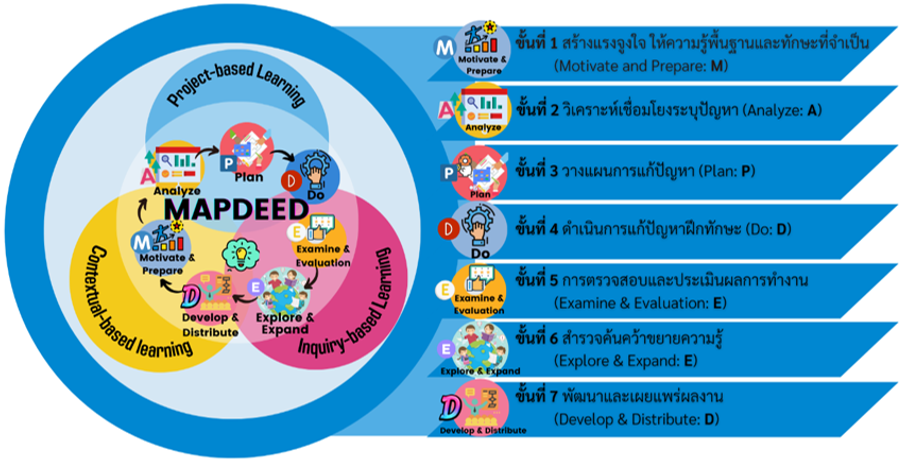
ผลการวิจัยพบว่า 1) การจัดการเรียนรู้มีลักษณะเป็นการเรียนรู้ร่วมกันวิเคราะห์ วางแผน ฝึกปฏิบัติ ตรวจสอบ ประเมินผล พัฒนาและเผยแพร่ผลงาน โดยใช้ปัญหาจากบริบทท้องถิ่น ผู้สอนมีบทบาทเป็นผู้อำนวยความสะดวกเป็นผู้ชี้แนะให้การช่วยเหลือและเสริมแรง 2) รูปแบบการจัดการเรียนรู้แบบโครงงานร่วมกับการจัดการเรียนรู้แบบสืบเสาะหาความรู้โดยใช้บริบทเป็นฐาน มี 5 องค์ประกอบ ดังนี้ (1) หลักการ (2) วัตถุประสงค์ (3) กระบวนการจัดการเรียนรู้ MAPDEED (แม๊พดี้ดี 7 ขั้นตอน คือ สร้างแรงจูงใจ ให้ความรู้พื้นฐานและทักษะที่จำเป็น (M), วิเคราะห์เชื่อมโยงระบุปัญหา (A), วางแผนการแก้ปัญหา (P), ดำเนินการแก้ปัญหาฝึกทักษะ (D), การตรวจสอบและประเมินผลการทำงาน (E), สำรวจค้นคว้าขยายความรู้ (E) และ พัฒนาและเผยแพร่ผลงาน (4) การวัดและประเมินผล (5) เงื่อนไขสำคัญในการนำรูปแบบไปใช้ให้ประสบความสำเร็จรูปแบบมีคุณภาพอยู่ในระดับมาก และมีค่าดัชนีประสิทธิผล เท่ากับ 0.51 3) ผลการใช้รูปแบบ พบว่า ผู้เรียนมีทักษะการคิดเชิงคำนวณในทักษะที่เป็นองค์ประกอบของทักษะการคิดเชิงคำนวณทั้ง 5 ด้าน สูงขึ้นอย่างมีนัยสำคัญทางสถิติที่ 0.001 และรูปแบบการจัดการเรียนรู้ สามารถส่งเสริมการรับรู้การเรียนรู้ของผู้เรียน
Article Details

อนุญาตภายใต้เงื่อนไข Creative Commons Attribution-NonCommercial-NoDerivatives 4.0 International License.
เอกสารอ้างอิง
กระทรวงศึกษาธิการ. (2561). ตัวชี้วัดและสาระการเรียนรู้แกนกลาง กลุ่มสาระการเรียนรู้วิทยาศาสตร์ (ฉบับปรับปรุง พ.ศ. 2560) ตามหลักสูตรแกนกลางการศึกษาขั้นพื้นฐาน พุทธศักราช 2551. กรุงเทพฯ: โรงพิมพ์ชุมนุมสหกรณ์การเกษตรแห่งประเทศไทย.
คณะกรรมการพัฒนาการเศรษฐกิจและสังคมแห่งชาติ. (2559). แผนพัฒนาเศรษฐกิจและสังคมแห่งชาติ ฉบับที่ 12 (พ.ศ.2560-2564).
ชนันท์ธิดา ประพิณ, กอบสุข คงมนัส, ช่อบุญ จิรานุภาพ, และ วารีรัตน์ แก้วอุไร. (2560). การศึกษาองค์ประกอบของรูปแบบการจัดการเรียนรู้วิชาคอมพิวเตอร์ ด้วยการเรียนแบบโครงงานเป็นฐานร่วมกับสื่อสังคมออนไลน์ เพื่อส่งเสริมการเรียนรู้เทคโนโลยีสารสนเทศและการสื่อสาร สำหรับนักเรียนชั้นประถมศึกษาตอนปลาย. วารสารอิเล็กทรอนิกส์ Veridian มหาวิทยาลัยศิลปากร (มนุษยศาสตร์สังคมศาสตร์และศิลปะ), 10(2), 299-317.
ทิศนา แขมมณี. (2560). ศาสตร์การสอน: องค์ความรู้เพื่อการจัดกระบวนการเรียนรู้ที่มีประสิทธิภาพ. (พิมพ์ครั้งที่ 21). กรุงเทพฯ: แห่งจุฬาลงกรณ์มหาวิทยาลัย.
ธนารักษ์ สารเถื่อนแก้ว, สุพจน์ อิงอาจ, & ศยามน อินสะอาด. (2563). การพัฒนาบทเรียนคอมพิวเตอร์บนระบบเครือข่ายอินเทอร์เน็ตร่วมกับรูปแบบการเรียนการสอนแบบ 5E ในวิชาวิทยาศาสตร์ (วิทยาการคำนวณ) สำหรับนักเรียนชั้นประถมศึกษาปีที่ 3. วารสาร มจร.หริภุญชัยปริทรรศน์, 4(1), 16-29.
ปรียาดา ทะพิงค์แก. (2563). การพัฒนาบอร์ดเกมเชิงบริบทสร้างเสริมทักษะการคิดเชิงคำนวณและความตระหนักด้านสิ่งแวดล้อมเรื่อง ทีมโค้ดดิ้งดับไฟพิทักษ์ป่า สำหรับนักเรียนชั้นมัธยมศึกษาตอนต้น. ใน รายงานผลการประชุมทางวิชาการการวิจัยทางการศึกษาระดับชาติ ครั้งที่ 16: เรื่อง นวัตกรรมการศึกษา กล้าเปลี่ยน สร้างสรรค์ ยกระดับคุณภาพการศึกษาไทย (น.195-204). กรุงเทพฯ: สำนักงานเลขาธิการสภาการศึกษา.
ลลิตา วงค์มลี, & พงศ์ธนัช แซ่จู. (2565). การพัฒนาบทเรียนบนเครือข่ายตามการเรียนรู้แบบโครงงานเป็นฐาน เรื่อง บอร์ดไมโครคอนโทรลเลอร์เพื่อส่งเสริมทักษะการคิดเชิงคำนวณ สำหรับนักเรียน ชั้นมัธยมศึกษาปีที่ 3. วารสารเทคโนโลยีและสื่อสารการศึกษา คณะศึกษาศาสตร์ มหาวิทยาลัยมหาสารคาม, 5(13), 61-76.
วิรุฬห์ สิทธิเขตรกรณ์ และสุรีย์พร สว่างเมฆ. (2564). การพัฒนาทักษะการคิดเชิงคำนวณด้วยกิจกรรมการเรียนรู้สืบเสาะแบบ 5Es ร่วมกับบอร์ดเกมและการเขียน Formula Coding เรื่อง ประชากร ในสถานการณ์โรคระบาด สำหรับนักเรียนชั้นมัธยมศึกษาปีที่ 6. วารสารศึกษาศาสตร์ มหาวิทยาลัยนเรศวร, 23(3), 286-300.
วิลาณี อำนาจเจริญ, & พรสวรรค์ วงค์ตาธรรม. (2564). การออกแบบและพัฒนาบทเรียนบนเครือข่ายแบบโครงงานเป็นฐานที่ส่งเสริมการคิดเชิงคำนวณในวิชาการเขียนโปรแกรมภาษาซี. วารสารศึกษาศาสตร์ มหาวิทยาลัยขอนแก่น, 44(3), 46-62.
สำนักงานคณะกรรมการพัฒนาเศรษฐกิจและสังคมแห่งชาติ. (2561). ยุทธศาสตร์ชาติ พ.ศ.2561-2580.
สำนักงานเลขาธิการสภาการศึกษา. (2560). แผนการศึกษาแห่งชาติ พ.ศ. 2560-2579.
สำนักงานส่งเสริมเศรษฐกิจดิจิทัล. (2565). โครงการยกระดับโรงเรียนสู่การเรียนรู้ด้าน Coding, STEM, IoT, และ AI ประจำปี 2563-2565.
Duran, L. B., & Duran, E. (2004). The 5E instructional model: A learning cycle approach for inquiry-based science teaching. Science Education Review, 3(2), 49-58.
En, L. K., Karpudewan, M., & Zaharudin, R. (2021). in STEM education among matriculation science students. Asia Pacific Journal of Educators and Education, 36(1), 177–194.
Fu, Q. K., Lin, C. J., Hwang, G. J., & Zhang, L. (2019). Impacts of a mind mapping-based contextual gaming approach on EFL students’ writing performance, learning perceptions and generative uses in an English course. Computers & Education, 137, 59-77.
Hwang, G. J., Chiu, L. Y., & Chen, C. H. (2015). A contextual game-based learning approach to improving students’ inquiry-based learning performance in social studies courses. Computers and Education, 81, 13–25.
ISTE (2015). CT leadership toolkit. Retrived August 5, 2021, from https://cdn.iste.org/www-root/2020-10/ ISTE_CT_ Leadership_Toolkit_booklet.pdf
Johnson, E. B. (2002). Contextual teaching and learning: What it is and why it's here to stay. Corwin Press.
Joyce, B., & Weil, M. (2000). Model of teaching (6th ed.). New Jersey: Prentice Hall
Khasyyatillah, I., & Osman, K. (2019). The development of ct-s learning module on the linear motion topic to promote computational thinking. Journal of Educational Sciences, 3(3), 270.
Korkmaz, Ö., Çakir, R., & Özden, M. Y. (2017). A validity and reliability study of the computational thinking scales (CTS). Computers in Human Behavior, 72, 558–569.
Lu, J. J., & Fletcher, G. H. (2009). Thinking about computational thinking. ACM SIGCSE Bulletin, 41(1), 260-264.
Panjaburee, P., & Srisawasdi, N. (2016). An integrated learning styles and scientific investigation-based personalized web approach: a result on conceptual learning achievements and perceptions of high school students. Journal of Computers in Education, 3(3), 253–272.
Tapingkae, P., Panjaburee, P., Hwang, G.-J., & Srisawasdi, N. (2020). Effects of a formative assessment-based contextual gaming approach on students’ digital citizenship behaviours, learning motivations, and perceptions. Computers & Education, 103998.
Teo, T., Lee, C. B., Chai, C. S., & Wong, S. L. (2009). Assessing the intention to use technology among pre-service teachers in Singapore and Malaysia: A multigroup invariance analysis of the Technology Acceptance Model (TAM). Computers & Education, 53(3), 1000-1009.
Thanyaphongphat, J., Tapingkae, P., Thongkoo, K., & Daungcharone, K. (2022). Promoting Computational Thinking with Visualization Programming through Project-Based Learning in Computer Science. In Proceedings of the 2022 WEI International Academic Conference Proceedings (pp. 19-21). VIENNA, AUSTRIA.
Wing, J. M. (2008). Computational thinking and thinking about computing. Philosophical Transactions of the Royal Society A, 366, 3717-3725.
Wongwatkit, C., & Panjaburee, P. (2023). A duplex adaptation mechanism in the personalized learning environment. J. Comput. Educ. https://doi.org/10.1007/s40692-023-00292-w
