
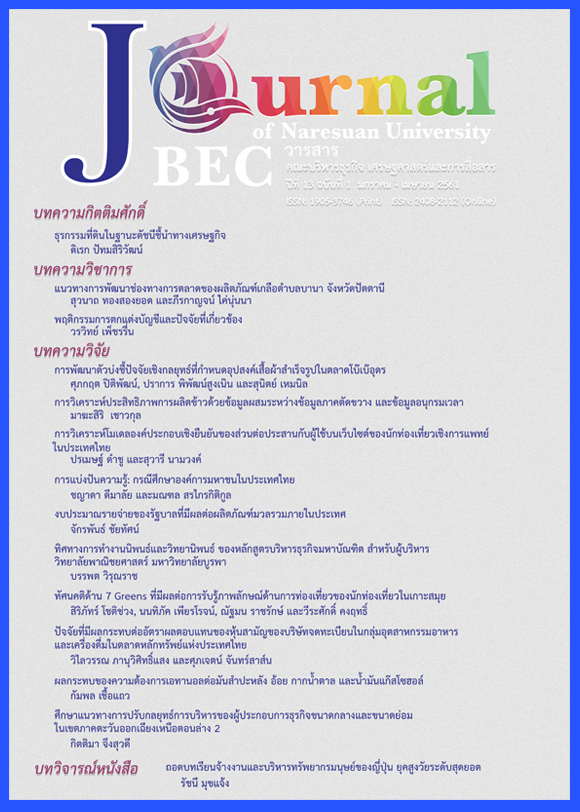
ทัศนคติด้าน 7 Greens ที่มีผลต่อการรับรู้ภาพลักษณ์ด้านการท่องเที่ยวของนักท่องเที่ยวในเกาะสมุย [Tourists’ Attitudes Toward 7 Greens Affecting Tourism Image Perception on Samui Island]
Article Sidebar
เผยแพร่แล้ว:
เม.ย. 30, 2018
Main Article Content
บทคัดย่อ
การวิจัยครั้งนี้มีวัตถุประสงค์เพื่อศึกษาทัศนคติด้าน 7 Greens ที่มีผลต่อการรับรู้ภาพลักษณ์ด้านการท่องเที่ยวของนักท่องเที่ยวในเกาะสมุย และเพื่อกำหนดตำแหน่งผลิตภัณฑ์ทางการท่องเที่ยวของเกาะสมุย โดยใช้แบบสอบถามในการเก็บข้อมูลนักท่องเที่ยวทั้งชาวไทยและต่างชาติ จำนวน 400 ชุด ผลการวิจัยพบว่า ทัศนคติของนักท่องเที่ยวในด้าน 7 Greens และการรับรู้ภาพลักษณ์ด้านการท่องเที่ยวของนักท่องเที่ยว ภาพรวมอยู่ในระดับมาก นอกจากนี้พบว่าทัศนคติด้าน 7 Greens มีผลต่อการรับรู้ภาพลักษณ์ด้านการท่องเที่ยวของเกาะสมุย ทั้งนี้เพื่อให้เกาะสมุยเป็นเกาะสีเขียวตามแนวคิด 7 Greens ควรสร้างความตระหนักให้กับคนเกาะสมุยและนักท่องเที่ยวที่เดินทางมาท่องเที่ยวในเกาะสมุยได้ร่วมกันดูแลและรักษาสิ่งแวดล้อมของเกาะสมุยให้คงอยู่อย่างสมบูรณ์
Article Details
รูปแบบการอ้างอิง
โชติช่วง ส., เพียรโรจน์ น., ราชรักษ์ ณ., & คงฤทธิ์ ว. (2018). ทัศนคติด้าน 7 Greens ที่มีผลต่อการรับรู้ภาพลักษณ์ด้านการท่องเที่ยวของนักท่องเที่ยวในเกาะสมุย [Tourists’ Attitudes Toward 7 Greens Affecting Tourism Image Perception on Samui Island]. Journal of Business, Innovation and Sustainability (JBIS), 13(1), 124–136. สืบค้น จาก https://so02.tci-thaijo.org/index.php/BECJournal/article/view/79367
ประเภทบทความ
บทความวิจัย (Research article)
เอกสารอ้างอิง
1. Baloglu, S. and McCleary, K. W. (1999). A model of destination image formation. Annuals of Tourism Research, 26(4), 868-897.
2. Belch, G. E. and Belch, M. A. (2003). Advertising and promotion: An integrated communication perspective (7th ed). New York: McGraw Hill.
3. Boonmeesrisanga, M. (2013). Factors affecting Thai tourists’ satisfaction and behavior toward Chatsila market in Hua Hin district, Prachuap Khiri Khan province. Veridian E-Journal, Silpakorn University, 6(1), 648-660.
4. Chen, C. F. and Tsai, D. C. (2007). How destination image and evaluative factors affect behavioral intentions?. Tourism Management, 28(4), 1115-1122.
5. Chen, Y. (2010). The driver of green brand equity: Green brand image, green satisfaction and green trust. Journal of Business Ethics, 92(3), 307-319.
6. Department of Tourism. (2014). Tourist statistics. Retrieved December 8, 2016, from http://tourism.go.th/subweb/list content/6/167/276
7. Department of Tourism. (2015). Tourist statistics. Retrieved December 20, 2016, from
http://newdot2.samartmultimedia.com/home/11/221/276
8. Echtner, C. M. and Ritchie, J. R. B. (2003). The measurement of destination Image: An empirical Assessment. Journal of Travel Research, 31(4), 3-13.
9. Hallmann, K. and Breuer, B. Z (2010). The image congruence between sport event and destination on behavioral intention. Tourism Review, 65(1), 66-74.
10. Jarumaneerat, T. (2015). A comparative study of the image of tourism products from the perspectives of tourists and the host community: Phuket, Phang-Nga and Krabi. Bangkok: Area-Based Tourism Research Centre for Sustainable Tourism Development, The Thailand Research Fund.
11. Kasemsup, J. (2009). Environmental preservation for sustainable tourism. Environment Journal, 13(3), 34-42.
12. Krejcie, R. V. and Morgan, D. W. (1970). Determining sample size for research activities. Educational and Psychological Measurement, 30(3), 607-610.
13. Kuptanont, W. (2008). Management and organizational behavior: Modern management techniques (3rd ed.). Pathum Thani: Rangsit University Press.
14. Lee, J., Hsu, L., Han, H. and Kim, Y. (2010). Understanding how consumers view green hotels: How a hotel’s green image can influence behavioral intention. Journal of Sustainable Tourism, 6(18), 901-914.
15. MGR Online. (2010). Touring throughout Thailand with 7 Greens: Manager online. Retrieved September 19, 2014, from http://www.manager.co.th/Travel/ViewNews.aspx?NewsID=9530000099875
16. Milman, A. and Pizam, A. (1995). The role of awareness and familiarity with a destination: The central Florida case. Journal of Travel Research, 33(3), 21-27.
17. Plangklang, L. (2011). Development and standardize of green tourism case study: Tourism communities in Phranakhon Si Ayutthaya and Angthong provinces. Retrieved September 19, 2014, from http://management.aru.ac.th/ctour/index.php?option=com_content&view=article&id=14&Itemid=13
18. Schiffman, L. G. and Kanuk, L. L. (2004). Consumer behavior (8th ed). NJ: Pearson/Prentice Hall.
19. Sereerat, S., Sereerat, S., Meejinda, P., Anuwitchanont, J. and Lertwannawit A. (2017). Marketing Management. Bangkok: Diamond in Business World Press.
20. Sinjaru, T. (2006). Research and statistical data analysis with SPSS (7th ed.). Bangkok: V Inter Print.
21. Sreshthaputra, A. (2016). ASHRAE energy audit. Energy Saving, 8(87), 32-33.
22. Thurstone, L. L. (1967). Reading in attitude theory and measurement. New York: John Wiley and Sons.
23. Tongsalee, C. (2014). The perception of the image of Hua Hin, Prachuap Khiri Khan provinces. Veridian E-Journal, Silpakorn University, 7(3), 1257-1264.
24. Tourism Authority of Thailand. (2008). 7 Greens Fair. Retrieved September 19, 2014, from http://7greens.tourismthailand.org/th/green_news/detail/848
25. Tourism Authority of Thailand. (2013). Koh Samui. Retrieved January 20, 2015, from http://thai.tourismthailand.org
26. Wisansing, J. (2013). Leaping path toward sustainable management: Case study Samui Island. TAT Tourism Journal, 2(April-June 2013), 14-17.
2. Belch, G. E. and Belch, M. A. (2003). Advertising and promotion: An integrated communication perspective (7th ed). New York: McGraw Hill.
3. Boonmeesrisanga, M. (2013). Factors affecting Thai tourists’ satisfaction and behavior toward Chatsila market in Hua Hin district, Prachuap Khiri Khan province. Veridian E-Journal, Silpakorn University, 6(1), 648-660.
4. Chen, C. F. and Tsai, D. C. (2007). How destination image and evaluative factors affect behavioral intentions?. Tourism Management, 28(4), 1115-1122.
5. Chen, Y. (2010). The driver of green brand equity: Green brand image, green satisfaction and green trust. Journal of Business Ethics, 92(3), 307-319.
6. Department of Tourism. (2014). Tourist statistics. Retrieved December 8, 2016, from http://tourism.go.th/subweb/list content/6/167/276
7. Department of Tourism. (2015). Tourist statistics. Retrieved December 20, 2016, from
http://newdot2.samartmultimedia.com/home/11/221/276
8. Echtner, C. M. and Ritchie, J. R. B. (2003). The measurement of destination Image: An empirical Assessment. Journal of Travel Research, 31(4), 3-13.
9. Hallmann, K. and Breuer, B. Z (2010). The image congruence between sport event and destination on behavioral intention. Tourism Review, 65(1), 66-74.
10. Jarumaneerat, T. (2015). A comparative study of the image of tourism products from the perspectives of tourists and the host community: Phuket, Phang-Nga and Krabi. Bangkok: Area-Based Tourism Research Centre for Sustainable Tourism Development, The Thailand Research Fund.
11. Kasemsup, J. (2009). Environmental preservation for sustainable tourism. Environment Journal, 13(3), 34-42.
12. Krejcie, R. V. and Morgan, D. W. (1970). Determining sample size for research activities. Educational and Psychological Measurement, 30(3), 607-610.
13. Kuptanont, W. (2008). Management and organizational behavior: Modern management techniques (3rd ed.). Pathum Thani: Rangsit University Press.
14. Lee, J., Hsu, L., Han, H. and Kim, Y. (2010). Understanding how consumers view green hotels: How a hotel’s green image can influence behavioral intention. Journal of Sustainable Tourism, 6(18), 901-914.
15. MGR Online. (2010). Touring throughout Thailand with 7 Greens: Manager online. Retrieved September 19, 2014, from http://www.manager.co.th/Travel/ViewNews.aspx?NewsID=9530000099875
16. Milman, A. and Pizam, A. (1995). The role of awareness and familiarity with a destination: The central Florida case. Journal of Travel Research, 33(3), 21-27.
17. Plangklang, L. (2011). Development and standardize of green tourism case study: Tourism communities in Phranakhon Si Ayutthaya and Angthong provinces. Retrieved September 19, 2014, from http://management.aru.ac.th/ctour/index.php?option=com_content&view=article&id=14&Itemid=13
18. Schiffman, L. G. and Kanuk, L. L. (2004). Consumer behavior (8th ed). NJ: Pearson/Prentice Hall.
19. Sereerat, S., Sereerat, S., Meejinda, P., Anuwitchanont, J. and Lertwannawit A. (2017). Marketing Management. Bangkok: Diamond in Business World Press.
20. Sinjaru, T. (2006). Research and statistical data analysis with SPSS (7th ed.). Bangkok: V Inter Print.
21. Sreshthaputra, A. (2016). ASHRAE energy audit. Energy Saving, 8(87), 32-33.
22. Thurstone, L. L. (1967). Reading in attitude theory and measurement. New York: John Wiley and Sons.
23. Tongsalee, C. (2014). The perception of the image of Hua Hin, Prachuap Khiri Khan provinces. Veridian E-Journal, Silpakorn University, 7(3), 1257-1264.
24. Tourism Authority of Thailand. (2008). 7 Greens Fair. Retrieved September 19, 2014, from http://7greens.tourismthailand.org/th/green_news/detail/848
25. Tourism Authority of Thailand. (2013). Koh Samui. Retrieved January 20, 2015, from http://thai.tourismthailand.org
26. Wisansing, J. (2013). Leaping path toward sustainable management: Case study Samui Island. TAT Tourism Journal, 2(April-June 2013), 14-17.
