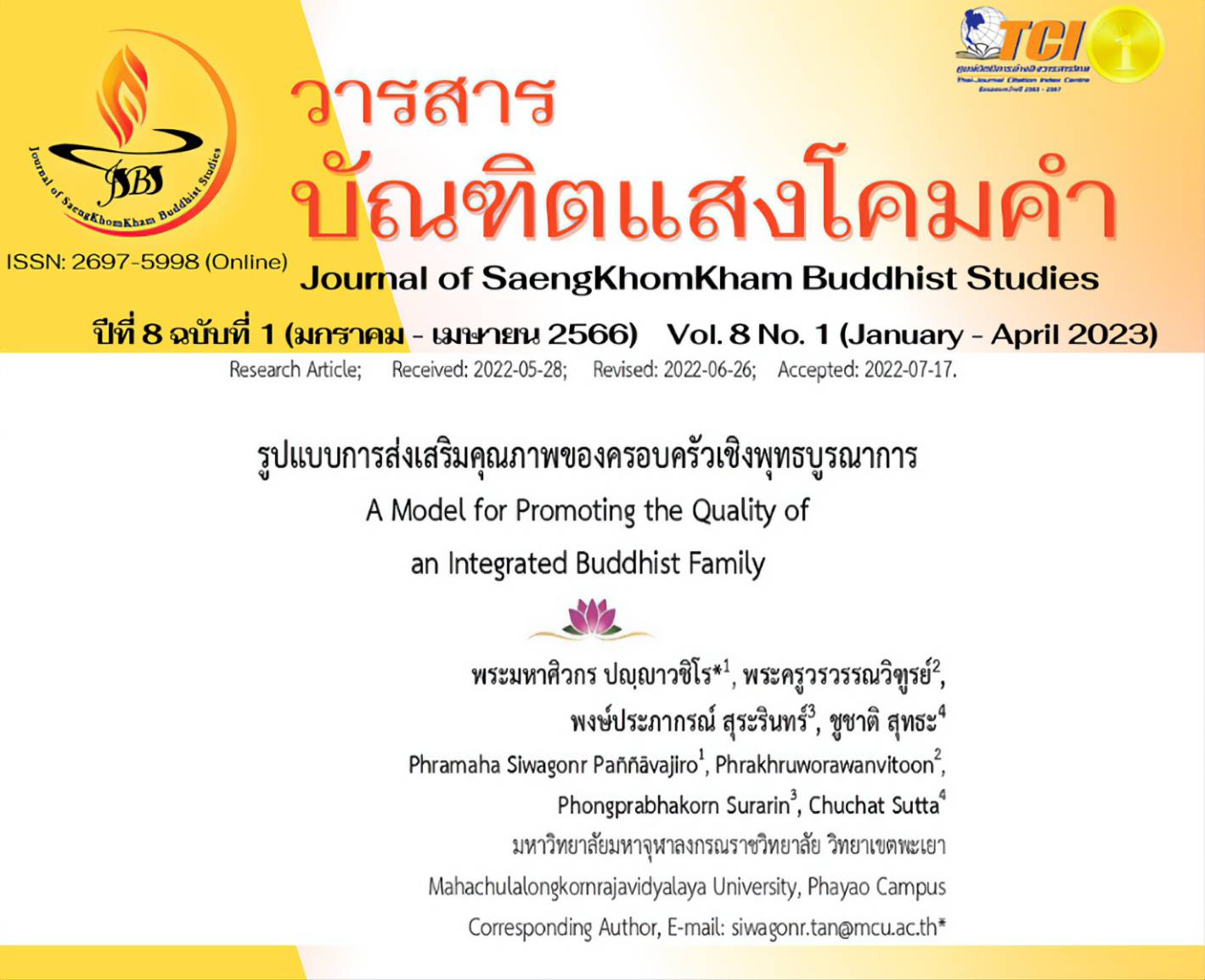
รูปแบบการส่งเสริมคุณภาพของครอบครัวเชิงพุทธบูรณาการ
คำสำคัญ:
การส่งเสริมคุณภาพ, ครอบครัว, พุทธบูรณาการบทคัดย่อ
การวิจัยนี้มีวัตถุประสงค์ ดังนี้ 1) เพื่อศึกษาสภาพปัจจุบันของครอบครัวตัวอย่างในจังหวัดพะเยา 2) เพื่อศึกษาคุณภาพของครอบครัวตามหลักพระพุทธศาสนา 3) เพื่อเสนอรูปแบบการส่งเสริมคุณภาพของครอบครัวเชิงพุทธบูรณาการ เป็นการวิจัยเชิงคุณภาพโดยการศึกษาเอกสารและเก็บข้อมูลจากการสัมภาษณ์ผู้ให้ข้อมูลหลัก 27 รูป/คน จากนั้น วิเคราะห์ข้อมูลด้วยวิธีการเขียนสรุปผลการวิจัยในรูปแบบการเขียนเชิงพรรณนา
ผลการวิจัย พบว่า 1) ลักษณะครอบครัวในสังคมไทยปัจจุบัน ส่วนมากเป็นครอบครัวเดี่ยวและครอบครัวขนาดเล็ก โดยแนวโน้มครอบครัวคนเดียวและครอบครัว 2 คน มีจำนวนเพิ่มสูงขึ้นอย่างมาก สำหรับครอบครัวในจังหวัดพะเยามีการเปลี่ยนแปลงทั้งจำนวนโครงสร้างของขนาดครอบครัวและจำนวนประชากร กล่าวคือ ในอดีตเป็นครอบครัวขยาย ส่วนปัจจุบันเป็นครอบครัวเดี่ยว นอกจากนั้น บางพื้นที่ยังเป็นครอบครัวข้ามรุ่น คือ ตายาย/ปู่ย่าและหลานอยู่รวมกัน 2) คุณภาพของครอบครัวตามหลักพระพุทธศาสนามี 2 ประการ คือ (1) คุณภาพครอบครัวที่พึงประสงค์ทั่วไป ได้แก่ ต้นแบบจากพ่อแม่ที่มีหลักของการอยู่ร่วมกันของสมาชิก มีวิธีการแก้ปัญหา รู้จักการเรียนรู้ร่วมกัน (2) คุณภาพครอบครัวในพระพุทธศาสนา คือ การเข้าถึงศาสนา เข้าใจหลักคำสอนและนำไปปฏิบัติได้จริง 3) รูปแบบการส่งเสริมคุณภาพของครอบครัวเชิงพุทธบูรณาการมี 2 ประการ คือ (1) การส่งเสริมคุณภาพของครอบครัวด้านความมั่นคง เพื่อป้องกันการทะเลาะวิวาท ความรุนแรง การหย่าร้าง โดยมีแนวทางการส่งเสริม ดังนี้ 1.1 การเลือกคนเป็นคู่ครองตามหลักสมชีวิธรรม พิจารณาจากอุปนิสัย วัยวุฒิ สุขภาพร่างกาย จิตและอารมณ์ ความเชื่อ ความประพฤติ ความเสียสละและสติปัญญาให้มีความเท่าเทียมกันหรือเหมือนกัน 1.2 การศึกษาเรียนรู้และเข้าใจหลักการที่ดีเพื่อครอบครัวด้วยการทำตามแบบอย่างที่ดีและฟังคำแนะนำของบิดามารดา 1.3 ความมั่นคงหนักแน่นตามหลักฆราวาสธรรม คือ จริงใจ ฝึกฝน ทนได้ ให้ปัน 1.4 ความเคารพ อ่อนน้อมถ่อมตนและอยู่ในโอวาท ดูแลเลี้ยงดูบิดามารดา ช่วยเหลือกิจการ แบ่งเบาภาระ รักษาชื่อเสียงวงค์ตระกูล และประพฤติตนเป็นคนดี (2) การส่งเสริมคุณภาพของครอบครัวด้านความมั่งคั่งเพื่อแก้ไขปัญหาความยากจน ตามแนวทางหลักทิฏฐธัมมิกัตถประโยชน์ คือ ความขยัน เก็บออมรักษาทรัพย์สินอย่างรัดกุม รู้จักคบหาเพื่อนที่ดี อยู่อย่างพอเพียงตามแนวปรัชญาเศรษฐกิจพอเพียง องค์ความรู้จากการวิจัย คือ 1. การได้รูปแบบการส่งเสริมคุณภาพของครอบครัวด้านความมั่นคงในชีวิตครอบครัว โดยการบูรณาการกับหลักธรรมทางพระพุทธศาสนา รวมถึงแนวคิดของผู้มีประสบการณ์ในการครองเรือนที่ดี 2. การได้รูปแบบการส่งเสริมคุณภาพของครอบครัวด้านความมั่งคั่งทางเศรษฐกิจด้วยการประยุกต์ใช้หลักธรรมเพื่อการสร้างความมั่งมี ความร่ำรวยและเป็นแนวทางแก้ไขปัญหาทางเศรษฐกิจของครอบครัว
Downloads
เอกสารอ้างอิง
กลุ่มนโยบายและวิชาการ สำนักงานพัมนาสังคมและความมั่นคงของมนุษย์จังหวัดพะเยา. (2564). รายงานสถานการณ์ทางสังคมจังหวัดพะเยา ประจำปี 2564. พะเยา: สำนักงานพัฒนาสังคมและความมั่นคงของมนุษย์จังหวัดพะเยา.
คาสปาร์ พีค และคณะ. (2558). รายงานสถานการณ์ประชากรไทย พ.ศ. 2558 โฉมหน้าครอบครัวไทยยุคเกิดน้อย อายุยืน. สุนทร เจริญทัศน์. (ผู้แปล). กรุงเทพมหานคร: กองทุนประชากรแห่งสหประชาชาติประจำประเทศไทย และสำนักงานคณะกรรมการพัฒนาการเศรษฐกิจและสังคมแห่งชาติ.
ฉัฐวีณ์ สิทธิ์ศิรอรรถ. (2559). การศึกษาความผูกพันต่อครอบครัวของนักเรียนเตรียมทหาร. วารสารสันติศึกษาปริทรรศน์ มจร. 4 (1), 1-17.
พระครูนิรมิตสังฆกิจ (นินนาท ธมฺมนาโท). (2562). พุทธศาสตร์: การบูรณาการพุทธธรรมเพื่อแก้ปัญหาความยากจน. วารสารบัณฑิตศึกษาปริทรรศน์ วิทยาลัยสงฆ์นครสวรรค์. 7 (3), 287-298.
พระครูนิวิฐศีลขันธ์ และคณะ. (2563). วัฒนธรรมและภูมิปัญญาท้องถิ่นวิถีพุทธกับการเสริมสร้างความมั่นคงของครอบครัวพ่อ-แม่มือใหม่. วารสารสันติศึกษาปริทรรศน์ มจร. 8 (6), 2128-2137.
พระครูสิรธรรมานุยุต. (อภิรมย์ พลชะนะ). (2562). แนวทางการประยุกต์ใช้หลักพุทธธรรมเพื่อส่งเสริมการครองเรือนในครอบครัวไทยปัจจุบัน. วารสารมหาจุฬานาครทรรศน์. 6 (3), 1397-1414.
พระมหายศวิภรณ์ เปมสีโล และคณะ. (2561). การบูรณาการหลักฆราวาสธรรมกับการปฏิบัติตนของครอบครัวไทยยุคไทยแลนด์ 4.0. วารสารสังคมศาสตร์และมานุษยวิทยาเชิงพุทธ. 3 (2), 44-62.
พูนสุข มาศรังสรรค์. (2559). การจัดการความรุนแรงในครอบครัวเชิงพุทธบูรณาการ. วารสารสันติศึกษาปริทรรศน์ มจร. 4 (1), 221-242.
มหามกุฏราชวิทยาลัย. (2557). พระไตรปิฎกและอรรถกถาแปล เล่ม 18, พิมพ์ครั้งที่ 9. นครปฐม: โรงพิมพ์มหามกุฏราชวิทยาลัย.
มหาจุฬาลงกรณราชวิทยาลัย. (2539). พระไตรปิฎกภาษาไทย ฉบับมหาจุฬาลงกรณราชวิทยาลัย เล่ม 11, 15, 21, 23, 25. กรุงเทพมหานคร: โรงพิมพ์มหาจุฬาลงกรณราชวิทยาลัย.
ยุพา จิ๋วพัฒนกุล และฐิติรัตน์ ทับแก้ว. (2557). การพัฒนาแนวทางการลดความขัดแย้งในครอบครัวเพื่อป้องกันการบริโภคเครื่องดื่มแอลกอฮอล์ของเยาวชนไทย. วารสารคณะพยาบาลศาสตร์ มหาวิทยาลัยบูรพา. 22 (2), 15-27.
ราเชนทร์ นพณัฐวงศกร. (2562). บทบาทของรัฐบาลชุดปัจจุบันในการขับเคลื่อนโครงการสวัสดิการแห่งรัฐ: เพื่อแก้ไขปัญหาความยากจนและความเหลื่อมล้ำในสังคมไทย. การประชุมวิชาการระดับชาติด้านการบริหารกิจการสาธารณะยุคดิจิทัล ครั้งที่ 5. วิทยาลัยการปกครองท้องถิ่น มหาวิทยาลัยขอนแก่น. วันที่ 1-2 พฤศจิกายน. หน้า 155-173.
วศิน อินทสระ. (2527). ธรรมและชีวิต, พิมพ์ครั้งที่ 2. กรุงเทพมหานคร: กมลการพิมพ์.
สำนักงานสภาพัฒนาการเศรษฐกิจและสังคมแห่งชาติ. (2562ก). รายงานการวิเคราะห์สถานการณ์ความยากจนและความเหลื่อมล้ำในประเทศไทยในปี 2562. กรุงเทพมหานคร: สำนักงานสภาพัฒนาการเศรษฐกิจและสังคมแห่งชาติ.
สำนักงานสภาพัฒนาการเศรษฐกิจและสังคมแห่งชาติ. (2562ข). รายงานการศึกษาผลกระทบจากการเปลี่ยนแปลงโครงสร้างประชากรและข้อเสนอแนะเชิงนโยบายต่อการพัฒนาประเทศจากผลการคาดประมาณประชากรของประเทศไทย. กรุงเทพมหานคร: สำนักงานสภาพัฒนาการเศรษฐกิจและสังคมแห่งชาติ.
สำนักบริหารแรงงานต่างด้าว. (2563). สถิติจำนวนคนต่างด้าวที่ได้รับอนุญาตทำงานทั่วราชอาณาจักร ประจำปี 2560. กรุงเทพมหานคร: สำนักบริหารแรงงานต่างด้าว กระทรวงแรงงาน.
อุทัย บุญประเสริฐ (2529). การศึกษากับการพัฒนาและความสัมพันธ์กับการพัฒนาประเทศ. สระบุรี: โรงพิมพ์ปากเพรียวการช่าง.
Bronfenbrenner, U. and Morris, P. (2006). The Bioecoloigical Model of Human Development. In Lerner, R. M. and Damon, W. (eds.). Handbook of Child Psychology Vol. 1: Theorectical Models of Human Development, 5th ed. (pp. 793-828). New York: Wiley.
ดาวน์โหลด
เผยแพร่แล้ว
รูปแบบการอ้างอิง
ฉบับ
ประเภทบทความ
สัญญาอนุญาต
ลิขสิทธิ์ (c) 2023 วารสารบัณฑิตแสงโคมคำ

อนุญาตภายใต้เงื่อนไข Creative Commons Attribution-NonCommercial-NoDerivatives 4.0 International License.