
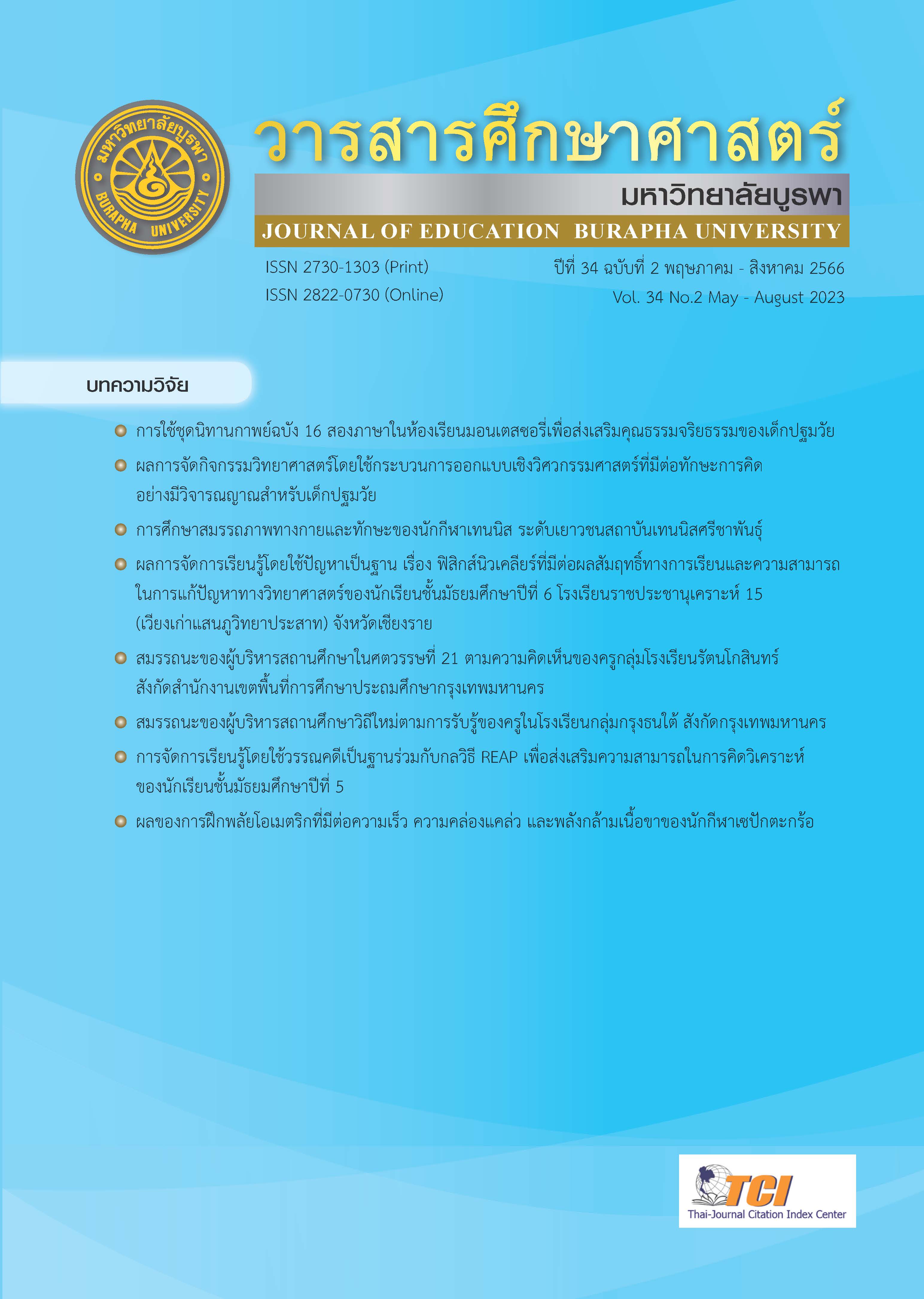
การจัดการเรียนรู้โดยใช้วรรณคดีเป็นฐานร่วมกับกลวิธี REAP เพื่อส่งเสริมความสามารถในการคิดวิเคราะห์ ของนักเรียนชั้นมัธยมศึกษาปีที่ 5
คำสำคัญ:
วรรณคดีเป็นฐาน, กลวิธี REAP, ความสามารถในการคิดวิเคราะห์บทคัดย่อ
การวิจัยครั้งนี้มีวัตถุประสงค์เพื่อ 1) เพื่อเปรียบเทียบความสามารถในการคิดวิเคราะห์ของนักเรียนชั้นมัธยมศึกษาปีที่ 5 ก่อนและหลังการจัดการเรียนรู้โดยใช้วรรณคดีเป็นฐานร่วมกับกลวิธี REAP 2) เพื่อเปรียบเทียบความสามารถในการคิดวิเคราะห์ของนักเรียนชั้นมัธยมศึกษาปีที่ 5 หลังการจัดการเรียนรู้โดยใช้วรรณคดีเป็นฐานร่วมกับกลวิธี REAP กับเกณฑ์ร้อยละ 80 และ 3) เพื่อศึกษาความพึงพอใจของนักเรียนชั้นมัธยมศึกษาปีที่ 5 ที่มีต่อการจัดการเรียนรู้โดยใช้วรรณคดีเป็นฐานร่วมกับกลวิธี REAP กลุ่มตัวอย่าง ได้แก่ นักเรียนชั้นมัธยมศึกษาปีที่ 5/1 ปีการศึกษา 2565 โรงเรียนบางกระทุ่มพิทยาคม จำนวน 32 คน ซึ่งได้มาโดยการเลือกกลุ่มตัวอย่างแบบเจาะจง เครื่องมือที่ใช้ในการวิจัย ได้แก่ 1) แผนการจัดการเรียนรู้โดยใช้วรรณคดีเป็นฐานร่วมกับกลวิธี REAP 2) แบบวัดความสามารถในการคิดวิเคราะห์ และ 3) แบบประเมินความพึงพอใจของนักเรียนที่มีต่อการจัดการเรียนรู้โดยใช้วรรณคดีเป็นฐานร่วมกับกลวิธี REAP สถิติที่ใช้ในการวิเคราะห์ข้อมูล ได้แก่ ค่าเฉลี่ย ร้อยละ ส่วนเบี่ยงเบนมาตรฐาน การทดสอบ t-test dependent และ t-test One sample ผลการวิจัยพบว่า 1) ความสามารถในการคิดวิเคราะห์ของนักเรียนชั้นมัธยมศึกษาปีที่ 5 หลังได้รับการจัดการเรียนรู้โดยใช้วรรณคดีเป็นฐานร่วมกับกลวิธี REAP สูงกว่าก่อนเรียนอย่างมีนัยสำคัญทางสถิติที่ระดับ .05 2) ความสามารถในการคิดวิเคราะห์ของนักเรียนชั้นมัธยมศึกษาปีที่ 5 หลังการจัดการเรียนรู้โดยใช้วรรณคดีเป็นฐานร่วมกับกลวิธี REAP สูงกว่าเกณฑ์ร้อยละ 80 อย่างมีนัยสำคัญทางสถิติที่ระดับ .05 3) นักเรียนชั้นมัธยมศึกษาปีที่ 5 มีความพึงพอใจต่อการจัดการเรียนรู้โดยใช้วรรณคดีเป็นฐานร่วมกับกลวิธี REAP อยู่ในระดับมากที่สุด (=4.51, S.D.=0.65)
เอกสารอ้างอิง
กระทรวงศึกษาธิการ. (2552). หลักสูตรแกนกลางการศึกษาขั้นพื้นฐาน พุทธศักราช 2551. กรุงเทพฯ: โรงพิมพ์ชุมนุมสหกรณ์การเกษตรแห่งประเทศไทย.
กรมวิชาการ. (2546). กิจกรรมส่งเสริมการอ่าน. กรุงเทพฯ: โรงพิมพ์คุรุสภาลาดพร้าว.
กาญจนา วงศ์กรด. (2564). การพัฒนาผลสัมฤทธิ์ทางการเรียนวิชาภาษาไทยเชิงบูรณาการ โดยใช้แนวคิดวรรณคดีเป็นฐานร่วมกับรูปแบบการจัดการเรียนรู้ตามแนวคิดจิตวิทยาเชิงบวก PERMA สำหรับนักเรียนชั้นมัธยมศึกษาปีที่ 3 (การค้นคว้าอิสระ ปริญญาการศึกษามหาบัณฑิต), สาขาวิชาภาษาไทย มหาวิทยาลัยนเรศวร.
ชวิน พงษ์ผจญ. (2562). การออกแบบหน่วยการเรียนรู้ภาษาไทยโดยใช้แนวคิดวรรณคดีเป็นฐาน: แนวคิดแนวทางปฏิบัติ และประเด็นที่ควรพิจารณา. วารสารมนุษยศาสตร์วิชาการ, 26(2), 95-125.
ณัฐพร สายกฤษณะ. (2563). การพัฒนาความสามารถในการอ่านวิเคราะห์และการเขียนสรุปความของนักเรียนชั้นมัธยมศึกษาปีที่ 2 โดยการจัดกิจกรรมการเรียนรู้ตามกลวิธี REAP ร่วมกับเทคนิคการใช้ผังกราฟิก (วิทยานิพนธ์ ปริญญาการศึกษามหาบัณฑิต), สาขาวิชาหลักสูตรและการสอน มหาวิทยาลัยศิลปากร. สืบค้นจาก http://ithesis-ir.su.ac.th/dspace/handle/123456789/3107
บุญชม ศรีสะอาด. (2560). การวิจัยเบื้องต้น. (พิมพ์ครั้งที่ 10). กรุงเทพฯ: สุวีริยาสาส์น.
วีรภัทร ศุภรสิงห์. (2562). ผลของการจัดการเรียนรู้โดยใช้กลวิธี REAP ที่มีต่อผลสัมฤทธิ์ทางการเรียนวรรณคดีไทยและความสามารถในการคิดเชิงวิพากษ์ของนักเรียนชั้นมัธยมศึกษาปีที่ 5 (ปริญญานิพนธ์การศึกษามหาบัณฑิต), สาขาวิชาวิทยาการทางการศึกษาและการจัดการเรียนรู้, คณะศึกษาศาสตร์ มหาวิทยาลัยศรีนครินทรวิโรฒเชียงใหม่. สืบค้นจาก http://ir-ithesis.swu.ac.th/dspace/bitstream/123456789/696/1/gs591130124.pdf
สุนันทา อาจสัตรู. (2559). ผลการจัดกิจกรรมการเรียนรู้วรรณคดีกลอนดอกสร้อยรำพึงในป่าช้าแบบบูรณาการตามแนวคิดวรรณคดีเป็นฐาน ระดับชั้นมัธยมศึกษาปีที่ 2 โรงเรียนส่วนบุญถัมภ์ ลำพูน (วิทยานิพนธ์ ปริญญาครุศาสตรมหาบัณฑิต), สาขาวิชาหลักสูตรและการสอน มหาวิทยาลัยราชภัฏเชียงใหม่. สืบค้นจาก http://cmruir.cmru.ac.th/handle/123456789/1639
สุรีรัตน์ อักษรกาญจน์. (2562). การคิดวิเคราะห์: การพัฒนาการจัดการเรียนรู้แบบแวดวงวรรณกรรมร่วมกับการใช้คำถามระดับสูง. วารสารราชภัฏสุราษฎร์ธานี, 7(1), 35-62.
Custodio, B., & Sutton, M. J. (1998). Literature-Based ESL for Secondary School Students. TESOL Journal, 7(5), 19-23.
Marilyn G. Eanet, & Anthony V. Manzo. (1976). REAP - A Strategy for Improving Reading/Writing/Study Skills. Journal of Reading, 19(8), 647-652.
ดาวน์โหลด
เผยแพร่แล้ว
รูปแบบการอ้างอิง
ฉบับ
ประเภทบทความ
สัญญาอนุญาต
ลิขสิทธิ์ (c) 2023 วารสารศึกษาศาสตร์ มหาวิทยาลัยบูรพา

อนุญาตภายใต้เงื่อนไข Creative Commons Attribution 4.0 International License.
ลิขสิทธิ์ของบทความที่ปรากฏในวารสารศึกษาศาสตร์ มหาวิทยาลัยบูรพา เป็นของวารสารศึกษาศาสตร์ มหาวิทยาลัยบูรพา ทั้งนี้บทความทุกเรื่องผ่านการตรวจสอบความถูกต้องทางวิชาการจากผู้ทรงคุณวุฒิ ข้อความและข้อมูลของบทความในวารสารฯ เป็นแนวคิดของผู้แต่ง มิใช่เป็นความคิดเห็นของกองบรรณาธิการ และมิใช่ความรับผิดชอบของคณะศึกษาศาสตร์ มหาวิทยาลัยบูรพา ไม่สงวนลิขสิทธิ์การนำไปใช้ประโยชน์ทางวิชาการแต่ต้องอ้างอิงแสดงแหล่งที่มาและอยู่ในขอบเขตของกฎหมายลิขสิทธิ์


