Study on Decay Law of Radioactive Materials using Scilab Computer Program and Xcos Application
Article Sidebar
Main Article Content
Abstract
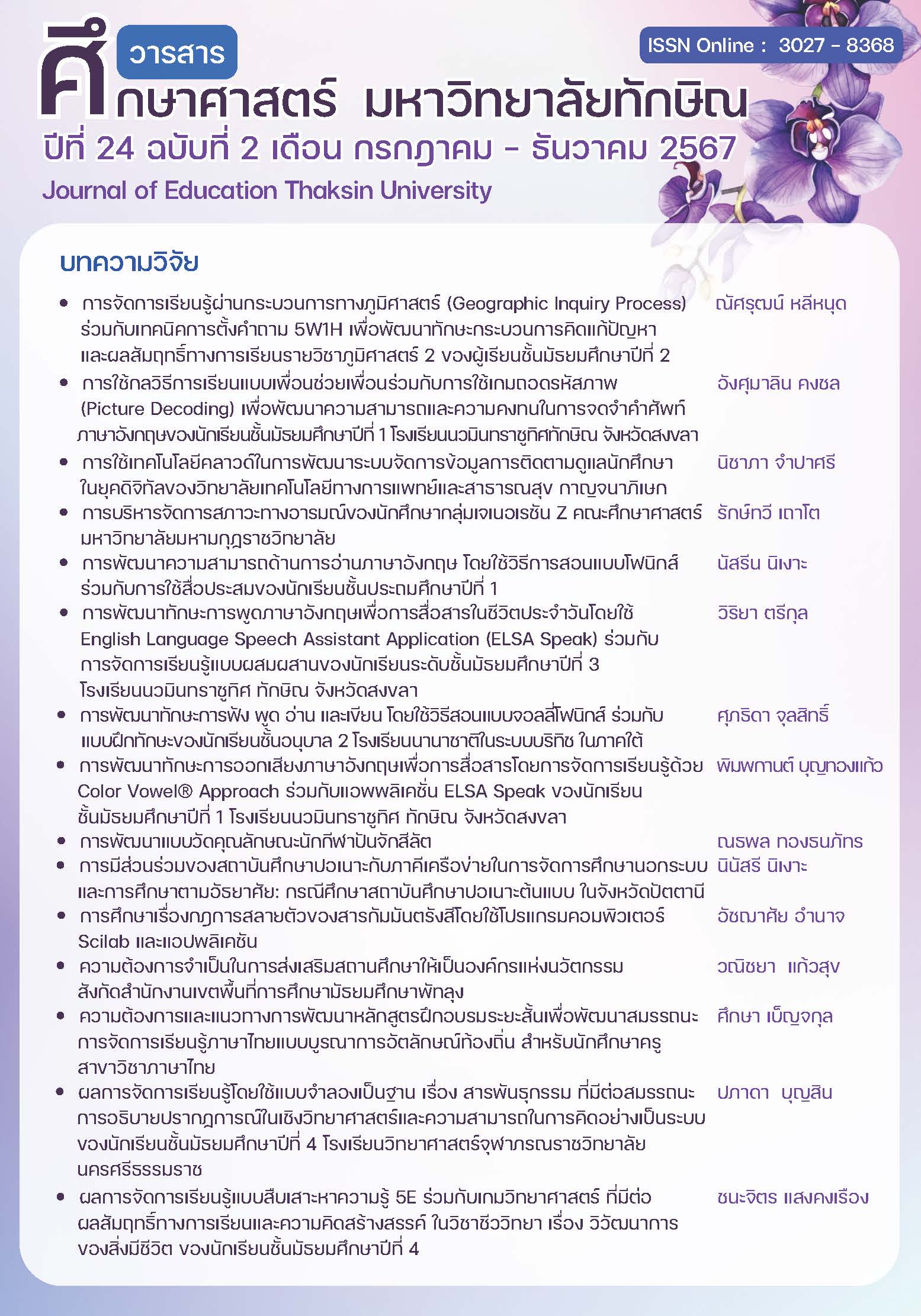
The Xcos application in Scilab computer program was used to study on the decay law of radioactive materials in this study. The main objective of this study was to present the characteristic of decaying of radioactive materials in forms of exponential decay which are usually different and depend on time. By doing this, we can show some results that help student and teacher easily to understand the content and then could be used some of these results to prepare for teaching and learning in classroom. And the characteristic of the successive decay of radioactive materials was also studied and presented. During study, the researcher also compared the characteristics of the graphs obtained from the research study with the graphs obtained directly from the Scilab computer program and found that the results were exactly the same. Moreover, some graphs from this study were used to create the pretest, posttest and then using with 5 undergraduate students who were in the 3rd year of Bachelor degree of Education (B.Ed.), major in Physics, Faculty of Education and Faculty of Science, Thaksin University, Songkhla Campus. It was found that the average points from the test after studying higher than before studying. In addition, the effectiveness index (E.I.) was also evaluated and equal to 88 %. Hence, we can conclude that the application Xcos in Scilab computer program is suitable and can be applied to prepare some Physics document using for classroom activities in both high school and university level.
Article Details

This work is licensed under a Creative Commons Attribution-NonCommercial-NoDerivatives 4.0 International License.
ในกรณีที่กองบรรณาธิการ หรือผู้เชี่ยวชาญ ซึ่งได้รับเชิญให้เป็นผู้ตรวจบทความวิจัย หรือ บทความทางวิชาการมีความเห็นว่าควรแก้ไขความบกพร่อง ทางกองบรรณาธิการจะส่งต้นฉบับให้ ผู้เขียนพิจารณาจัดการแก้ไขให้เหมาะสมก่อนที่จะลงพิมพ์ ทั้งนี้ กองบรรณาธิการจะยึดถือความคิด เห็นของผู้เชี่ยวชาญเป็นเกณฑ์
References
ซันซิมา ภู่ทอง (2562). การศึกษาการเคลื่อนที่แบบโพรเจกไทล์โดยใช้ Xcos ในโปรแกรมคอมพิวเตอร์ Scilab. โครงงานวิทยาศาสตร์-ฟิสิกส์ หลักสูตรปริญญาการศึกษาบัณฑิต วิชาเอกวิทยาศาสตร์-ฟิสิกส์ คณะศึกษาศาสตร์ร่วมกับคณะวิทยาศาสตร์ มหาวิทยาลัยทักษิณ.
ณัฐวุฒิ ยกน้อยวงศ์ (2561). การพัฒนาทักษะการให้เหตุผลและการพัฒนาแก้โจทย์ปัญหาฟิสิกส์ โดยใช้กลวิธีแก้ปัญหาเชิงตรรกะร่วมกับแผนผังมโนทัศน์ของนักเรียนชั้นมัธยมศึกษาตอนปลาย [วิทยานิพนธ์ระดับปริญญาโทหลักสูตรศึกษาศาสตรมหาบัณฑิต มหาวิทยาลัยธุรกิจบัณฑิตย์] มหาวิทยาลัยธุรกิจบัณฑิตย์
ธำรง เมธาศิริ. (2541). ฟิสิกส์ของนิวเคลียสเบื้องต้น. กรุงทพฯ: สำนักพิมพ์จุฬาลงกรณ์มหาวิทยาลัย.
นฤมล ฉิมงาม (2558). การพัฒนาความสามารถในการแก้โจทย์ปัญหาฟิสิกส์โดยใช้เทคนิคการแก้ปัญหาของโพลยาผสานกับการจัดการเรียนรู้แบบวัฏจักรการเรียนรู้ 7 ขั้นของนักเรียนมัธยมศึกษาปีที่ 6 [วิทยานิพนธ์ระดับปริญญาโทหลักสูตรศึกษาศาสตรมหาบัณฑิต มหาวิทยาลัยเทคโนโลยีราชมงคลธัญบุรี] มหาวิทยาลัยเทคโนโลยีราชมงคลธัญบุรี
ประสงค์ เกษราธิคุณ. (2561). เอกสารประกอบการสอนรายวิชาฟิสิกส์นิวเคลียร์. สาขาวิชาวิทยาศาสตร์และคณิตศาสตร์พื้นฐาน. คณะวิทยาศาสตร์ มหาวิทยาลัยทักษิณ วิทยาเขตพัทลุง.
ยุวันดา อินทรสวัสดิ์ (2560). การศึกษาฟิสิกส์ของคลื่นโดยใช้โปรแกรมคอมพิวเตอร์ Scilab. โครงงานวิทยาศาสตร์-ฟิสิกส์หลักสูตรปริญญาการศึกษาบัณฑิต วิชาเอกวิทยาศาสตร์-ฟิสิกส์ คณะศึกษาศาสตร์ร่วมกับคณะวิทยาศาสตร์ มหาวิทยาลัยทักษิณ.
วรินดา พัฒน์แก้ว. (2561). การศึกษาการเคลื่อนที่แบบมีแรงต้านทานของอากาศโดยใช้ Xcos ในโปรแกรมคอมพิวเตอร์ Scilab. โครงงานวิทยาศาสตร์-ฟิสิกส์ หลักสูตรปริญญาการศึกษาบัณฑิต วิชาเอกวิทยาศาสตร์-ฟิสิกส์ คณะศึกษาศาสตร์ร่วมกับคณะวิทยาศาสตร์ มหาวิทยาลัยทักษิณ.
สุภาภรณ์ บุษยา. (2561). การศึกษาการเคลื่อนที่ในแนวเส้นตรงด้วยความเร่งคงที่โดยใช้ Xcos ในโปรแกรมคอมพิวเตอร์ Scilab. โครงงานวิทยาศาสตร์-ฟิสิกส์ หลักสูตรปริญญาการศึกษาบัณฑิต วิชาเอกวิทยาศาสตร์-ฟิสิกส์ คณะศึกษา ศาสตร์ร่วมกับคณะวิทยาศาสตร์ มหาวิทยาลัยทักษิณ.
อภิญญา สายนุ้ย (2560). การศึกษาทฤษฎีบทงานและพลังงานในระบบอนุรักษ์โดยใช้โปรแกรมคอมพิวเตอร์ Scilab. โครงงานวิทยาศาสตร์-ฟิสิกส์ หลักสูตรปริญญาการศึกษาบัณฑิต วิชาเอกวิทยาศาสตร์-ฟิสิกส์ คณะศึกษาศาสตร์ร่วมกับคณะวิทยาศาสตร์ มหาวิทยาลัยทักษิณ.
Leros, A. & Andreatos, A. S. (2012). Using Xcos as a teaching tool in a simulation course. Proceedings of the 6th international conference on Communications and Information Technology, and Proceedings of the 3rd World conference on Education and Educational Technologies. 121-126. https://www.researchgate.net/publication/ 262315171_Using_Xcos_as_a_teaching_tool_in_a_simulation_course
Nandini, C. S. (2017). Simulation of Simple Harmonic Oscillator using Xcos, Journal of Emerging Technologies and Innovative Research. 4(9), 831-839. https://www.jetir.org/papers/ JETIR1709123.pdf
Scilab Enterprises (2013). Xcos for very beginners. Scilab Enterprises, Versailles, France. 15 pages. https://www.scilab.org/sites/default/ files/prg/att/1732/Xcos_beginners_0.pdf
Sastri, O. S. K. S. (2014). Model based simulation of forced oscillator using open source application Xcos: A constructivist paradigm. International Journal of Innovative Science, Engineering & Technology, 1(8), 93-100. https://www.ijiset.com/v1s8/IJISET_V1_I8_13.pdf
Serway, A. R. & Jewett, J.W. (2018). Physics for Scientists and Engineers with Modern Physics. (10th ed.) Cengage Learning. 1296 p.
Verma, A. K. & Verma, R. (2020). Introduction to Xcos: A Scilab tool for modeling dynamical systems. kdp. amazon.com. 80 pages. https://www.researchgate.net/publication/ 343472236_Introduction_to_Xcos_A_Scilab_Tool_for_Modeling_Dynamical_Systems
