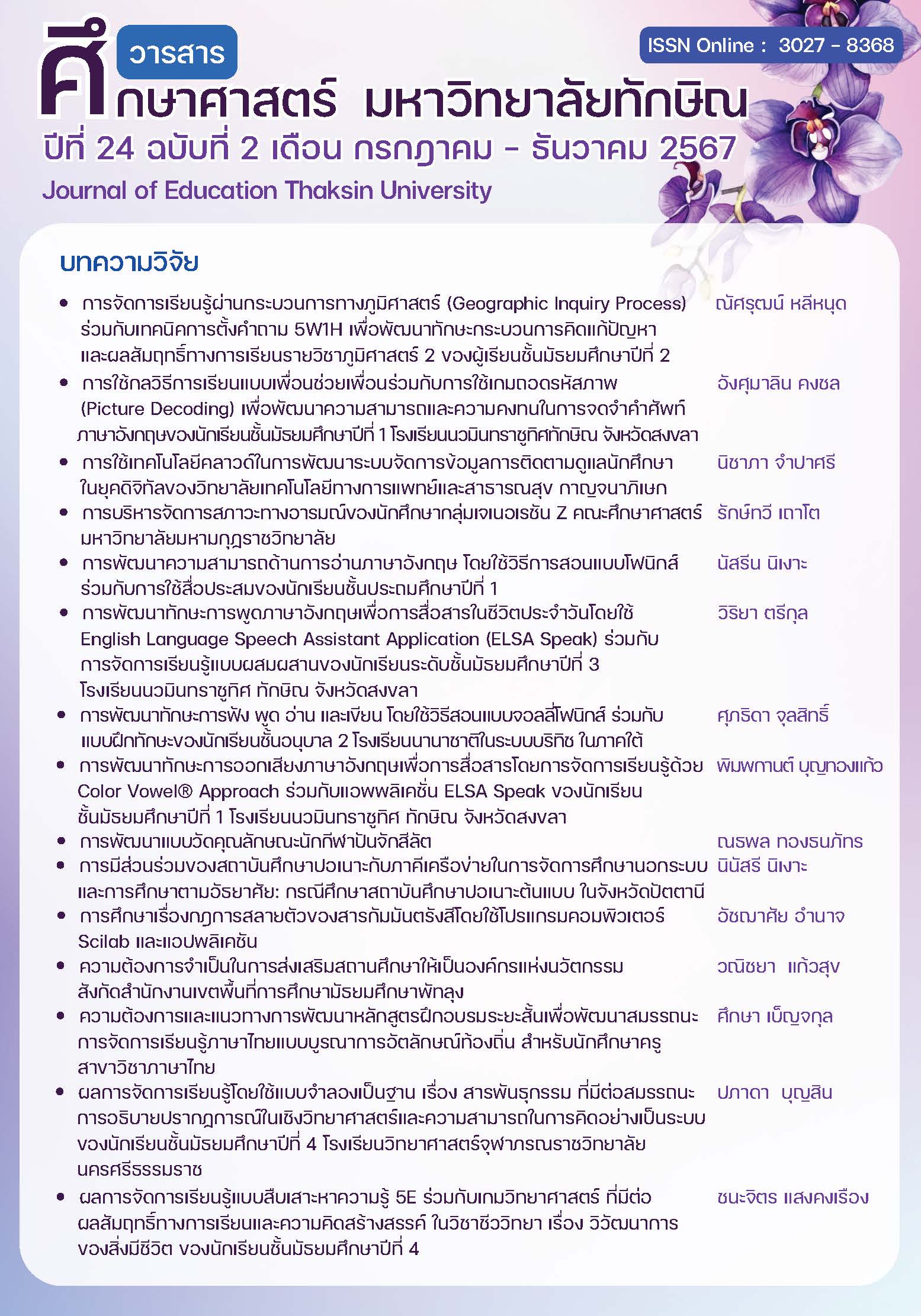
ผลการจัดการเรียนรู้โดยใช้แบบจำลองเป็นฐาน เรื่อง สารพันธุกรรม ที่มีต่อสมรรถนะการอธิบายปรากฏการณ์ในเชิงวิทยาศาสตร์และความสามารถในการคิดอย่างเป็นระบบของนักเรียนชั้นมัธยมศึกษาปีที่ 4 โรงเรียนวิทยาศาสตร์จุฬาภรณราชวิทยาลัย นครศรีธรรมราช
Article Sidebar
Main Article Content
บทคัดย่อ
การวิจัยครั้งนี้มีวัตถุประสงค์เพื่อ 1) เปรียบเทียบสมรรถนะการอธิบายปรากฏการณ์เชิงวิทยาศาสตร์ของนักเรียนชั้นมัธยมศึกษาปีที่ 4 ที่เรียนโดยการจัดการเรียนรู้โดยใช้แบบจำลองเป็นฐาน เรื่อง สารพันธุกรรม และนักเรียนที่เรียนโดยการจัดการเรียนรู้แบบปกติ และ 2) เปรียบเทียบความสามารถในการคิดอย่างเป็นระบบของนักเรียนชั้นมัธยมศึกษาปีที่ 4 ที่เรียนโดยการจัดการเรียนรู้โดยใช้แบบจำลองเป็นฐาน เรื่อง สารพันธุกรรม และนักเรียนที่เรียนโดยการจัดการเรียนรู้แบบปกติ กลุ่มตัวอย่างที่ใช้ในการวิจัยครั้งนี้ ได้แก่ นักเรียนชั้นมัธยมศึกษาปีที่ 4 โรงเรียนวิทยาศาสตร์จุฬาภรณราชวิทยาลัย นครศรีธรรมราช ภาคเรียนที่ 2 ปีการศึกษา 2565 จำนวน 2 ห้อง รวม 48 คน ได้มาโดยการสุ่มแบบกลุ่ม แล้วจับฉลากห้องเรียนเป็นกลุ่มทดลอง จำนวน 24 คน และกลุ่มควบคุมจำนวน 24 คน เครื่องมือที่ใช้ในการวิจัย ได้แก่ 1) แผนการจัดการเรียนรู้ วิชาชีววิทยา เรื่อง สารพันธุกรรม ระดับชั้นมัธยมศึกษาปีที่ 4 จำนวน 5 แผน เวลารวม 18 ชั่วโมง และแผนการจัดการเรียนรู้รูปแบบปกติ 2) แบบวัดสมรรถนะการอธิบายปรากฏการณ์ในเชิงวิทยาศาสตร์ เรื่อง สารพันธุกรรม และ 3) แบบวัดความสามารถในการคิดอย่างเป็นระบบ เรื่อง สารพันธุกรรม สถิติที่ใช้วิเคราะห์ข้อมูล ได้แก่ ค่าเฉลี่ย ส่วนเบี่ยงเบนมาตรฐาน และการทดสอบค่าที
ผลการวิจัยพบว่า 1) สมรรถนะการอธิบายปรากฏการณ์เชิงวิทยาศาสตร์ของนักเรียนชั้นมัธยมศึกษาปีที่ 4 ที่เรียนโดยการจัดการเรียนรู้โดยใช้แบบจำลองเป็นฐาน เรื่อง สารพันธุกรรม สูงกว่านักเรียนที่เรียนโดยการจัดการเรียนรู้แบบปกติ อย่างมีนัยสำคัญทางสถิติที่ระดับ .05 และ 2) ความสามารถในการคิดอย่างเป็นระบบของนักเรียนชั้นมัธยมศึกษาปีที่ 4 ที่เรียนโดยการจัดการเรียนรู้โดยใช้แบบจำลองเป็นฐาน เรื่อง สารพันธุกรรม สูงกว่านักเรียนที่เรียนโดยการจัดการเรียนรู้แบบปกติ อย่างมีนัยสำคัญทางสถิติที่ระดับ .05
Article Details

อนุญาตภายใต้เงื่อนไข Creative Commons Attribution-NonCommercial-NoDerivatives 4.0 International License.
ในกรณีที่กองบรรณาธิการ หรือผู้เชี่ยวชาญ ซึ่งได้รับเชิญให้เป็นผู้ตรวจบทความวิจัย หรือ บทความทางวิชาการมีความเห็นว่าควรแก้ไขความบกพร่อง ทางกองบรรณาธิการจะส่งต้นฉบับให้ ผู้เขียนพิจารณาจัดการแก้ไขให้เหมาะสมก่อนที่จะลงพิมพ์ ทั้งนี้ กองบรรณาธิการจะยึดถือความคิด เห็นของผู้เชี่ยวชาญเป็นเกณฑ์
เอกสารอ้างอิง
ชนาธิป โหตรภวานนท์, สุรีย์พร สว่างเมฆ และวันดี วัฒนชัยยิ่งเจริญ. (2562). การพัฒนาการคิดอย่างเป็นระบบสำหรับนักเรียนชั้นมัธยมศึกษาปีที่ 4 เรื่อง ระบบประสาทและอวัยวะรับความรู้สึก โดยใช้การจัดการเรียนรู้แบบจำลองเป็นฐาน. วารสารศึกษาศาสตร์ มหาวิทยาลัยนเรศวร, 21(2), 64-79.
ชัยยนต์ ศรีเชียงหา. (2553). การพัฒนาแนวคิดเรื่องสมดุลเคมีและเจตคติต่อ วิชาเคมีของนักเรียนชั้นมัธยมศึกษาปีที่ 5 ด้วยกิจกรรมการจัดการเรียนรู้ โดยแบบจำลองเป็นฐาน (วิทยานิพนธ์ปริญญามหาบัณฑิต). มหาวิทยาลัยเกษตรศาสตร์, กรุงเทพฯ.
ทิศนา แขมมณี. (2557). ศาสตร์การสอน: องค์ความรู้เพื่อการจัดกระบวนการเรียนรู้ที่มีประสิทธิภาพ. (พิมพ์ครั้งที่ 18). กรุงเทพฯ: สำนักพิมพ์แห่งจุฬาลงกรณ์มหาวิทยาลัย.
ไพศาล วรคำ. (2556). การวิจัยทางการศึกษา. (พิมพ์ครั้งที่ 6). มหาสารคาม: ตักศิลาการพิมพ์.
ภรทิพย์ สุภัทรชัยวงศ์, ชาตรี ฝ่ายคำตา และพจนารถ สุวรรณรุจิ. (2558). การจัดการเรียนรู้โดยใช้แบบจำลองเป็นฐานเพื่อพัฒนาแบบจำลองทางความคิด เรื่อง โครงสร้างอะตอมและความเข้าใจธรรมชาติของแบบจำลองของนักเรียนชั้นมัธยมศึกษาปีที่ 4. วารสารนวัตกรรมการเรียนรู้, 1(1), 97-124.
ราตรี ยะคำ. (2560). การวิจัยปฏิบัติการเพื่อพัฒนาสมรรถนะการอธิบายปรากฏการณ์ในเชิงวิทยาศาสตร์ของนักเรียนชั้นมัธยมศึกษาปีที่ 5 ด้วยการจัดการเรียนรู้โดยใช้แบบจำลองเป็นฐาน เรื่อง เชื้อเพลิงซากดึกดำบรรพ์และผลิตภัณฑ์. (วิทยานิพนธ์ปริญญาการศึกษามหาบัณฑิต). มหาวิทยาลัยนเรศวร, พิษณุโลก.
ศูนย์ดำเนินงาน PISA แห่งชาติ สถาบันส่งเสริมการสอนวิทยาศาสตร์และเทคโนโลยี. (2564). ผลการประเมิน PISA 2018 การอ่าน คณิตศาสตร์ และวิทยาศาสตร์. กรุงเทพฯ: สถาบันส่งเสริมการสอนวิทยาศาสตร์และเทคโนโลยี (สสวท.).
สถาบันส่งเสริมการสอนวิทยาศาสตร์และเทคโนโลยี กระทรวงศึกษาธิการ. (2560). กรอบโครงสร้างการประเมินผลนักเรียนโครงการ PISA 2015. กรุงเทพฯ: สสวท.
สันติชัย อนุวรชัย. (2561). การพัฒนาความสามารถในการอธิบายปรากฏการณ์เชิงวิทยาศาสตร์ของนักเรียนระดับชั้นมัธยมศึกษาปีที่ 5 ในหน่วยการเรียนดาราศาสตร์ผ่านกลยุทธ์การเสริมศักยภาพด้วยผังมโนทัศน์. วารสารศึกษาศาสตร์ มหาวิทยาลัยมหาสารคาม, 12(2), 280-191.
สำนักงานสภาพัฒนาการเศรษฐกิจและสังคมแห่งชาติ. (2564). โครงการการพัฒนาระบบสถิติข้อมูลและตัวชี้วัดเพื่อใช้ในการบริหารราชการแผ่นดินตามยุทธศาสตร์ชาติ ประเด็นที่ 12 การพัฒนาการเรียนรู้. กรุงเทพฯ: ศูนย์บริการวิชาการแห่งจุฬาลงกรณ์มหาวิทยาลัย.
สุนีย์ คล้ายนิล, ปรีชาญ เดชศรี และอัมพลิกา ประโมจนีย์. (2551). ความรู้และสมรรถนะทางวิทยาศาสตร์ สำหรับโลกวันพรุ่งนี้. กรุงเทพฯ: เซเว่นพริ้นติ้ง กรุ๊ป.
Barger, M. C. (1984). Clinical Thinking ability and Nursing students. Journal of Nursing Education, 23 (7), 306–309.
Bryce, C., Baliga, V. B., de Nesnera, K., Fiack, D., Goetz, K., Tarjan, L. M., Gilbert, G. S. (2016). Models in the NGSS biology classroom. American biology teacher, 78(1), 35–42.
Centre for Strategic Management, Architects in Strategic and Social Charge. (1999). Systems thinking and learning: Executive briefing and seminar. San Diego: Pleasantville Press.
Coll, R. K., & Taylor, I. (2005). The role of models and analogies in science education. International Journal of Science Education, 27(2), 183–198.
Evagorou, M., Korfiatis, K., Nicolaou, C., & Constantinou. C. (2009). An investigation of the potential of interactive simulations for developing system thinking skills in elementary school: A case study with fifth graders and sixth graders. International Journal of Science Education, 31(5), 655–74.
Gardner, B. H., & Demello, S. (1993). System thinking in action. Health Care Forum Journal, 36(4), 25-28.
Krell, M., zu Belzen, A. U., & Krüger, D. (2014). Students’ levels of understanding models and modelling in biology: global or aspect-dependent. Research in Science Education, 44(1), 109–132. https://doi. org/10.1007/s11165-013-9365-y.
Schwarz, C. V., et al. (2009). Developing a learning progression for scientific modeling: making scientific modeling accessible and meaningful for learners. Journal of Research in Science Teaching, 46(6), 632-654.
Senge, P. M. (1993). The fifth discipline: The art & practice of the learning organization. London: Century Business.
Verhoeff, R. P., Waarlo, A. J., & Boersma, K. T. (2008). Systems modelling and the development of coherent understanding of cell biology. International Journal of Science Education, 30(4), 543–568.
Windschitl, M., Thompon, J., & Braten, M. (2008). Beyond the scientific method: Model – based inquiry as a new paradigm of preference for school science investigation. Science Education, 92(5), 941-967.
Yang, Hsiu-Ting., & Wang, Kuo-Hua. (2013). A teaching model for scaffolding 4th grade students’ scientific explanation writing. Research Science Education, 44(4), 531–548.
