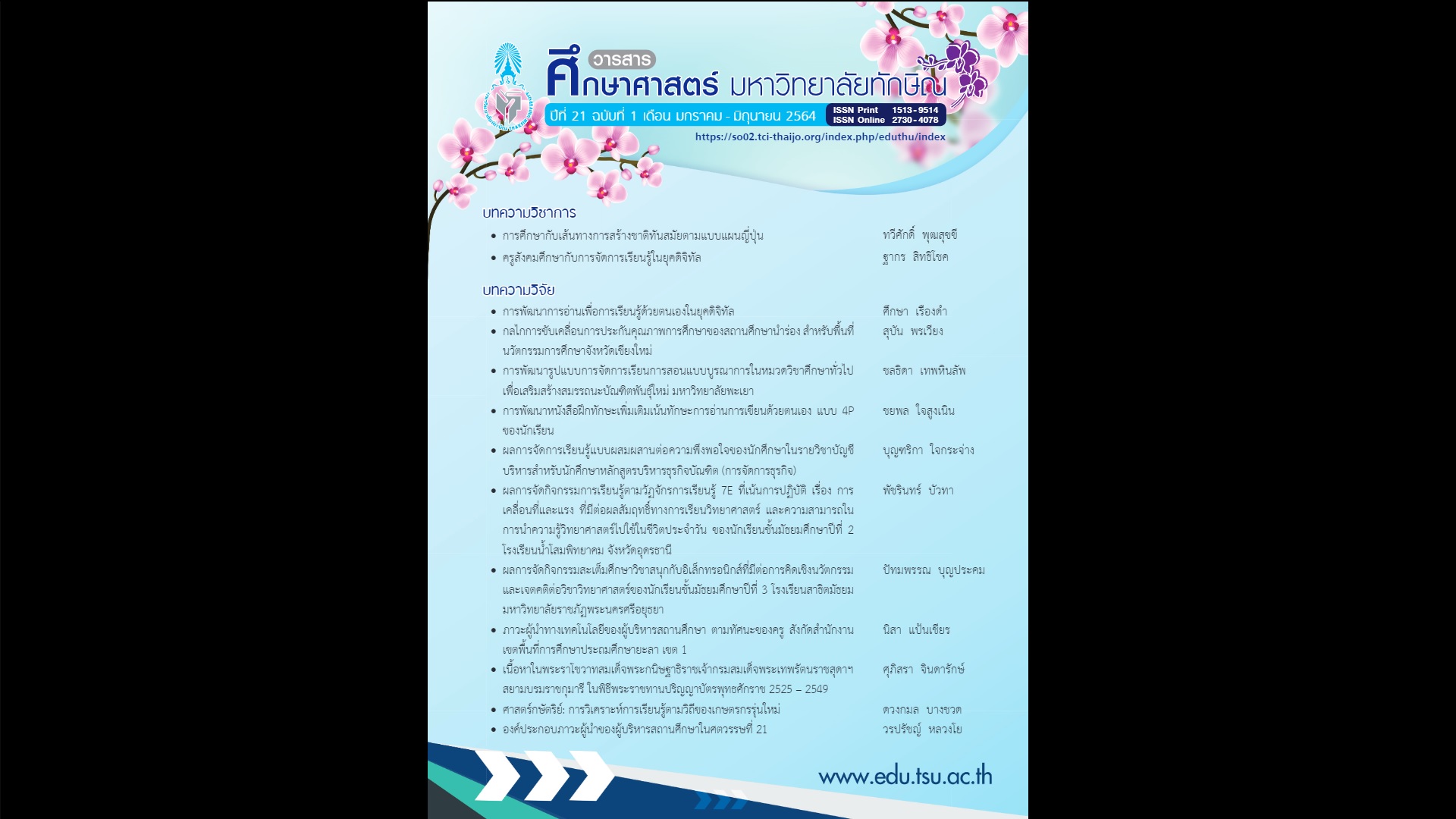
ศาสตร์กษัตริย์: การวิเคราะห์การเรียนรู้ตามวิถีของเกษตรกรรุ่นใหม่
Article Sidebar
Main Article Content
บทคัดย่อ
การวิจัยนี้มีวัตถุประสงค์คือ 1. เพื่อวิเคราะห์วิถีการเรียนรู้ของเกษตรกรรุ่นใหม่ตามแนวทางศาสตร์ กษัตริย์ 2. เพื่อนำเสนอรูปแบบวิถีของเกษตรกรรุ่นใหม่ตามแนวทางศาสตร์กษัตริย์ โดยศึกษาจากเกษตรกร รุ่นใหม่ 26 คน จากการวิเคราะห์เอกสาร วิเคราะห์เนื้อหา การสัมภาษณ์เชิงลึก การสังเกตแบบไม่มีส่วนร่วม เครื่องมือที่ใช้คือ แบบสัมภาษณ์และแบบสังเกตแบบไม่มีส่วนร่วม พบว่า เกษตรกรรุ่น ใหม่นำศาสตร์กษัตริย์ ซึ่งหมายถึงการเป็นนักรบที่พร้อมจะต่อสู้กับปัญหาอุปสรรคในบริบทที่แตกต่างกันตามความเชี่ยวชาญใน ศาสตร์ความรู้และความสามารถอื่นของตนเองที่มามีแต่เดิม วิถีของเกษตรกรรุ่นใหม่เริ่มจากการแสวงหา ปรัชญาการใช้ชีวิตที่มีอัตลักษณ์เฉพาะตนคือการทำความเข้าใจตนเอง นำไปสู่กูารเข้าถึงการประยุกต์แนวคดิ ทฤษฎีสู่การปฏิบัติ จากนั้นจึงมุ่งมั่นพัฒนาการทำงานเพื่อส่วนรวม โดยเกษตรกรรุ่นใหม่มีคุณลักษณะที่ สำคัญ 3 ประการคือ 1. การวางแผนเพื่อที่จะมี เช่นพื้นที่ เงินทุน ความรู้ เครือข่าย 2. เปิดมุมมองใหม่ เพื่อวางแผนชีวิตที่ต้องการจะเป็น และ 3. แสวงหาชีวิตที่สมดุล มีความสุขและมีอิสรภาพ และทำงานร่วม กับหน่วยงานภาครัฐและเอกชนที่ให้การสนับสนุนการจัดอบรมบนฐานความต้องการของเกษตรกรรุ่นใหม่ พร้อมทั้งติดตามผลการดำเนินงาน และยังมีสถาบันการศึกษาระดับอุดมศึกษาและอาชีวศึกษาได้จัดให้มี หลักสูตรผู้ประกอบการเพื่อบ่มเพาะเกษตรกรรุ่นใหม่
Article Details

อนุญาตภายใต้เงื่อนไข Creative Commons Attribution-NonCommercial-NoDerivatives 4.0 International License.
ในกรณีที่กองบรรณาธิการ หรือผู้เชี่ยวชาญ ซึ่งได้รับเชิญให้เป็นผู้ตรวจบทความวิจัย หรือ บทความทางวิชาการมีความเห็นว่าควรแก้ไขความบกพร่อง ทางกองบรรณาธิการจะส่งต้นฉบับให้ ผู้เขียนพิจารณาจัดการแก้ไขให้เหมาะสมก่อนที่จะลงพิมพ์ ทั้งนี้ กองบรรณาธิการจะยึดถือความคิด เห็นของผู้เชี่ยวชาญเป็นเกณฑ์
เอกสารอ้างอิง
ชนิตา รักษ์พลเมือง. (2557). กระบวนทัศน์พัฒนศึกษา. กรุงเทพฯ: สำนักพิมพ์วิญญูชน.
ธนาคารแห่งประเทศไทย. (2563). Covid-19: social Distancing และคลื่นอพยพของประชากรจากมิติสังคมวิทยา: พลังไทย “อยู่บ้าน หยุดเชื้อ เพื่อชาติ” สืบค้น 12 สิงหาคม 2563, จากhttps://www.bot.or.th/Thai/ResearchAndPublications/articles/Pages/Article_31Mar2020.aspx
เปรมศักดิ์ เพียยุระ. (2551). ขุดทองบนดิน. กรุงเทพฯ: ดีเอ็มจี.
วัลลภา แวนวิลเลียนส์วาร์ด. (บ.ก.). (2558). ตลาดที่มีจิตสำนึก: ความร่วมมือของผู้ผลิตและผู้บริโภคเพื่อ เศรษฐกิจใหม่. กรุงเทพฯ: สวนเงินมีนา.
สำนักงานกองทุนสนับสนุนการสร้างเสริมสุขภาพ. (2563). ชีวิตวิถีใหม่ ชีวิตดีเริ่มที่เรา. สืบค้น 10 สิงหาคม 2563, จาก https://www.thaihealth.or.th/Books/643
สำนักงานสภาพัฒนาการเศรษฐกิจและสังคมแห่งชาติ. (2561). ศาสตร์กษัตริย์ หลักการทรงงาน หลักการครองราชย์ แนวพระราชดำริและทฤษฎีในการพัฒนาประเทศของพระบาทสมเด็จ พระปรมินทรมหาภูมิพลอดุลยเดช บรมนาถบพิตร. กรุงเทพฯ: สำนักงานสภาพัฒนาการเศรษฐกิจและสังคมแห่งชาติ.
สุวิทย์ เมษินทรีย์. (2563). โลกเปลี่ยน คนปรับ หลุดจากกับดัก ขยับสู่ความยั่งยืน. สืบค้น 10 กรกฎาคม 2563, จาก https://www.mhesi.go.th/home/index.php/pr/news/1612-e-book
International Labour Organization. (2020). COVID-19 and labour statistics. สืบค้น 10 มิถุนายน 2563, จาก https://ilostat.ilo.org/covid-19
Marcia B.Baxter Magolda. (1992). Knowing and reasoning in college: gender-related patterns in students’ intellectual development. San Francisci: Jossey-Bass.
