
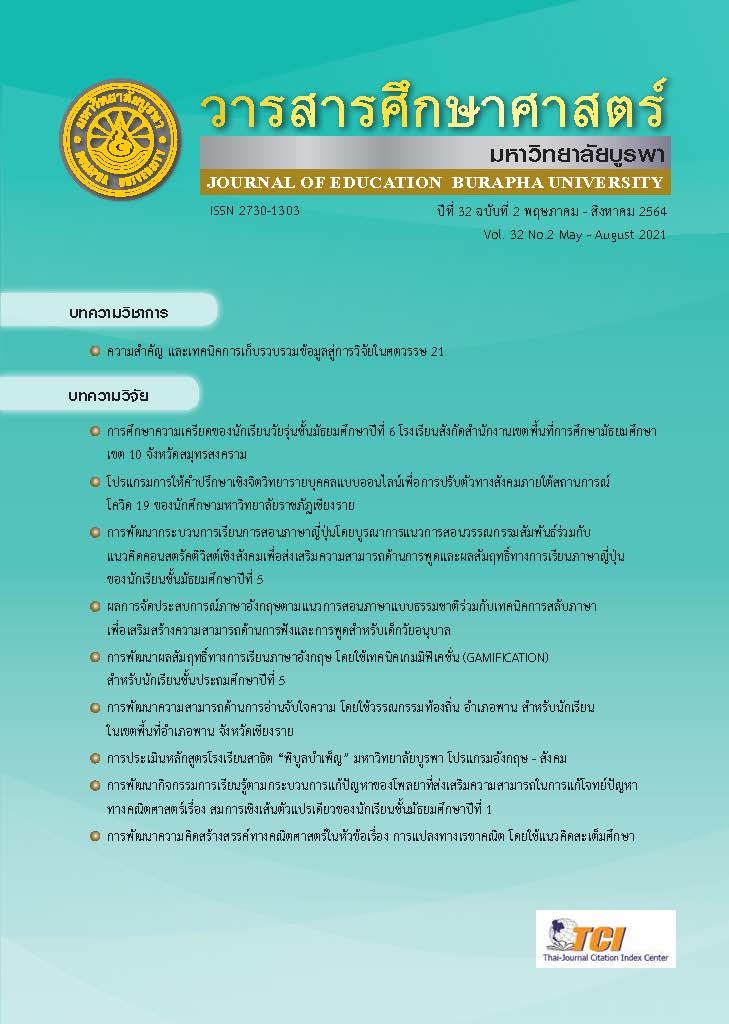
โปรแกรมการให้คำปรึกษาเชิงจิตวิทยารายบุคคลแบบออนไลน์เพื่อการปรับตัวทางสังคมภายใต้สถานการณ์โควิด 19ของนักศึกษามหาวิทยาลัยราชภัฏเชียงราย
คำสำคัญ:
การปรับตัวทางสังคม, การให้คำปรึกษาออนไลน์, โควิด 19, นักศึกษาบทคัดย่อ
การวิจัยครั้งนี้มีจุดมุ่งหมายเพื่อพัฒนาโปรแกรมการการให้คำปรึกษาเชิงจิตวิทยารายบุคคลแบบออนไลน์ และเปรียบเทียบการปรับตัวทางสังคมของนักศึกษามหาวิทยาลัยราชภัฏเชียงรายที่ได้รับโปรแกรมการให้คำปรึกษารายบุคคลแบบออนไลน์ก่อนและหลังการทดลอง กลุ่มตัวอย่าง คือ นักศึกษาคณะครุศาสตร์ ที่เป็นอาสาสมัคร จำนวน 9 คน เครื่องมือที่ใช้ คือ 1) โปรแกรมการการให้คำปรึกษาเชิงจิตวิทยารายบุคคลแบบออนไลน์ และ 2) แบบวัดการปรับตัวทางสังคมภายใต้สถานการณ์โควิด19 โดยให้คำปรึกษาแก่กลุ่มตัวอย่างจำนวน 8 ครั้ง ครั้งละ 60 นาที สัปดาห์ละ 1 ครั้ง ผ่านโปรแกรม Google Meet วิเคราะห์ข้อมูลด้วยค่าเฉลี่ย ส่วนเบี่ยงเบนมาตรฐาน และสถิติทดสอบค่าที ผลการวิจัย พบว่า
- 1. โปรแกรมการการให้คำปรึกษาเชิงจิตวิทยารายบุคคลแบบออนไลน์ ของนักศึกษามหาวิทยาลัยราชภัฏเชียงราย ประกอบด้วย 8 ครั้ง ได้แก่ ครั้งที่ 1) สร้างสัมพันธภาพ ครั้งที่ 2) การปฏิบัติตัวภายใต้โควิด 19 ครั้งที่ 3) การตระหนัก เรียนรู้ป้องกันไวรัสโคโรนาสายพันธุ์ใหม่ ครั้งที่ 4) ทักษะชีวิตสู้โควิด 19 ครั้งที่ 5) การเสริมสร้างความเข้มแข็งในครอบครัว ครั้งที่ 6) การปรับตัวด้านการเรียนวิถีใหม่ ครั้งที่ 7) การรับผิดชอบต่อชุมชน และ ครั้งที่ 8) ปัจฉิมนิเทศ รวมเวลาในการให้คำปรึกษา 8 ชั่วโมง และผลการประเมินอยู่ในระดับมาก (M = 4.07, SD =1.9)
- 2. ผลการใช้โปรแกรมการการให้คำปรึกษาเชิงจิตวิทยารายบุคคลแบบออนไลน์ พบว่า นักศึกษามีคะแนนการปรับตัวทางสังคมหลังการเข้าร่วมโปรแกรม (M=4.34, SD =0.79) สูงกว่าก่อนการเข้าร่วมโปรแกรม (M = 3.42, SD = 0.79) อย่างมีนัยสำคัญทางสถิติที่ระดับ .05
เอกสารอ้างอิง
ณัฐวุฒิ สรพิพัฒน์เจริญ (2558) การปรับตัวของนิสิตที่รับการปรึกษาออนไลน์ตามแนวทฤษฏีปรึกษาแบบเน้นทางออก. วิทยานิพนธ์ วท.ม. (จิตวิทยาการให้คำปรึกษา).ชลบุรี: มหาวิทยาลัยบูรพา.
ดวงมณี จงรักษ์. (2556). ทฤษฎีการให้การปรึกษาและจิตบำบัดเบื้องต้น (พิมพ์ครั้งที่2). กรุงเทพฯ: สมาคม ส่งเสริมเทคโนโลยี(ไทย-ญี่ปุ่น).
ทัชชา สุริโย (2559) ที่ศึกษาผลของโปรแกรมการให้คำปรึกษากลุ่มที่มีต่อการเสริมสร้างความฉลาดทางสังคม ในวัยรุ่นกลุ่มเสี่ยงต่อภาวะซึมเศร้า. ปริญญานิพนธ์ ศศ.ม.(จิตวิทยาประยุกต์ แขนงวิชาจิตวิทยาการให้ คำปรึกษา). กรุงเทพ: มหาวิทยาลัยศรีนครินทรวิโรฒ.
นันทกา ฟูสีกุล . (2555). การวิจัยเชิงปฏิบัติการในการให้คำปรึกษาออนไลน์. วิทยานิพนธ์ กศ.ม. (จิตวิทยา การศึกษาและการแนะแนว). เชียงใหม่ : มหาวิทยาลัยเชียงใหม่ .
บุญใจ ศรีสถิตย์นรากูร. (2555). การพัฒนาและตรวจสอบคุณภาพเครื่องมือวิจัย: คุณสมบัติการวัดเชิง จิตวิทยา. กรุงเทพ: โรงพิมพ์แห่งจุฬาลงกรณ์มหาวิทยาลัย
พงษ์พันธ์ พงษ์โสภา. (2544). ทฤษฎีและเทคนิคการให้คำปรึกษา. พิมพ์ครั้งที่ 3. กรุงเทพ: พัฒนาศึกษา.
พรพิมล พลครบุรี. (2554). ผลของกิจกรรมกลุ่มเพื่อพัฒนาความสามารถในการปรับตัวทางสังคม
ของนักเรียนที่มากจากครอบครัวอย่าร้างโรงเรียนไทยรัฐวิทยา 55 (วัดโบสถ์ดอนพรหม) นนทบุรีวิทยานิพนธ์ กศ.ม.(จิตวิทยาการแนะแนว). กรุงเทพฯ: มหาวิทยาลัยศรีนครินทรวิโรฒ
วัชรี ทรัพย์มี. (2556). ทฤษฎีการให้คำปรึกษา. กรุงเทพ: โรงพิมพ์จุฬาลงกรณ์มหาวิทยาลัย.
วัณยรัตน์ คุณาพันธ์. (2561). การศึกษากระบวนการปรับตัวที่มีประสิทธิผลสำหรับนักศึกษาในสถาบันอุดมศึกษาเอกชน. ดุษฎีนิพนธ์ ปร.ด. (วิจัย วัดผลและสถิติการศึกษา).ชลบุรี :มหาวิทยาลัยบูรพา.
สิริพร อินทสนธ์. (2563). โควิด – 19 : กับการเรียนการสอนออนไลน์ กรณีศึกษา รายวิชาการเรียนโปรแกรมเว็บ. วารสารวิทยาการจัดการปริทัศน์. 22(2), 203-213.
สิทธิพร ครามานนท์ นฤมลพระใหญ่ และภาสกร คุ้มสิริ. (2564). ไวรัสโคโรนา 2019 และการช่วยเหลือด้านจิตใจเบื้องต้น. วารสารจิตวิทยา มหาวิทยาลัยเกษมบัณฑิต. 11(2), 18 -28.
สุววุฒิ วงศ์ทางสวัสดิ์. (2559). ผลของการปรึกษาเชิงจิตวิทยารายบุคคลแบบออนไลน์แนวอตถิภาวนิยม ของนิสิตนักศึกษาปริญญาตรีที่มีบุคลิกภาพแบบไม่มั่นคงทางอารมณ์. วิทยานิพนธ์ ศศ.ด.(จิตวิทยา) กรุงเทพ: จุฬาลงกรณ์มหาวิทยาลัย
ยูนิเซฟ (2563) แนวทางปฏิบัติสำหรับสถานศึกษา เพื่อป้องกันและควบคุมการแพร่ระบาดของโรคโควิด19 (COVID-19 สืบค้นจาก www.unicef.org.
ยูนิเซฟ (2563) รายงานเบื้องต้น การสำรวจผลกระทบและความต้องการของเด็กและเยาวชนในสถานการณ์ โควิด-19 ผลสำรวจออนไลน์ ระหว่างวันที่ 28 มีนาคม ถึง 10 เมษายน พ.ศ.2563 สืบค้นจาก https://www.unicef.org/thailand/th/media/4031/file
อุมาภรณ์ สุขารมณ์. การให้คำปรึกษาแบบออนไลน์. วารสารจิตวิทยามหาวิทยาลัยเกษมบัณฑิต. 6(1), 1- 10.
Desena, P. A. (1964). The Role of Conciscy in Identifying: Characteristics of Three
Levels of Achievement.The Personal and Guidance Journal. 43, 145- 149.
Ellis, A. (1994). Reason and Emotion in Psychotherapy Revised. New York :Carol Publishing.
Hurlock, E.B (1978). Child Development. New York : McGraw-Hill Book Company.
Roger, C. R. (1961). On Becoming a Person: A Therapist’s View of Psychotherapy. Boston: Houghton Miffin.
Roy, C., & Andrew, H. A. (1991). The Roy Adaptation Model: The Definitive Statement. Connecticut: Appleton & Lange.
Roy, C., & Andrew, H. A. (1999). The Roy Adaptation Model :2nd ed. Connecticut: Appleton & Lange.
ดาวน์โหลด
เผยแพร่แล้ว
รูปแบบการอ้างอิง
ฉบับ
ประเภทบทความ
สัญญาอนุญาต
ลิขสิทธิ์ของบทความที่ปรากฏในวารสารศึกษาศาสตร์ มหาวิทยาลัยบูรพา เป็นของวารสารศึกษาศาสตร์ มหาวิทยาลัยบูรพา ทั้งนี้บทความทุกเรื่องผ่านการตรวจสอบความถูกต้องทางวิชาการจากผู้ทรงคุณวุฒิ ข้อความและข้อมูลของบทความในวารสารฯ เป็นแนวคิดของผู้แต่ง มิใช่เป็นความคิดเห็นของกองบรรณาธิการ และมิใช่ความรับผิดชอบของคณะศึกษาศาสตร์ มหาวิทยาลัยบูรพา ไม่สงวนลิขสิทธิ์การนำไปใช้ประโยชน์ทางวิชาการแต่ต้องอ้างอิงแสดงแหล่งที่มาและอยู่ในขอบเขตของกฎหมายลิขสิทธิ์


