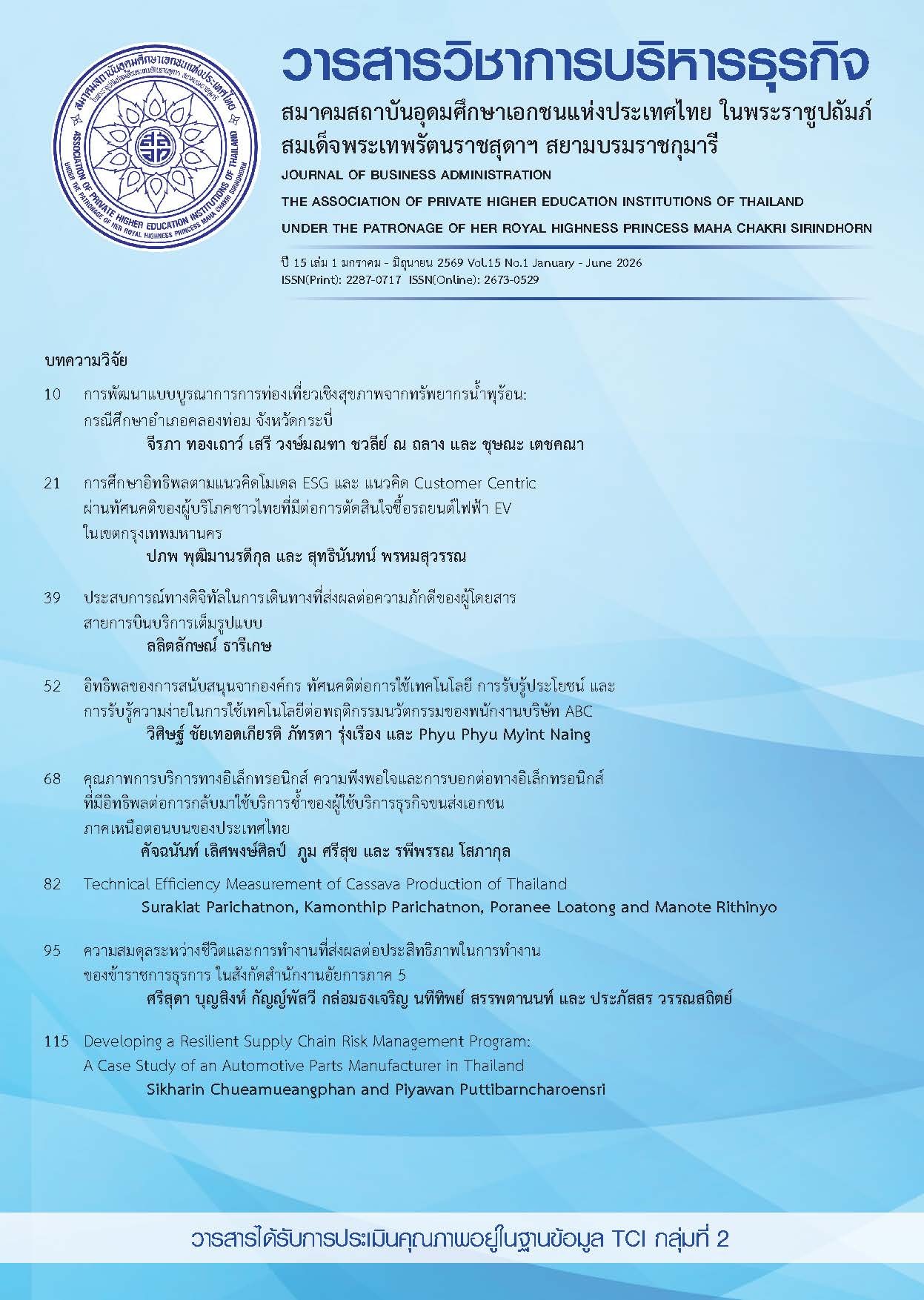
การพัฒนาแบบบูรณาการการท่องเที่ยวเชิงสุขภาพจากทรัพยากรน้ำพุร้อน: กรณีศึกษาอำเภอคลองท่อม จังหวัดกระบี่
คำสำคัญ:
การท่องเที่ยวเชิงสุขภาพ , น้ำพุร้อน, การพัฒนาแบบบูรณาการ , ความยั่งยืน , อำเภอคลองท่อม จังหวัดกระบี่บทคัดย่อ
การวิจัยนี้มีวัตถุประสงค์เพื่อ (1) ศึกษาบริบทและศักยภาพของทรัพยากรน้ำพุร้อนในการพัฒนาเป็นแหล่งท่องเที่ยวเชิงสุขภาพ และ (2) สังเคราะห์รูปแบบการพัฒนาแบบบูรณาการเพื่อความยั่งยืน กรณีศึกษาอำเภอคลองท่อม จังหวัดกระบี่ การวิจัยใช้ระเบียบวิธีเชิงคุณภาพ โดยเก็บรวบรวมข้อมูลจากการสัมภาษณ์เชิงลึกผู้ให้ข้อมูลสำคัญจำนวน 23 คน จาก 4 ภาคส่วน ได้แก่ ภาครัฐ ภาคเอกชน ผู้นำชุมชน และนักวิชาการ ร่วมกับการสังเกตภาคสนาม วิเคราะห์ข้อมูล และตรวจสอบความน่าเชื่อถือด้วยการตรวจสอบแบบสามเส้า ผลการวิจัยพบว่า (1) ทรัพยากรน้ำพุร้อนในอำเภอคลองท่อมมีศักยภาพสูงด้านคุณภาพทางกายภาพ อุณหภูมิที่เหมาะสม และภูมิทัศน์ธรรมชาติที่เอื้อต่อการพัฒนาเป็นแหล่งท่องเที่ยวเชิงสุขภาพ โดยมีกลุ่มนักท่องเที่ยววัยหนุ่มสาวเป็นตลาดหลัก และภาคเอกชนมีบทบาทสำคัญในการพัฒนาบริการสุขภาพ เช่น สปา รีสอร์ต และโปรแกรมฟื้นฟูสุขภาพ อย่างไรก็ตาม ในเชิงพื้นที่ยังมีข้อจำกัดด้านโครงสร้างพื้นฐาน มาตรฐานบริการ การบริหารจัดการแบบบูรณาการ และการประชาสัมพันธ์ยังไม่มีประสิทธิภาพเพียงพอ (2) การสังเคราะห์ข้อมูลนำไปสู่ข้อเสนอรูปแบบการพัฒนาแบบบูรณาการใน 3 มิติ ได้แก่ มิติของการยกระดับโครงสร้างพื้นฐานและมาตรฐานบริการ มิติของการออกแบบกิจกรรมสุขภาพเชิงประสบการณ์ที่สะท้อนอัตลักษณ์ท้องถิ่น และมิติของการเสริมสร้างศักยภาพและบทบาทนำของชุมชน เพื่อยกระดับพื้นที่สู่การเป็นแหล่งท่องเที่ยวเชิงสุขภาพระดับจังหวัดได้อย่างยั่งยืน ผลการวิจัยสามารถเป็นแนวทางให้หน่วยงานภาครัฐกำหนดนโยบายและแผนแม่บท ในการพัฒนาแหล่งท่องเที่ยวเชิงสุขภาพ โดยเน้นการบูรณาการความร่วมมือระหว่างภาครัฐ ภาคเอกชน และชุมชนในพื้นที่ ผลักดันผู้ประกอบการและชุมชนร่วมกันพัฒนาผลิตภัณฑ์และบริการท่องเที่ยวเชิงสุขภาพที่มีเอกลักษณ์เฉพาะถิ่น และกำหนดมาตรการควบคุมการใช้ทรัพยากร การอนุรักษ์สิ่งแวดล้อม และการรักษาสมดุลของระบบนิเวศในพื้นที่เพื่อความยั่งยืน
เอกสารอ้างอิง
Dryglas, D., & Salamaga, M. (2017). Applying destination attribute segmentation to health tourists: A case study of Polish spa resorts. Journal of Travel & Tourism Marketing, 34(4), 503–514.
Goodwin, H. (2017). Responsible tourism: Using tourism for sustainable development (2nd ed.). Goodfellow Publishers.
Hall, C. M., Prayag, G., & Amore, A. (2017). Tourism and resilience: Individual, organisational and destination perspectives. Channel View Publications.
Inwang, K. (2020). Community participation in the management of health tourism destinations. NIDA Development Journal, 60(3), 89–105. [in Thai]
Kaewnet, P., Chaisanit, P., & Yodsuwan, C. (2022). Tourism stakeholder participation process in hot spring wellness tourism in Chiang Rai Province. Silpakorn University Journal, 42(5), 71–83.
Konu, H. (2010). Identifying potential wellbeing tourism segments in Finland. Tourism Review, 65(2), 41–51.
Lee, T. H., Jan, F.H., & Yang, C.C. (2013). Conceptualizing and measuring environmentally responsible behaviors from the perspective of community-based tourism. Tourism Management, 36, 454–468.
Mueller, H., & Kaufmann, E. L. (2001). Wellness tourism: Market analysis of a special health tourism segment. Journal of Vacation Marketing, 7(1), 5–17.
Pholtanee, I., & Boonphetkaew, U. (2022). The Motivation of Thai Tourists for Health Tourism in Khao Chai Son Hot Spring, Phatthalung Province. Suratthani Rajabhat Journal, 10(2), 97–120. [in Thai]
Pimolsompong, C. (2018). Guidelines for sustainable health tourism development in Thailand. International Thai Tourism Journal, 14(1), 1–18. [in Thai]
Porter, M. E. (1998). Competitive strategy: Techniques for analyzing industries and competitors. Free Press.
Rattanadilok Na Phuket, K., & Weerakit, N. (2019). Assessment of the readiness of hot spring tourism resources in Khlong Thom District, Krabi Province for development as a prototype wellness hot spring tourism destination. Veridian E-Journal, Silpakorn University, 12(3), 1031–1051. [in Thai]
Setthayukanont, R., & Jarutach, T. (2024). Behavior, Decision Factor and Satisfaction of Natural Hot Spring Tourists: Case Studies of Porn Rang Hot Spring, Taryn Hot Spring in Ranong,v and Wareerak Hot Spring and Wellness in Krabi. Sarasatr: Journal of Architecture and Design, 7(1), 200-216. [in Thai]
Smith, M., & Puczkó, L. (2014). Health, tourism and hospitality: Spas, wellness and medical travel. Routledge.
Srichantra, T., & Manirochana, N. (2021). Competitiveness of natural hot spring wellness tourism destinations in lower central Thailand. Srinakharinwirot Business Journal, 12(1), 115–137. [in Thai]
Suban, S. A. (2024). Spa tourism: Understanding the relationship of tourists’ emotional experience, destination image, satisfaction, and intention to recommend using an integrated model. International Journal of Spa and Wellness, 7(1), 1–22.
ดาวน์โหลด
เผยแพร่แล้ว
รูปแบบการอ้างอิง
ฉบับ
ประเภทบทความ
สัญญาอนุญาต
ลิขสิทธิ์ (c) 2026 วารสารวิชาการบริหารธุรกิจ สมาคมสถาบันอุดมศึกษาเอกชนแห่งประเทศไทย

อนุญาตภายใต้เงื่อนไข Creative Commons Attribution-NonCommercial-NoDerivatives 4.0 International License.
บทความที่ลงตีพิมพ์ในวารสารวิชาการบริหารธุรกิจ สมาคมสถาบันอุดมศึกษาเอกชนแห่งประเทศไทยต้องเป็นบทความที่ไม่เคยได้รับการตีพิมพ์เผยแพร่ หรืออยู่ระหว่างการพิจารณาตีพิมพ์ในวารสารอื่นๆ การละเมิดลิขสิทธิ์เป็นความรับผิดชอบของผู้ส่งบทความโดยตรง

