
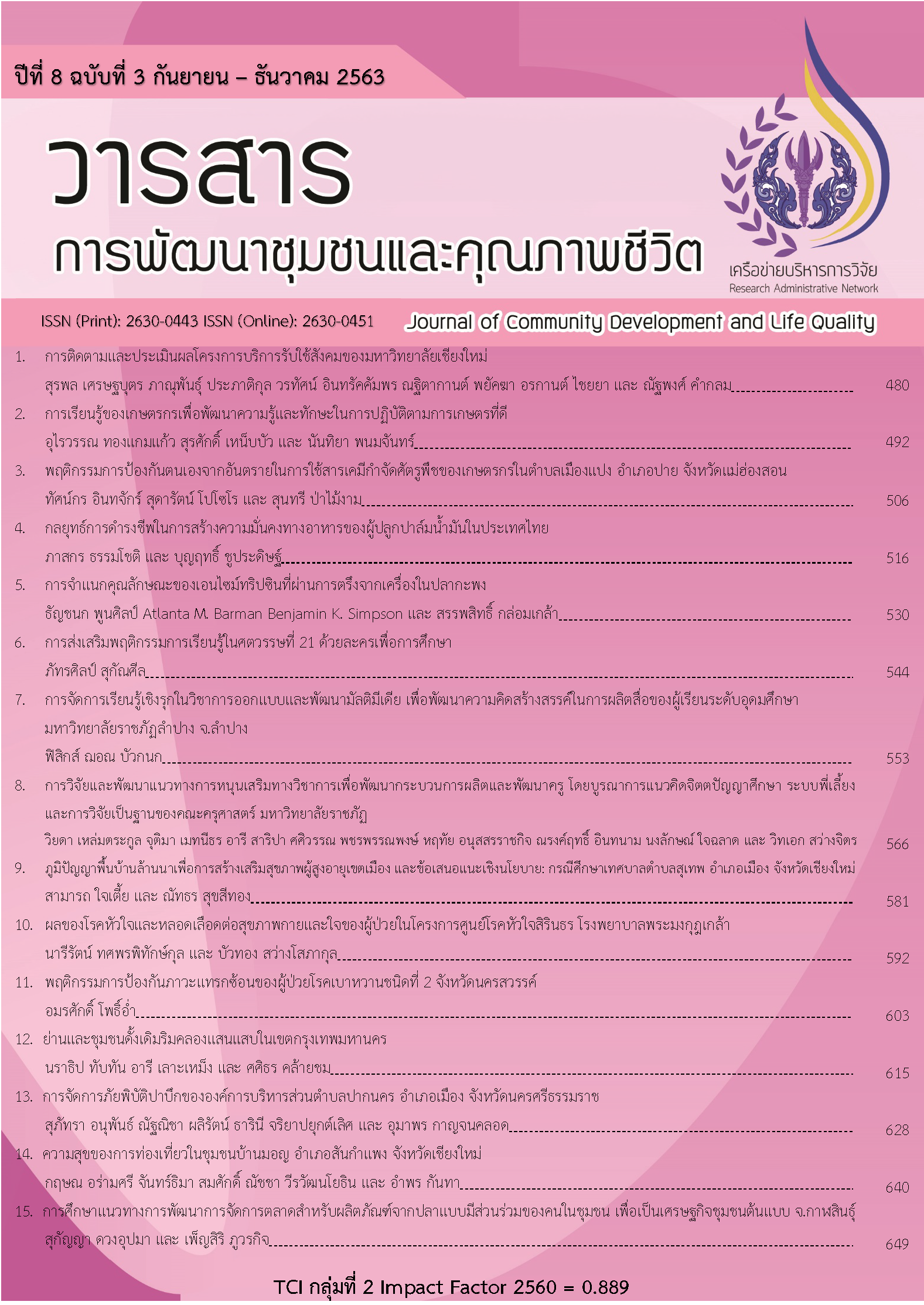
การวิจัยและพัฒนาแนวทางการหนุนเสริมทางวิชาการเพื่อพัฒนากระบวนการผลิตและพัฒนาครูโดยบูรณาการแนวคิดจิตตปัญญาศึกษา ระบบพี่เลี้ยง และการวิจัยเป็นฐานของคณะครุศาสตร์ มหาวิทยาลัยราชภัฏ
คำสำคัญ:
การหนุนเสริมทางวิชาการ, การผลิตครู, เครือข่ายมหาวิทยาลัยราชภัฏบทคัดย่อ
การวิจัยนี้มีวัตถุประสงค์เพื่อ 1) พัฒนาแนวทางการหนุนเสริมทางวิชาการเพื่อพัฒนากระบวนการผลิตและพัฒนาครูโดยใช้แนวคิดจิตตปัญญาศึกษา ระบบพี่เลี้ยง และการเรียนรู้โดยใช้วิจัยเป็นฐานของคณะครุศาสตร์ มหาวิทยาลัยราชภัฏ 2) เพื่อสังเคราะห์ปัจจัยในการหนุนเสริมทางวิชาการ และ 3) ศึกษากระบวนการรวมตัวในลักษณะของเครือข่ายในการทำงานผลิตและพัฒนาครูร่วมกันของคณะครุศาสตร์ มหาวิทยาลัยราชภัฏ กลุ่มเป้าหมายประกอบด้วย คณาจารย์ นักศึกษา และครูพี่เลี้ยงโรงเรียนฝึกประสบการณ์วิชาชีพครูของมหาวิทยาลัยราชภัฏ 38 แห่ง เครื่องมือที่ใช้ในการวิจัยประกอบด้วย แบบวิเคราะห์สภาพการดำเนินงานผลิตและพัฒนาครู แบบบันทึกการแลกเปลี่ยนเรียนรู้ และบันทึกสะท้อนความคิดและความรู้สึกของทีมหนุนเสริมทางวิชาการ วิเคราะห์ข้อมูลโดยใช้การวิเคราะห์เนื้อหา ผลการวิจัยพบว่า 1) แนวทางการหนุนเสริมทางวิชาการเพื่อพัฒนากระบวนการผลิตและพัฒนาครู ประกอบด้วย ความมุ่งหมาย แนวคิดและทฤษฎี หลักการ กระบวนการ และผลผลิต ผลลัพธ์ ตลอดจนผลกระทบของการหนุนเสริมทางวิชาการ 2) ปัจจัยที่ส่งผลต่อความสำเร็จในการหนุนเสริมทางวิชาการ มีด้านความรู้ของทีมหนุนเสริมทางวิชาการ ด้านวิธีการหนุนเสริม และด้านระบบและกลไกในการทำงานในลักษณะเครือข่ายความร่วมมือ 3) กระบวนการรวมตัวในลักษณะของเครือข่ายในการทำงานผลิตและพัฒนาครูของมหาวิทยาลัยราชภัฏทั้ง 38 แห่ง อยู่ในลักษณะเครือข่ายแบบวงแหวน (Ring Network)
เอกสารอ้างอิง
Carter, B. 2012. Facilitating preservice teacher induction through learning in partnership. Australian Journal of Teacher Education 37(2): 99-113.
Chookamnerd, W. and E. Sungtong. 2014. Professional learning community of in school for teacher professional development based on learner centered approach. Academic Services Journal Prince of Songkla University. 25(1): 93-102. (in Thai)
Kheovichai, K. 2019. Participatory action research and empowerment of teacher and educational personnel. Silpakorn Educational Research Journal 11(1): 1-12. (in Thai)
Kimwarey, M.C., H.N. Chirure and M. Omondi. 2014. Teacher empowerment in education practice: Strategies, constraints and suggestions. Journal of Research & Method in Education. 4(2): 51-56.
Klangvijit, W. 2013. Development network administration model of Rajabhat University central area group. Journal of Education Studies 41(3): 201-212.
Meyer, T. 2002. Novice teacher learning communities: An alternative to one-on-one mentoring. American Secondary Education 31(1): 27-42.
Mekwichai, J. 2014. Development of an empowerment system for knowledge transfer in colleges of medicine towards being “talented” organizations. Journal of Education Studies 42(1): 20-34. (in Thai)
Nathongchai, S. and W. Charoensin. 2018. The model of network management in producing doctors at faculty of medicine, Naresuan University. Chiangrai Medical Journal 10(1): 49-58. (in Thai)
Ruchirat, S. 2015. Empowerment to develop instructional competency of teachers that promote happiness learning of students. Silpakorn Educational Research Journal. 13(1): 104-113. (in Thai)
Short, P.M. and J.S. Rinehart. 1992. School participant empowerment scale: Assessment of level of empowerment within the school environment. Educational and Psychological Measurement 52(4): 951-960.
Triwaranyu, C. 2017. Development of professional learning community through lesson study: An approach and guideline for success. Journal of Education Studies 45(1): 299-319. (in Thai)
Zimmerman, M.A. and J. Rappaport. 1988. A citizen participation, perceived control, and psychological empowerment. American Journal of Community Psychology 16(5): 725-750.
ดาวน์โหลด
เผยแพร่แล้ว
รูปแบบการอ้างอิง
ฉบับ
ประเภทบทความ
สัญญาอนุญาต
กองบรรณาธิการขอสงวนสิทธิ์ในการตรวจและแก้ไขบทความที่เสนอเพื่อตีพิมพ์ในวารสารการพัฒนาชุมชนและคุณภาพชีวิต
บทความหรือข้อความคิดเห็นใด ๆ ที่ปรากฏในวารสารการพัฒนาชุมชนและคุณภาพชีวิต เป็นวรรณกรรมของผู้เขียนโดยเฉพาะคณะผู้จัดทำไม่จำเป็นต้องเห็นด้วย และไม่ใช่ความรับผิดชอบของมหาวิทยาลัยและคณะผู้จัดทำ / บรรณาธิการ


