การศึกษาภาพตัวแทนชาวแอฟริกัน-อเมริกันที่ปรากฏในภาพยนตร์สยองขวัญยุคหลัง
Article Sidebar
Main Article Content
บทคัดย่อ
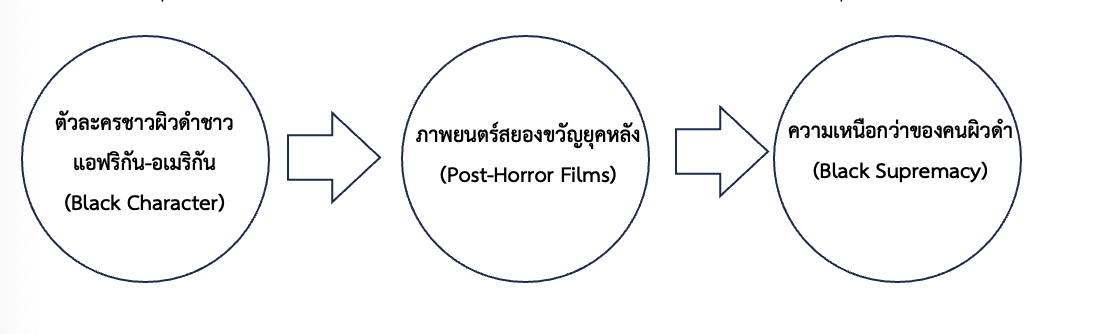
บทนำ:ในอดีตภาพยนตร์สยองขวัญมักนำเสนอภาพลักษณ์ของตัวละครคนผิวขาวให้มีบทบาทที่โดดเด่นและเหนือกว่าคนผิวดำในทุกๆด้าน ส่งผลให้ตัวละครผิวดำที่ปรากฏในภาพยนตร์สยองขวัญนั้นถูกด้อยค่าและเป็นตัวละครที่ขาดพัฒนาการเมื่อเทียบกับตัวละครที่เป็นคนผิวขาว ปัจจุบันภาพยนตร์สยองขวัญยุคหลังได้รับความนิยมเป็นอย่างมากและการปรับเปลี่ยนรูปแบบและเนื้อหาในการนำเสนอให้น่าสนใจยิ่งขึ้น โดยที่ตัวละครผิวดำได้รับบทบาทที่สำคัญและโดดเด่น วัตถุประสงค์การศึกษา:เพื่อวิเคราะห์ภาพตัวแทนของชาวแอฟริกัน-อเมริกัน จากภาพยนตร์สยองขวัญของต่างประเทศ ระเบียบวิธีวิจัย: เป็นการวิจัยเชิงคุณภาพโดยมีการคัดเลือกอย่างเฉพาะเจาะจง จำนวน 3 เรื่อง ได้แก่ “Get Out ลวงร่างจิตหลอน” (2017) “Antebellum หลอน ย้อน โลก” (2020) และ “Nope ไม่” (2022) นำมาวิเคราะห์ผ่านองค์ประกอบในการเล่าเรื่อง ร่วมกับแนวคิดการประกอบสร้างความเป็นจริง แนวคิดตระกูลภาพยนตร์สยองขวัญยุคหลัง และแนวคิดในการเหยียดเชื้อชาติ ผลการวิจัยค้นพบว่า: วิธีการนำเสนอภาพตัวแทนของชาวแอฟริกัน-อเมริกันของในภาพยนตร์สยองขวัญทั้งหมด มีรูปแบบและวิธีการเล่าเรื่องที่แตกต่างไปจากภาพยนตร์สยองขวัญแบบเดิมเป็นอย่างมาก โดยเฉพาะเนื้อหาทั้งหมดมุ่งเน้นที่ประเด็นของการเหยียดสีผิวและเชื้อชาติโดยตรง และมีตัวละครหลักเป็นคนผิวดำที่ล้วนถูกคุกคามผ่านอุดมการณ์ “ความเหนือกว่าทางอำนาจของคนผิวขาว” (White Supremacy) ในสังคมร่วมสมัยทั้งสิ้น ส่งผลให้ตัวละครผิวดำทำการต่อต้านขัดขืดและตอบโต้ด้วยวิธีการด้วยที่แปลกใหม่ โดยที่คนผิวดำมีบทบาทมากขึ้น คนผิวขาวถูกลดบาทบาทลง และมักพบความขัดแย้งระหว่างมนุษย์กับมนุษย์ปรากฏให้เห็นเป็นหลัก สรุป:ภาพตัวแทนชาวแอฟริกัน-อเมริกันที่ปรากฏในภาพยนตร์สยองขวัญยุคหลัง นำมาซึ่งสร้างความเป็นจริงทางสังคม (Social Construction of Reality) โดยที่ภาพยนตร์สยองขวัญยุคหลังได้สร้างภาพตัวแทน (Representation) ของคนผิวดำให้เปลี่ยนไปจากเดิมและมีแนวโน้นที่จะเกิดอุดมการณ์ “ความเหนือกว่าทางอำนาจของคนผิวดำ” (Black Supremacy) ในภาพยนตร์สยองขวัญหลังต่อไปในอนาคต
Downloads
Article Details

อนุญาตภายใต้เงื่อนไข Creative Commons Attribution-NonCommercial-NoDerivatives 4.0 International License.
** ข้อความ ข้อคิดเห็น หรือข้อค้นพบ ในวารสารสหวิทยาการสังคมศาสตร์และการสื่อสารเป็นของผู้เขียน ซึ่งจะต้องรับผิดชอบต่อผลทางกฎหมายใด ๆ ที่อาจเกิดขึ้นจากบทความและงานวิจัยนั้น ๆ โดยมิใช่ความรับผิดชอบของคณะนิเทศศาสตร์ มหาวิทยาลัยราชภัฏรำไพพรรณี **
เอกสารอ้างอิง
Chaowsiri, R. (2014). Presentation strategies of racial discrimination issues toward African-Americans in Hollywood films: A textual analysis. [Unpublished master’s thesis]. National Institute of Development Administration]. National Institute of Development Administration
Chermanchonlamark, C. (2020). Analysis of the Art of Cinematic Storytelling in “Post Horror” Movies. Journal of Communication Arts Review, 24(1), 7-16.https://so06.tci-thaijo.org/index.php/jca/article/view/245295/166259
Kitvisala, K. (2010). The meaning of social resistance through storytelling in Thai films between 1970 and 2007. [Unpublished doctoral dissertation]. Chulalongkorn University.
Kaewthep, K., & Hinwiman, S. (2008). The stream of thinkers in political economy and communication theories. Phap Phim.
Luiyyaphong, K. (2013). Cinema and the social construction: People, history, nation. Chulalongkorn University Press.
