
นิยายคลาสสิคจีนสมัยหมิงและการกลายเป็นญี่ปุ่นในงานศิลปะอุคิโยเอะ
DOI:
https://doi.org/10.69598/sbjfa277764คำสำคัญ:
นิยายคลาสสิคจีน, ราชวงศ์หมิง, อุคิโยเอะ, การกลายเป็นญี่ปุ่น, การดัดแปลงบทคัดย่อ
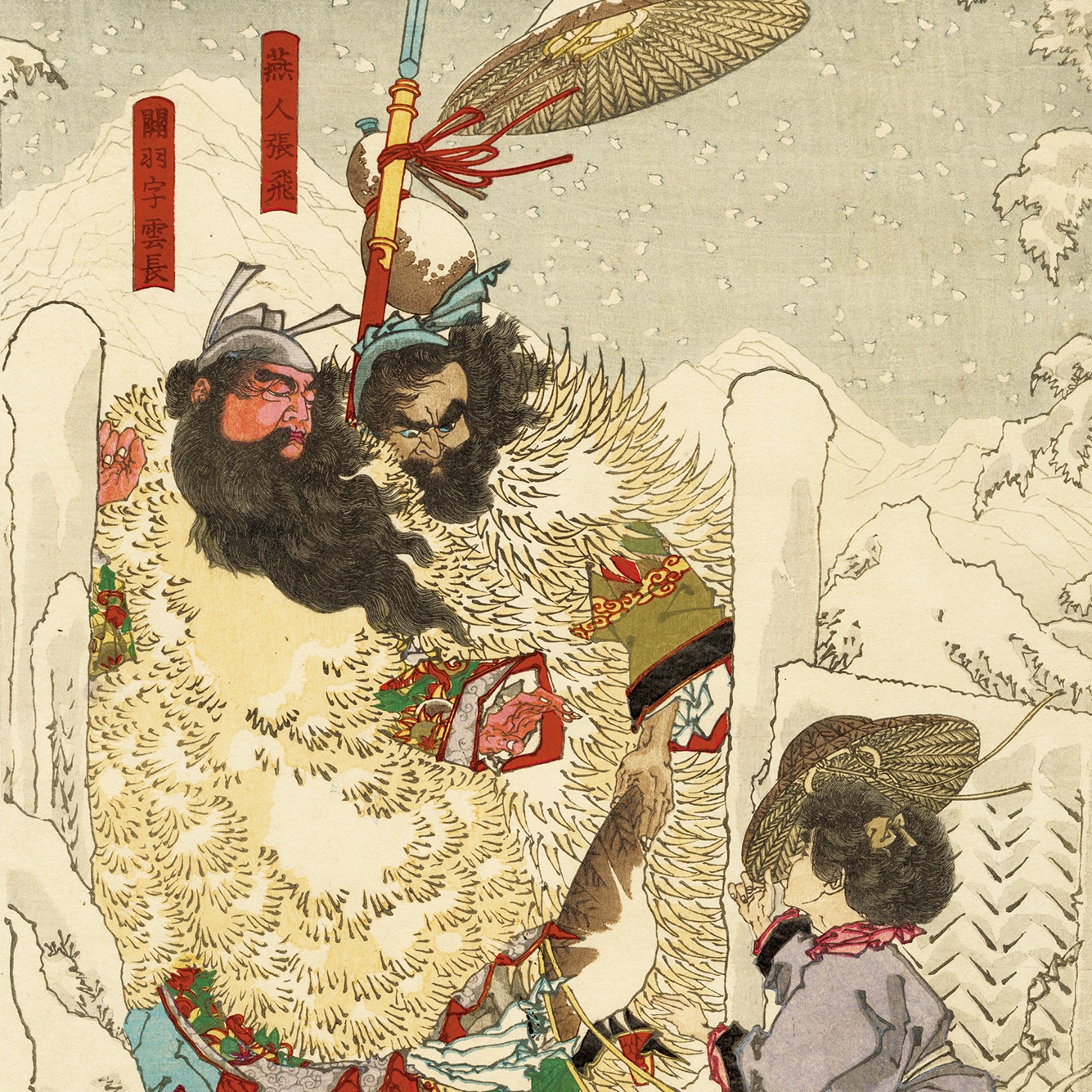
บทความนี้เป็นการวิจัยเชิงคุณภาพเกี่ยวกับนิยายคลาสสิคจีนสมัยราชวงศ์หมิง และการกลายเป็นญี่ปุ่นผ่านการดัดแปลงภาพในจินตนาการเป็นงานศิลปะญี่ปุ่นประเภทอุคิโยเอะ มีวัตถุประสงค์เพื่อศึกษาแนวคิดด้านรูปแบบและเนื้อหาที่มีการดัดแปลงภาพในจินตนาการจากนิยายจีนโบราณสู่งานภาพพิมพ์แกะไม้อุคิโยเอะของญี่ปุ่นระหว่างคริสต์ศตวรรษที่ 17-19 วิธีดำเนินการวิจัยใช้การวิเคราะห์ผลงานอุคิโยเอะภายใต้รูปแบบเนื้อหาจากนิยายคลาสสิคจีน 2 เรื่อง คือ ซานกั๋วเหยี่ยนอี้และสุยหู่จ้วน โดยวิเคราะห์จากผลงานของศิลปินอุคิโยเอะ จำนวน 5 คน ได้แก่ คัตซึชิกะ โฮะคุไซ อุตะงาวะ คุนิโยชิ ทสึกิโอกะ โยชิโทชิ อุตะงาวะ คุนิซาดะ และโทโยฮาระ คุนิจิกะ ผลการวิจัยพบว่า แนวคิดที่ปรากฏในงานอุคิโยเอะญี่ปุ่นซึ่งมีหัวข้อจากนิยายคลาสสิคจีนสมัยหมิงนอกจากอ้างอิงตามการแปลเนื้อหาแล้ว ยังผ่านกระบวนการสร้างภาพลักษณ์และจินตนาการของศิลปิน เกิดการหลอมรวมและดัดแปลงลักษณะทางวัฒนธรรมที่แตกต่างสู่ความเป็นญี่ปุ่น โดยรูปแบบและเนื้อหาสะท้อนให้เห็นอัตลักษณ์ของสังคมญี่ปุ่นสมัยเอโดะผ่านการดัดแปลงข้ามสื่อทางวัฒนธรรม ทำให้ตัวบทเดิมของจีนพัฒนาสู่การกลายเป็นญี่ปุ่นของตัวบทใหม่ ศิลปินไม่ได้เคร่งครัดหรือยึดติดกับต้นแบบอย่างเข้มงวด การดัดแปลงในผลงานศิลปะเกิดขึ้นเพื่อให้สอดคล้องกับรสนิยมของตัวศิลปินและประชาชน ภายใต้ความคิดสร้างสรรค์ทางสุนทรียะของตัวศิลปินอุคิโยเอะ
Downloads
เอกสารอ้างอิง
ชัยยศ อิษฎ์วรพันธุ์. (2558). บริบททางสังคมวัฒนธรรมของภาพชุนกะ. วารสารศิลป์ พีระศรี, 2(2), 95-113. https://so02.tci-thaijo.org/index.php/jfa/article/view/241001/163863
ถาวร สิกขโกศล. (2566). สามก๊ก: จากวรรณคดีเอกของจีนมาเป็นวรรณคดีเอกของไทย. ใน ถาวร สิกขโกศล (บ.ก.), รวมบทความนานาสาระจีนวิทยา (น.271-282). ซีพี ออลส์.
มาลินี ดิลกวณิช. (2535). การละคอนญี่ปุ่น: ประวัติและศิลปะการแสดง. วารสารไทย-ญี่ปุ่นศึกษา, 9(3), 50-70. https://so02.tci-thaijo.org/index.php/japanese/article/view/52255
วิทยาลัยภาษาจีนปักกิ่ง, มหาวิทยาลัยครูหนานจิง และ มหาวิทยาลัยครูอันฮุย. (2550). ความรู้ทั่วไปเกี่ยวกับวัฒนธรรมประเทศจีน. สุขภาพใจ.
历朝驿站. (n.d.). (唐朝)变文流行. https://sharehistory.cn/sys-nd/2091.html
宫竹正. (2005). 浮世絵的故事. 陕西师范大学出版社.
Beijing Language and Culture University, Nanjing University, & Anhui University. (2007). General knowledge of Chinese culture. Sukhaphap Jai. [in Thai]
Clark, T. (2021). Hokusai The Great Picture Book of Everything. British Museum.
Dilokwanich, M. (1992). Japanese Drama: History and Performing Arts. Thai-Japanese Studies Journal, 9(3), 50-70. https://so02.tci-thaijo.org/index.php/japanese/article/view/52255 [in Thai]
Eli. (2021, September 26). E66C Tattooing-The Suikoden. A History of Japan. https://historyofjapan.co.uk/2021/09/26/tattooing-the-suikoden/
Fraleigh, M. (2022). A Faithful Translation: Tsūzoku sangokushi, the First Japanese Translation of Sanguozhi yanyi. In L. Guo, P. Sieber, & P. Kornicki (Eds.), Ecologies of Translation in East and South East Asia, 1600-1900 (pp. 59–88). Amsterdam University Press. https://doi.org/10.2307/j.ctv2r4kxds.5
Gong, Z. (2005). The Story of Ukiyo-e. Shaanxi Normal University Press. [in Chinese]
Goree, R. (2020). The Culture of Travel in Edo-Period Japan. Oxford Research Encyclopedia of Asian History. https://oxfordre.com/asianhistory/display/10.1093/acrefore/9780190277727.001.0001/acrefore-9780190277727-e-72
Hokusai, K. (1847). Cao Cao At Red Cliffs [colored silk, one scroll]. Shimane Art Museum. https://shimane-art-museum-ukiyoe.jp/nagata/c-nagata/h15-01.html
Isavorapant, C. (2015). Socio-Cultural Context of Shunga. Silpa Bhirasri (Journal of Fine Arts), 2(2), 95–113. [in Thai]
Kunichika, T. (1889). Kunichika Suikoden: The Scene at the Wakaji Temple [Color woodblock print, triptych-Oban-tate-e]. https://jp.japanese-finearts.com/item/list2/A1-98-116/Kunichika/Yakusha-e
Kunisada, U. (1820). Parody of Liu Bei (J: Gentoku) Visiting Zhuge Liang (J: Komei) in Wind and Snow (Gentoku fusetsu ni Komei o tazureru) [Color woodblock print, triptych-Oban-tate-e]. Ota Memorial Museum of Art. https://otakinen-museum.note.jp/n/n8a7990f1ac52
Kuniyoshi, U. (1827a). Leopard Head Lin Chong [Color woodblock print]. Wikipedia. https://ja.wikipedia.org/wiki/通俗水滸伝豪傑百八人之一個#/media/ファイル:Utagawa_Kuniyoshi_-_水滸傳_-林冲.jpg
______. (1827b). Ascetic Takematsu [Color woodblock print]. Wikipedia. https://ja.wikipedia.org/wiki/通俗水滸伝豪傑百八人之一個#/media/ファイル:Honcho_Suikoden_Goketsu_(BM_1973,0723,0.29_84).jpg
______. (1853a). Popular Romance of the Three Kingdoms / Liu Xuande Breaks the Siege of Beihai [Color woodblock print, triptych-Oban-tate-e]. Yamada-Shoten. https://www.yamada-shoten.com/english/detail.php?item_id=58606
______. (1853b). Popular Romance of the Three Kingdoms, Guan Yu's Five [Color woodblock print, triptych-Oban-tate-e]. Hara Shobo. https://www.harashobo.com/ukiyoe/ukiyoe_detail.php?print_id=36154
Munroe Hotes, C. (2013). Puppet Theatre Romance of the Three Kingdoms (人形劇三国志, 1982-1984). Nishikata Film Review: A Journey through Visual Culture. https://www.nishikata-eiga.com/2013/12/puppet-theatre-romance-of-three.html
Ohnuki, N. (2010). The Reception of Suikoden (Tales of Water Margin) in Japan and Its Visual Interpretation: Expansion of Visual Environment in Japan. The Journal of Asian Arts & Aesthetics, (4), 97-111. https://doi.org/10.6280/JAAA.2010.04.10
Sharehistory. (n.d.). (Tang Dynasty) was popular. https://sharehistory.cn/sys-nd/2091.html [in Chinese]
Sikkhakosol, T. (2023). Romance of the Three Kingdoms: From the Classic Chinese novel to From the Classic Thai novel. in T. Sikkhakosol, (Ed.), Collected Essay on Chinese Studies (pp.271-282). CP Alls. [in Thai]
Yoshitoshi, T. (1883). Gentoku Visits Komei in Snow Storm [Color woodblock print, triptych-Oban-tate-e]. Art of Ukiyoe. https://www.artofukiyoe.com/gallery/p/gentoku-visits-komei-in-snow-storm
______. (1885). Moon Rising over Nanping- Cao Cao [Color woodblock print]. British Museum. https://britishmuseum.org.cn/blog/the-last-Ukiyoe
ดาวน์โหลด
เผยแพร่แล้ว
รูปแบบการอ้างอิง
ฉบับ
ประเภทบทความ
สัญญาอนุญาต
ลิขสิทธิ์ (c) 2025 ปานชีวา บุตราช, ปิยะแสง จันทรวงศ์ไพศาล

อนุญาตภายใต้เงื่อนไข Creative Commons Attribution 4.0 International License.
บทความนี้อยู่ภายใต้สัญญาอนุญาตครีเอทีฟคอมมอนส์ CC BY 4.0
ทัศนะและข้อคิดเห็นในบทความเป็นของผู้เขียน กองบรรณาธิการไม่จำเป็นต้องเห็นพ้อง และไม่รับผิดชอบต่อข้อคิดเห็นเหล่านั้น










.jpg)