Appropriation Art in Contemporary Traditional Chinese Painting
DOI:
https://doi.org/10.69598/sbjfa278128Keywords:
Appropriation Art , Chinese Art , Contemporary Traditional Chinese PaintingAbstract
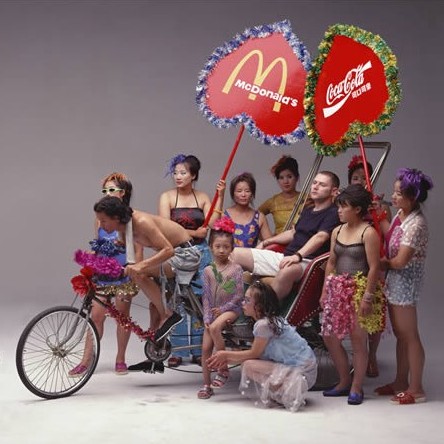
This research study explores Appropriation art in contemporary traditional Chinese painting through a qualitative research methodology. The aim is to study the concepts, styles, and creative processes of contemporary Chinese artists working within the context of Appropriation art. The study analyzes contemporary traditional Chinese painting artworks by three contemporary Chinese artists from the People's Republic of China who create works based on appropriation art: Xu Bing, Yang Yongliang, and Wang Qingsong. The results show that the concepts, styles, and creative approaches of contemporary Chinese artists working within Appropriation art contexts demonstrate overall consistency in direction. All artworks represent new creations rather than copies, reproductions, or repetitions of original works. Contemporary Chinese artists who create works within an Appropriation art context have developed their own identities while reflecting hidden meanings in their works. These meanings can be divided into three main issues: 1) Art History, 2) Social concerns, and 3) Environmental themes. Furthermore, each contemporary Chinese artist has a unique style in presenting their work, employing different techniques and materials for creative expression, including readymade objects, found objects, photography, installation art, and digital art.
Downloads
References
กำจร สุนพงษ์ศรี. (2559). ประวัติศาสตร์ศิลปะจีน (พิมพ์ครั้งที่ 4). สำนักพิมพ์แห่งจุฬาลงกรณ์มหาวิทยาลัย.
รสลิน กาสต์. (2558). แอ็พโพรพริเอชันอาร์ต ศิลปะแห่งการหยิบยืม. สำนักพิมพ์แห่งจุฬาลงกรณ์มหาวิทยาลัย.
ศิลป์ พีรศรี. (2500). ศิลปสงเคราะห์: พจนานุกรมศัพท์ศิลปของชาวตะวันตก (พระยาอนุมานราชธน, แปล). โรงพิมพ์รุ่งเรืองธรรม.
尼尔.柯林斯. (n.d.). 前卫艺术:定义,意义,历史, https://gallerix.asia/pedia/definitions--avant-garde-art/
Atkins, S. M. & Marter, J. (2004). Art Appropriation and Identity since 1980 [Unpublished dissertation, Rutgers, The State University of New Jersey]. Penn state Libraries Open Publishing. https://openpublishing.psu.edu/ahd/content/art-appropriation-and-identity-1980
Bhirasri, S. (1957). Dictionary of Western Art terms (Phraya Anuman Rajadhon, Trans.). Rungruangdhamma Publishing. [in Thai]
Collins, N. (n.d.). Avant-garde art. Gallerix. https://gallerix.asia/pedia/definitions--avant-garde-art/ [in Chinese]
Garst, R. (2015). Appropriation Art. Chulalongkorn University Press. [in Thai]
Gaylord, K. (2016). Cindy Sherman. MoMA. https://www.moma.org/artists/5392-cindy-sherman
Gu, H. (7 C.E.). Gu Hongzhong's Night Banquet of Han Xizai [Ink on Silk]. The Palace Museum, Beijing. https://www.dpm.org.cn/collection/paint/228200
Guo, X. (11 C.E.). Early spring scroll by Guo Xi, Song dynasty [Ink on Silk]. National Palace Museum, Taiwan. https://digitalarchive.npm.gov.tw/Painting/Content?pid=47&Dept=P
Irvin, S. (2005). Appropriation and Authorship in Contemporary Art. British Journal of Aesthetics, 45(2), 123-137. https://philpapers.org/archive/IRVAAA.pdf
Li, T. (12 C.E.). Song Li Tang Jiangshan Xiaojing Scroll [Ink on Silk]. National Palace Museum, Taiwan. https://digitalarchive.npm.gov.tw/Painting/Content?pid=14436&Dept=P
MoMA. (n.d.). Art terms: Appropriation. https://www.moma.org/collection/terms/appropriation
Philadelphia Museum of Art. (2017, March 27). Marcel Duchamp and the Fountain Scandal. https://press.philamuseum.org/marcel-duchamp-and-the-fountain-scandal/
Shimin, W. (1654). hanging scroll; painting [Ink on paper]. The British Museum. https://www.britishmuseum.org/collection/object/A_1960-1008-0-1
Soonpongsri, K. (2016). History of Chinese Art (4th ed). Chulalongkorn University Press. [in Thai]
Sullivan+Strumpf. (n.d.). Yang Yongliang. https://www.sullivanstrumpf.com/artists/yang-yongliang
Tate. (n.d.). Art terms: Readymade. https://www.tate.org.uk/art/art-terms/r/readymade
Vine, R. (2008). New China New Art. Prestel.
Wang, Q. (2000a). Can I Cooperate with you? [Photograph]. Wang Qingsong Studio. http://www.wangqingsong.com/index.php?option=com_content&view=article&id=57&Itemid=12
_____. (2000b). Night Revels of Lao Li [Digital chromogenic print]. The Walther Collection. https://www.walthercollection.com/en/collection/artworks/night-revels-of-lao-li
Xu, B. (n.d.). Background Story. https://www.xubing.com/en/work/details/374?type=project#374
_____. (2011). Background Story 7 [Natural debris attached to frosted glass panel]. (https://www.xubing.com/en/work/details/386?year=2011&type=year#386
_____. (2020). Background Story: Autumn Colors on the Qiao and Hua Mountains [Natural debris attached to frosted glass panel]. https://www.xubing.com/en/work/details/596?year=2020&type=year
_____. (2024). Background Story: Autumn Colors on the Qiao and Hua Mountains [Natural debris attached to frosted glass panel]. ArtAsiaPacific. https://artasiapacific.com/issue/houston-xu-bing-word-alchemy
Yan, L. (7 C.E.). Yan Liben's Procession of Emperor Taizong to the Buddhist Monk Xuanzang [Ink on paper]. Palace Museum, Beijing. https://www.dpm.org.cn/collection/paint/234620
Yang, Y. (2019a). Early Spring [Giclee print on lightbox]. Yang Yongliang Studio. https://www.yangyongliang.com/early-spring-i-
_____. (2019b). Intimate Scenery of River and Mountain [Giclee print on lightbox]. Yang Yongliang Studio. (https://www.yangyongliang.com/new-gallery-15/2019/8/23/qe8dv3nwold80svfx1byj9u3xg7j6k
Zhao, M. (13 C.E.). Autumn scenery of Qiao and Hua [Color on paper scroll]. National Palace Museum https://theme.npm.edu.tw/khan/Article.aspx?sNo=03009158
Downloads
Published
How to Cite
Issue
Section
License
Copyright (c) 2025 ปิยะแสง จันทรวงศ์ไพศาล

This work is licensed under a Creative Commons Attribution 4.0 International License.
The journal's editorial team does not have to agree with the views and comments in the author's article, nor are they responsible for the comments.