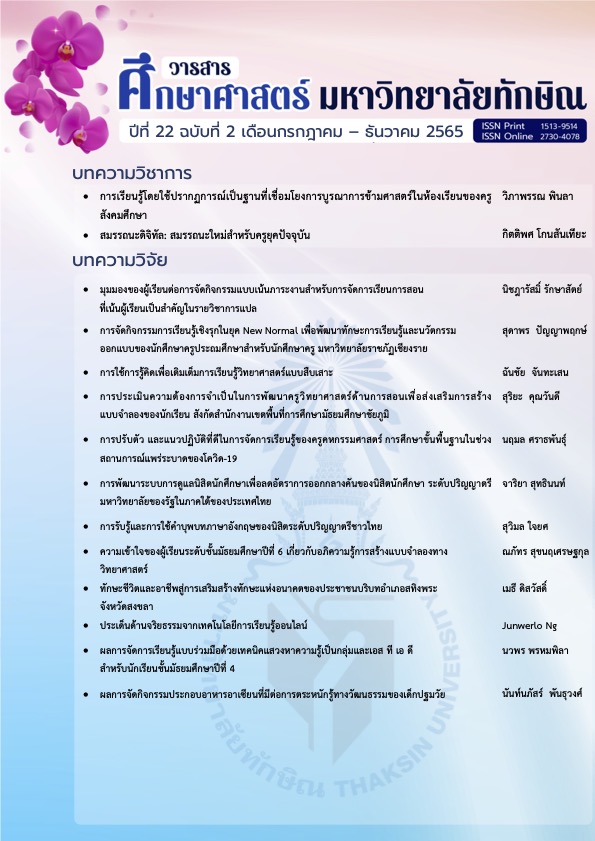
ความเข้าใจของผู้เรียนระดับชั้นมัธยมศึกษาปีที่ 6 เกี่ยวกับอภิความรู้การสร้างแบบจำลองทางวิทยาศาสตร์
Article Sidebar
Main Article Content
บทคัดย่อ
อภิความรู้การสร้างแบบจำลอง เป็นแนวคิดพื้นฐานทางแบบจำลองที่ทำให้ทราบธรรมชาติและเป้าหมายทางญาณวิทยาของแบบจำลองในเชิงชัดแจ้ง แนวคิดดังกล่าวมีความสำคัญเทียบเท่ากับแนวคิดการปฏิบัติทางแบบจำลอง ซึ่งทั้งสองแนวคิดจำเป็นต้องศึกษาและพัฒนาไปอย่างคู่ขนาน เพื่อให้ไปสู่เป้าหมายของการมีสมรรถนะการสร้างแบบจำลองที่สอดคล้องกับนักวิทยาศาสตร์ ดังนั้นงานวิจัยนี้มีวัตถุประสงค์เพื่อศึกษาความเข้าใจอภิความรู้การสร้างแบบจำลองทางวิทยาศาสตร์ของผู้เรียนระดับชั้นมัธยมศึกษาปีที่ 6 จำนวนทั้งสิ้น 50 คน เก็บรวบรวมข้อมูลโดยใช้แบบวัดความเข้าใจอภิความรู้การสร้างแบบจำลอง วิเคราะห์ข้อมูลด้วยวิธีการวิเคราะห์เชิงคุณภาพ โดยใช้การวิเคราะห์เชิงเนื้อหา เพื่อจัดกลุ่มและหาระดับความเข้าใจอภิความรู้การสร้างแบบจำลองของผู้เรียน
ผลการวิจัยพบว่า ผู้เรียนส่วนใหญ่มีความเข้าใจอภิความรู้การสร้างแบบจำลองจัดอยู่ในกลุ่มผู้เริ่มต้น (ระดับที่ 1) ในทุกมุมมอง โดยเฉพาะอย่างยิ่งในมุมมองด้านความรู้ในการรู้คิดของกระบวนการสร้างแบบจำลอง สำหรับข้อค้นพบในมุมมองทั้งสองด้านมีดังนี้ 1) ด้านความรู้ในการได้มาซึ่งแบบจำลองพบว่า ผู้เรียนมีความเข้าใจธรรมชาติของแบบจำลองและวัตถุประสงค์ของแบบจำลองเป็นไปในทิศทางเดียวกัน โดยเข้าใจว่าแบบจำลองเป็นเพียงสื่อการเรียนรู้ที่เลียนแบบแนวคิดทางวิทยาศาสตร์ ซึ่งมีเป้าหมายเพื่อสื่อสารแนวคิดทางวิทยาศาสตร์ให้เกิดความชัดเจนเข้าใจได้ง่าย ผู้เรียนไม่เข้าใจว่าแบบจำลองสามารถนำไปใช้ทำนายปรากฏการณ์ รวมถึงไม่เข้าใจว่า สมการทางคณิตศาสตร์จัดเป็นประเภทหนึ่งของแบบจำลอง และ 2) ด้านความรู้ในการรู้คิดของกระบวนการสร้างแบบจำลองพบว่า ผู้เรียนส่วนใหญ่เข้าใจว่านักวิทยาศาสตร์มีกระบวนการสร้างแบบจำลองเหมือนกับขั้นตอนทางวิทยาศาสตร์ 5 ขั้นตอนทุกประการ อย่างไรก็ตามผู้เรียนไม่สามารถอธิบายความสัมพันธ์ระหว่างกระบวนการดังกล่าวกับขั้นตอนทางวิทยาศาสตร์ได้ รวมถึงในชั้นเรียนวิทยาศาสตร์ที่ผ่านมากระบวนการที่ผู้เรียนใช้สร้างแบบจำลองอยู่ในลักษณะของกระบวนการออกแบบชิ้นงานประดิษฐ์ทั่วไปซึ่งไม่สอดคล้องกับกระบวนการสร้างแบบจำลองทางวิทยาศาสตร์
Article Details

อนุญาตภายใต้เงื่อนไข Creative Commons Attribution-NonCommercial-NoDerivatives 4.0 International License.
ในกรณีที่กองบรรณาธิการ หรือผู้เชี่ยวชาญ ซึ่งได้รับเชิญให้เป็นผู้ตรวจบทความวิจัย หรือ บทความทางวิชาการมีความเห็นว่าควรแก้ไขความบกพร่อง ทางกองบรรณาธิการจะส่งต้นฉบับให้ ผู้เขียนพิจารณาจัดการแก้ไขให้เหมาะสมก่อนที่จะลงพิมพ์ ทั้งนี้ กองบรรณาธิการจะยึดถือความคิด เห็นของผู้เชี่ยวชาญเป็นเกณฑ์
เอกสารอ้างอิง
กระทรวงศึกษาธิการ. (2560). ตัวชี้วัดและหลักสูตรแกนกลาง กลุ่มสาระการเรียนรู้วิทยาศาสตร์(ฉบับปรับปรุง พ.ศ. 2560) ตามหลักสูตรแกนกลางการศึกษาขั้นพื้นฐาน พุทธศักราช 2551. กรุงเทพมหานคร: โรงพิมพ์ชุมนุมสหกรณ์
การเกษตรแหล่งประเทศไทย จํากัด จารุภา กิจเจริญปัญญา และพรเทพ จันทราอุกฤษฎ์. (2563). การพัฒนาความสามารถในการสร้างแบบจำลองทาง วิทยาศาสตร์ของนักเรียนชั้นมัธยมศึกษาตอนต้นด้วยรูปแบบการเรียนการสอนทำนายแลกเปลี่ยนความคิดสังเกต อธิบาย. วารสารอิเล็กทรอนิกส์ทางการศึกษา, 15(2), 1-12.
ณัฐนรี คณะเมือง และร่มเกล้า จันทราษี. (2561). การจัดการเรียนรู้ที่เน้นแบบจำลองเรื่อง การระเหยที่มีต่อ กระบวนการสร้างแบบจำลองทางวิทยาศาสตร์ของนักเรียนชั้นมัธยมศึกษาปีที่ 4. วารสารวิทยาศาสตร์และวิทยาศาสตร์ศึกษา, 1(1), 86-96.
ศศิมน ศรีกุลวงค์ และลฎาภา ลดาชาติ. (2564). การใช้แบบจำลองและการสร้างคำอธิบายทางวิทยาศาสตร์ของ นักเรียนชั้นมัธยมศึกษาปีที่ 2. ศึกษาศาสตร์สาร มหาวิทยาลัยเชียงใหม่. 5(1), 12-27.
อนุพงศ์ ไพรศรี, ชาตรี ฝ่ายคำตา, เอกรัตน์ ทานาค, พงศ์ประพันธ์ พงษ์โสภณ, และเอกภูมิ จันทรขันตี. (2565). การสร้างและใช้แบบจำลองในห้องเรียนวิทยาศาสตร์. วารสารศึกษาศาสตร์ มหาวิทยาลัยนเรศวร, 24(1), 349-358.
Clement, J. (2017). Four levels of scientific modeling practices in expert learning. National Association for Research in Science Teaching (NARST), San Antonio, TX.
Constantinou, C. P., Nicolaou, C. T., & Papaevripidou, M. (2019). A framework for modeling-based learning, teaching, and assessment. In Towards a Competence-Based View on Models and Modeling in Science Education (pp. 39-58). Springer, Cham.
Denzin, N. K., & Lincoln, Y. S. (2017). The sage handbook of qualitative research 5th edition. Thousand Oaks: Sage Publications.
Gilbert, J. K., & Justi, R. (2016). Modelling-based teaching in science education. Springer, Cham.
Gogolin, S., & Krüger, D. (2018). Students' understanding of the nature and purpose of models. Journal of Research in Science Teaching, 55(9), 1313-1338.
Krell, M. (2019). Assessment of meta-modeling knowledge: learning from triadic concepts of models in the philosophy of science. Science Education Review Letters, 2019, 1-7.
Schwarz, C. V., & White, B. Y. (2005). Metamodeling knowledge: Developing students' understanding of scientific modeling. Cognition and instruction, 23(2), 165-205.
Soulios, I., & Psillos, D. (2016). Enhancing student teachers’ epistemological beliefs about models and conceptual understanding through a model-based inquiry process. International Journal of Science Education, 38(7), 1212-1233.
Justi, R., & Gilbert, J. (2003). Teachers' views on the nature of models. International Journal of science education, 25(11), 1369-1386.
Rea-Ramirez, M. A., Clement, J., & Núñez-Oviedo, M. C. (2008). An instructional model derived from model construction and criticism theory. In Model based learning and instruction in science (pp. 23-43). Springer, Dordrecht.
zu Belzen, A. U., van Driel, J., & Krüger, D. (2019). Introducing a framework for modeling competence. In Towards a competence-based view on models and modeling in science education (pp. 3-19). Springer, Cham.
