A Synthesis of Research on Brain-Based Learning
Article Sidebar
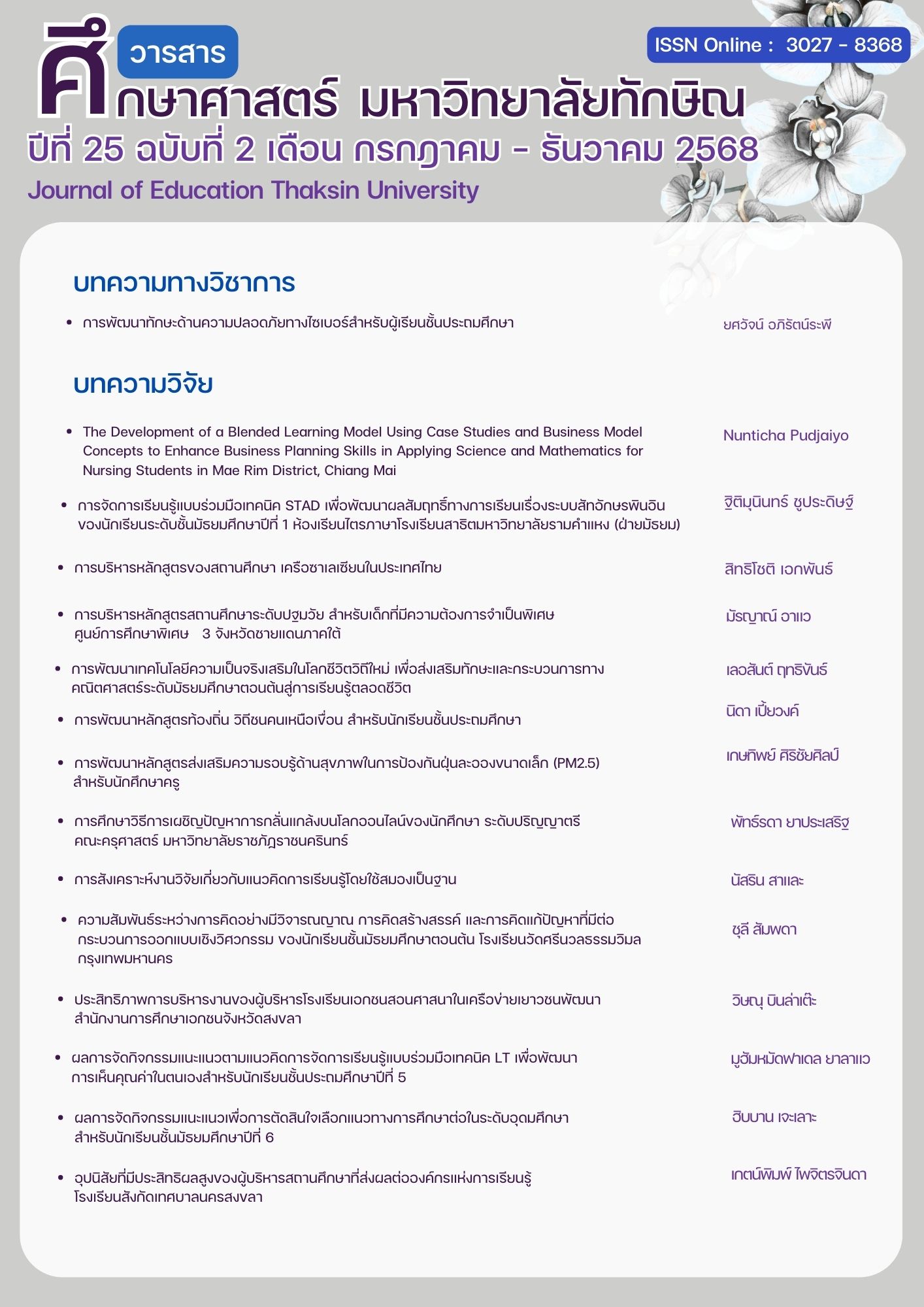
Main Article Content
Abstract
This research aims to the characteristics of the research on Brain-Based Learning (BBL) among students and to analyze the effect sizes based on educational level and subject area. The researchers that were synthesized were graduate theses from Universities in Thailand that focused on Brain-Based Learning, which were retrieved from the Thailis research database, a digital collection of full-text documents. The search yielded a total of 50 researches. The research instrument used a checklist-style synthesis form that covered the following aspects: 1) institution 2) academic year 3) subject 4) level of the population or sample group 5) field of study 6) sampling method 7) number of dependent variables 8) dependent variables 9) research design 10) experimental design 11) data collection tools 12) basic statistics used in the research 13) hypothesis testing statistics.
The result of the research characteristics about Brain-Based Learning (BBL) found that, Mahasarakham University had the highest proportion of Brain-Based Learning (36%). The field that produced the most research was Curriculum and Instruction (72%). The most research studies subject was English (30%). The most common sampling method was cluster random sampling (46%), and the research design was the One-Group Pretest-Posttest Design (58%). The research instrument is a test (42.39%). And regarding the effect sizes by educational level and subject area, the findings were as effect sizes across two key variables: educational level and subject area of the sample. For the subject area, the studies related to Arts, Music, and Performing Arts had the highest average effect size (4.51%). For educational level, the studies on secondary school students had the highest average effect size (3.76%).
Article Details

This work is licensed under a Creative Commons Attribution-NonCommercial-NoDerivatives 4.0 International License.
ในกรณีที่กองบรรณาธิการ หรือผู้เชี่ยวชาญ ซึ่งได้รับเชิญให้เป็นผู้ตรวจบทความวิจัย หรือ บทความทางวิชาการมีความเห็นว่าควรแก้ไขความบกพร่อง ทางกองบรรณาธิการจะส่งต้นฉบับให้ ผู้เขียนพิจารณาจัดการแก้ไขให้เหมาะสมก่อนที่จะลงพิมพ์ ทั้งนี้ กองบรรณาธิการจะยึดถือความคิด เห็นของผู้เชี่ยวชาญเป็นเกณฑ์
References
กมลพรรณ ชีวพันธุศรี และโสภา เกริกไกรกุล. (2546). สมองกับการเรียนร้ ูLearning and the Brain.กรุงเทพฯ : พรการพิมพ์.
กระทรวงศึกษาธิการ. (2551). หลักสูตรแกนกลางการศึกษาขั้นพื้นฐาน พุทธศักราช 2551. กรุงเทพมหานคร:
โรงพิมพ์ชุมนุมสหกรณ์การเกษตรแห่งประเทศไทย.
จิตติวิทย์ พิทักษ์ และ พงษ์พิทยา สัพโส. (2561). การพัฒนารูปแบบการเรียนการสอนดนตรีโดยใช้สมองเป็นฐาน
ระดับมัธยมศึกษาปีที่ 1 โรงเรียนสาธิตมหาวิทยาลัยขอนแก่น. วารสารสังคมศาสตร์และมนุษยศาสตร์ มหาวิทยาลัยเกษตรศาสตร์, 26(2), 99.
ณัฐวัชร จันทโรธร และ ไพโรจน์ ญัตติอัครวงศ์. (2565). การพัฒนาหลักสูตรและการเรียนการสอน. วารสารมหา
จุฬาวิชาการ, 9(1).
ธิดารัตน์ เจตินัย.(2551). ผลการอ่านจับใจความภาษาไทยชั้นมัธยมศึกษาปีที่ 2 ด้วยกลุ่มร่วมมือที่ใช้แผนผัง
ความคิดและเกมตามแนวคิดโดยใช้สมองเป็นฐาน.(วิทยานิพนธ์ครุศาสตรมหาบัณฑิต).มหาสารคาม:มหาวิทยาลัยมหาสารคาม
ธีรวุฒิ เอกะกุล. (2550). ระเบียบวิธีวิจัยทางพฤติกรรมศาสตร์และสังคมศาสตร์ (พิมพ์ครั้งที่ 5). อุบลราชธานี:
วิทยาออฟเซทการพิมพ์.
ภณิตา พงศ์วัชร์.(2559). ผลของการจัดกิจกรรมการอ่านโดยใช้แนวคิดสมองเป็นฐานที่มีต่อความสามารถ ในการ
อ่านจับใจความของนักเรียนชั้นประถมศึกษาปีที่ 3 (วิทยานิพนธ์ครุศาสตรมหาบัณฑิต).กรุงเทพมหานครฯ:จุฬาลงกรณมหาวิทยาลัย
ภาณุวัฒน์ สว่างแสง. (2562). แรงจูงใจในการตัดสินใจเข้าศึกษาในระดับปริญญาตรี ประจำปีการศึกษา 2561
มหาวิทยาลัยมหาสารคาม (TCAS 61). มหาสารคาม: สำนักพิมพ์มหาวิทยาลัยมหาสารคาม.
ยุดา รักไทย. (2544).เทคนิคการแก้ปัญหาและตัดสินใจ.พิมพ์ครั้งที่ 3.กรุงเทพฯ : เอ็กซเปอร์เน็ท
วรรณภา จัดสุวรรณ.(2556).การพัฒนาผลการการจัดการเรียนรู้ภาษาไทยด้านการอ่านเชิงวิเคราะห์ด้วยการจัด
กิจกรรมโดยใช้สมองเป็นฐานชั้นมัธยมศึกษาปีที่ 1.(วิทยานิพนธ์ครุศาสตรมหาบัณฑิต).มหาสารคาม:มหาวิทยาลัยมหาสารคาม
วีณา ประชากูล,ประสาท เนืองเฉลิม. (2553). รูปแบบการเรียนการสอน. พิมพ์ครั้งแรก. มหาสารคาม : สำนักพิมพ์
มหาวิทยาลัยมหาสารคาม.
สถาบันพัฒนาคุณภาพวิชาการ. (2549). การเรียนรู้ตามหลักการเรียนรู้ของสมอง, กรุงเทพฯ:สุวีริยาสาส์น.
อรพินท์ ตันเมืองใจ.(2556). ความสามารถในการสื่อสารทางวิทยาศาสตร์ของนักเรียนชั้นประถมศึกษาปีที่ 5 ที่เรียน
โดยใช้กิจกรรมการเรียนรู้แบบใช้สมองเป็นฐาน.(วิทยานิพนธ์ครุศาสตรมหาบัณฑิต).เชียงใหม่:มหาวิทยาลัยเชียงใหม่
Gall, M. D., Borg, W. R., & Gall, J. P. (1996). Educational research: An introduction (6th ed.).
Longman Publishing.
Jensen, E. (2005). Teaching with the brain in mind. ASCD.
