
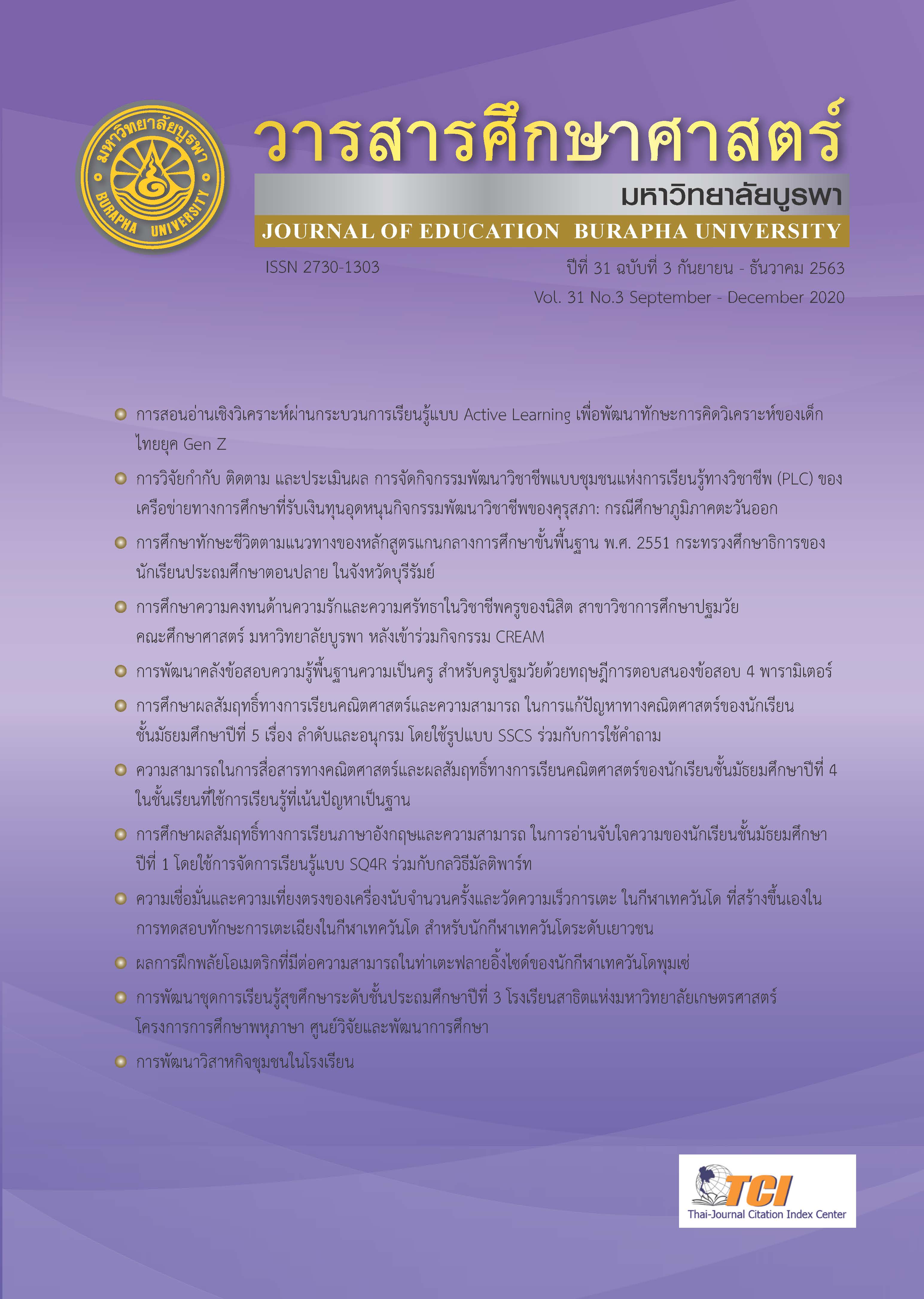
การพัฒนาวิสาหกิจชุมชนในโรงเรียน
คำสำคัญ:
การพัฒนา, วิสาหกิจชุมชน, โรงเรียนบทคัดย่อ
การวิจัยครั้งนี้มีวัตถุประสงค์เพื่อ 1) เพื่อศึกษาสภาพความต้องการการจัดการเรียนรู้ การจัดการวิสาหกิจชุมชนในโรงเรียน 2) เพื่อพัฒนาวิสาหกิจชุมชนในโรงเรียน 3) เพื่อออกแบบผลิตภัณฑ์ความคิดสร้างสรรค์ที่ต่อยอดจากการผลิตของชุมชนในการพัฒนาวิสาหกิจชุมชน โดยใช้การวิจัยการวิจัยและพัฒนา (Research and Development) ระยะเวลาที่ทำการวิจัยตั้งแต่เดือนมกราคม พ.ศ. 2562 ถึงเดือน เดือน มกราคม พ.ศ. 2563 กลุ่มเป้าหมายในการวิจัยแบ่งเป็น 2 กลุ่ม ดังนี้ กลุ่มเป้าหมายเพื่อหาข้อมูลได้แก่ ภาคีเครือข่าย ประกอบด้วย ผู้บริหารสถานศึกษา ครู นักเรียน สำนักงานเกษตรอำเภอ เกษตรกร ชุมชน นักวิชาการและกลุ่มวิสาหกิจผู้ประกอบการมะม่วง จำนวน 24 คน และกลุ่มตัวอย่างในการวิจัย ได้แก่ นักเรียนชั้นมัธยมศึกษาปีที่ 3 จำนวน 12 คน ได้มาจากการสุ่มแบบเจาะจง (Purposive Sampling) เครื่องมือที่ใช้ ได้แก่ แบบสัมภาษณ์แบบมีโครงสร้าง และหลักสูตรวิชาวิสาหกิจชุมชน ขั้นตอนการวิจัย 4 ขั้นตอน ดังนี้ 1) การศึกษาข้อมูลพื้นฐาน 2) การพัฒนานวัตกรรม 3) การทดลองและการพัฒนา และ4) การวัดและประเมินผล สถิติที่ใช้ในการวิเคราะห์ข้อมูล ได้แก่ ค่าเฉลี่ย ร้อยละ และค่าส่วนเบี่ยงเบนมาตรฐาน
ผลการวิจัยพบว่า
- การจัดการเรียนรู้เรื่องการจัดการวิสาหกิจชุมชนในโรงเรียนต้องตอบสนอง 5 ประการ ดังนี้ 1) ด้านนโยบายของสำนักงานเขตพื้นที่การศึกษา 2) มะม่วงพืชเศรษฐกิจของจังหวัด 3) ด้านความจำเป็นในการพัฒนาวิสาหกิจชุมชนในโรงเรียน 4) การเตรียมความพร้อมทักษะอาชีพ และ 5) สถานการณ์โรงเรียนกับวิสาหกิจชุมชน
- ศูนย์การเรียนรู้วิสากิจชุมชนในโรงเรียนและหลักสูตรวิสาหกิจชุมชนในโรงเรียน ค่า P.M. จากการวิเคราะห์โดยใช้เทคนิคปุยซองค์เท่ากับ 14.38 ซึ่งหมายถึงคุณภาพสูง
- ออกแบบความคิดสร้างสรรค์ที่ต่อยอดจากการผลิตของชุมชนในการพัฒนาวิสาหกิจชุมชนได้จำนวน 4 ผลิตภัณฑ์ ได้แก่ เยลลี่มะม่วงเบา วุ้นมะม่วงนมสด มะม่วงอบแห้ง และกล้วยตากพลังงานแสงอาทิตย์
เอกสารอ้างอิง
พนัชกร เพชรนาค. (2559). การศึกษารูปแบบและสร้างสรรค์ผลิตภัณฑ์จักสานทางมะพร้าว จากภูมิปัญญาท้องถิ่น ตำบลสาวชะโงก อำเภอบางคล้า จังหวัดฉะเชิงเทรา . รายงานการวิจัย. มหาวิทยาลัยราชภัฏราชนครินทร์: ฉะเชิงเทรา.
พนิดา สัตโยภาส บุญชนิด วิงวอนและบุญฑวรรณ วิงวอน. (2555). “ศักยภาพผู้ประกอบการและนวัตกรรมองค์การที่มีสิทธิพลต่อความสามารถในการแข่งขันของวิสาหกิจขนาดกลางและขนาดย่อมในเขตภาคเหนือตอนบน.” วารสารการประชุมวิชาการวิจัยรำไพพรรณี. 6,(1), 1-12.
พระราชบัญญัติการศึกษาแห่งชาติ พ.ศ. 2542 แก้ไขเพิ่มเติม (ฉบับที่ 2) และฉบับที่ 3 พ.ศ. 2553. (2542, 19 สิงหาคม). ราชกิจจานุเบกษา. เล่มที่ 116 ตอนที่ 74ก หน้า 1-19.
ศุภชัย เหมือนโพธิ์. (2559). การพัฒนาศักยภาพผู้ประกอบการชุมชน ตามแนวคิดเศรษฐกิจสร้างสรรค์ (ปรัชญาดุษฎีบัณฑิต). นครปฐม: มหาวิทยาลัยศิลปากร.
สำนักเลขาธิการรัฐมนตรี. (2557). คำแถลงนโยบายของคณะรัฐมนตรี. Retrived May 16, 2017, from
http:// oic.go.th/fileweb/cabinfocenter2/drawer051/general/data0000/00000187.
อดุลย์รัตน์ เกตุเวชสุริยา. (2559). การสร้างรูปแบบการถ่ายทอดภูมิปัญญาท้องถิ่นการแปรรูปเสื่อกก เพื่อส่งเสริมวิสาหกิจชุมชนโรงเรียน. วารสารธรรมทรรศน์. 16(2), 1-9.
ดาวน์โหลด
เผยแพร่แล้ว
รูปแบบการอ้างอิง
ฉบับ
ประเภทบทความ
สัญญาอนุญาต
ลิขสิทธิ์ของบทความที่ปรากฏในวารสารศึกษาศาสตร์ มหาวิทยาลัยบูรพา เป็นของวารสารศึกษาศาสตร์ มหาวิทยาลัยบูรพา ทั้งนี้บทความทุกเรื่องผ่านการตรวจสอบความถูกต้องทางวิชาการจากผู้ทรงคุณวุฒิ ข้อความและข้อมูลของบทความในวารสารฯ เป็นแนวคิดของผู้แต่ง มิใช่เป็นความคิดเห็นของกองบรรณาธิการ และมิใช่ความรับผิดชอบของคณะศึกษาศาสตร์ มหาวิทยาลัยบูรพา ไม่สงวนลิขสิทธิ์การนำไปใช้ประโยชน์ทางวิชาการแต่ต้องอ้างอิงแสดงแหล่งที่มาและอยู่ในขอบเขตของกฎหมายลิขสิทธิ์


