
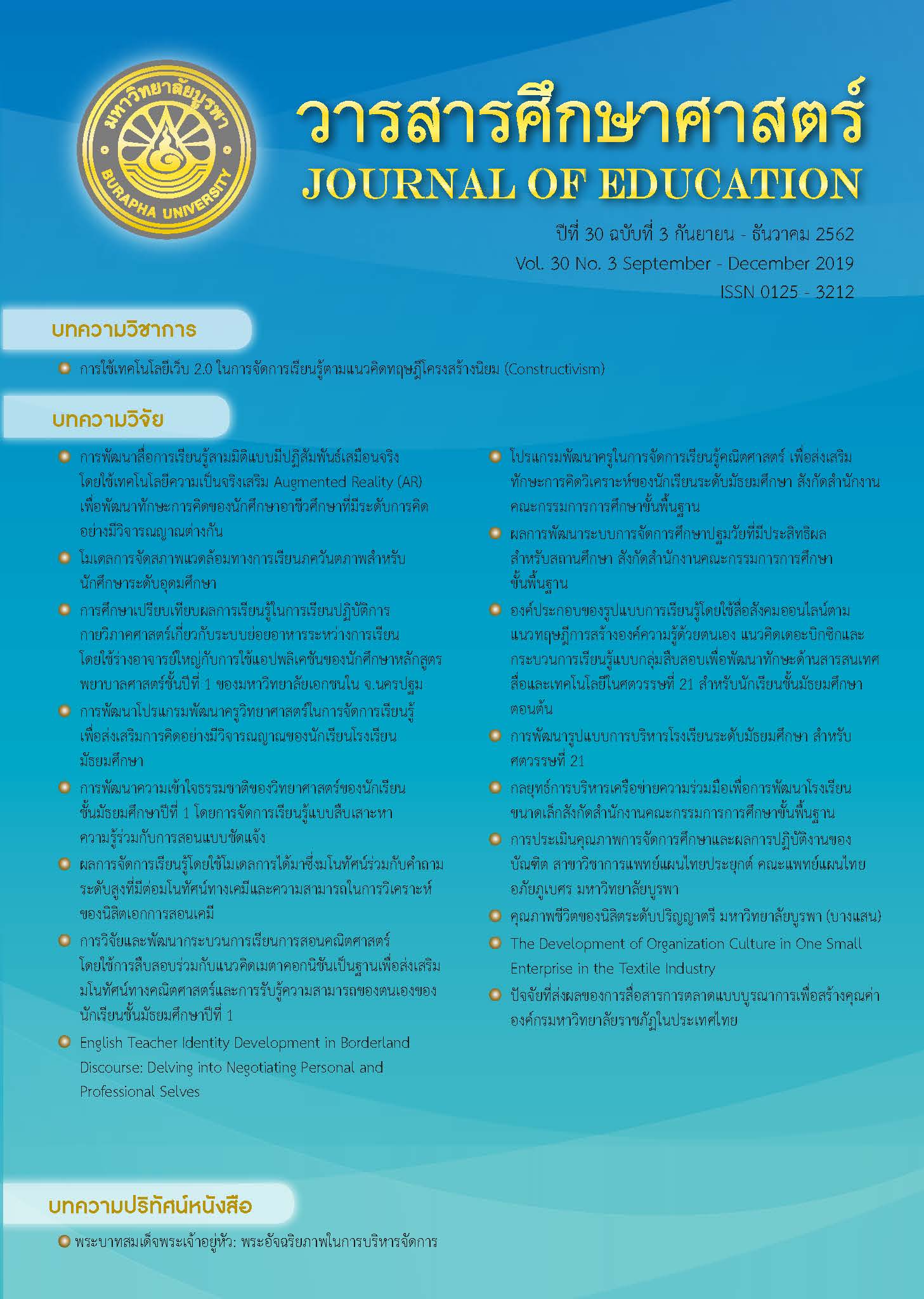
การพัฒนาระบบการจัดการการศึกษาปฐมวัยที่มีประสิทธิผล สำหรับสถานศึกษา สังกัดสำนักงานคณะกรรมการการศึกษาขั้นพื้นฐาน
คำสำคัญ:
การศึกษาปฐมวัย, ประสิทธิผล, การพัฒนาระบบบทคัดย่อ
การวิจัยในครั้งนี้มีวัตถุประสงค์เพื่อ 1) พัฒนาระบบการจัดการศึกษาปฐมวัยที่มีประสิทธิผล สำหรับสถานศึกษาสังกัดสำนักงานคณะกรรมการการศึกษาขั้นพื้นฐาน 2) ประเมินผลการใช้ระบบการจัดการศึกษาปฐมวัยที่มีประสิทธิผล สำหรับสถานศึกษาสังกัดสำนักงานคณะกรรมการการศึกษาขั้นพื้นฐาน การดำเนินการวิจัย ระยะที่ 1 พัฒนาระบบการจัดการการศึกษาปฐมวัยที่มีประสิทธิผล ประชากร ได้แก่ ผู้ทรงคุณวุฒิ จำนวน 7 คน ระยะที่ 2 ประเมินผลการใช้ระบบการจัดการศึกษาปฐมวัยที่มีประสิทธิผล ประชากร ได้แก่ ครูและบุคลากร กรรมการสถานศึกษา ผู้ปกครองนักเรียน จำนวน 65 คน และนักเรียนชั้นอนุบาล จำนวน 24 คน เครื่องมือที่ใช้ในการวิจัย ประกอบด้วย แบบสอบถาม แบบประเมิน และแบบสัมภาษณ์ สถิติที่ใช้ในการวิเคราะห์ข้อมูล คือ ความค่าเฉลี่ยและส่วนเบี่ยงเบนมาตรฐาน
ผลการวิจัยพบว่าระบบการจัดการการศึกษาปฐมวัยที่มีประสิทธิผล สำหรับสถานสังกัดสำนักงานคณะกรรมการการศึกษาขั้นพื้นฐาน ปัจจัยนำเข้า ประกอบด้วย ภาวะผู้นำของผู้บริหาร คุณลักษณะของครูปฐมวัย สิ่งอำนวยความสะดวกและการบริการ ความร่วมมือของชุมชนและผู้ปกครอง ความพร้อมของผู้เรียน นโยบายที่เกี่ยวข้อง กระบวนการ ประกอบด้วย การแต่งตั้งคณะทำงาน การสร้างความรู้ความเข้าใจ การเตรียมวัสดุอุปกรณ์และเครื่องมือประเมิน การพัฒนาครู การพัฒนาหลักสูตร การจัดประสบการณ์ การจัดสภาพแวดล้อม การประเมินพัฒนาการ การนิเทศติดตาม การประเมินผล ผลผลิต ประกอบด้วย พัฒนาการด้านร่างกาย พัฒนาการด้านอารมณ์- จิตใจ พัฒนาการด้านสังคม พัฒนาการด้านสติปัญญา ความพึงพอใจ ข้อมูลป้อนกลับ ประกอบด้วย รายงานผล ระบบย่อย ได้แก่ ระบบการพัฒนาหลักสูตร ระบบการพัฒนาครู ระบบการจัดประสบการณ์ ระบบการจัดสภาพแวดล้อม ระบบการประเมินพัฒนาการ การประเมินการใช้ระบบการจัดการศึกษาปฐมวัยที่มีประสิทธิผล สำหรับสถานศึกษาสังกัดสำนักงานคณะกรรมการการศึกษาขั้นพื้นฐาน กระบวนการดำเนินงานโดยรวมอยู่ในระดับมาก พัฒนาการของผู้เรียนโดยรวมอยู่ในระดับดีมาก ความพึงพอใจโดยรวมอยู่ในระดับมาก
เอกสารอ้างอิง
กิดานันท์ มลิทอง. (2543). เทคโนโลยีการศึกษาและนวัตกรรม.พิมพ์ครั้งที่ 2 กรุงเทพฯ : จุฬาลงกรณ์ มหาวิทยาลัย.
จีระพันธุ์ พูลพัฒน์. (2546). การเรียนรู้ของเด็กปฐมวัยไทย : ตามแนวคิดมอนเตสซอรี. กรุงเทพมหานคร : สำนักงานคณะกรรมการการศึกษาแห่งชาติ.
เฉลียว บุรีภักดี. (2552). คู่มือการฝึกคิดเป็นระบบ. เอกสารประกอบการสอนรายวิชา 0511904 การประยุกต์ทฤษฏีระบบในการพัฒนาและบริหารการศึกษา. เลย :
มหาวิทยาลัยราชภัฏเลย
ทิศนา แขมมณี และคณะ. (2535). หลักการและรูปแบบการพัฒนาเด็กปฐมวัยตามวิถีไทย. กรุงเทพฯ : โรงพิมพ์จุฬาลงกรณ์มหาวิทยาลัย.
ทิศนา แขมมณี . (2554). ศาสตร์การสอนองค์ความรู้เพื่อการจัดกระบวนการเรียนรู้ที่มีประสิทธิภาพ. กรุงเทพฯ : สำนักพิมพ์แห่งจุฬาลงกรณ์มหาวิทยลัย.
นิตยา คชภักดี. (2530). จิตเวชเด็กสำหรับกุมารแพทย์. กรุงเทพฯ : คณะแพทย์ศาสตร์โรงพยาบาลรามาธิบดี
นิรัชกร ทองน้อย. (2556). การพัฒนาระบบการบริหารงานวิชาการที่มีประสิทธิผลในโรงเรียนประถมศึกษา. วิทยานิพนธ์ กศ.ด. สาขาการบริหารการศึกษา. มหาสารคาม :
มหาวิทยาลัยมหาสารคาม.
ปรัชญา เวสารัชช์. (2545). ชุดฝึกอบรมผู้บริหาร : ประมวลสาระสำคัญ โครงการพัฒนาผู้บริหารการศึกษา ผู้บริหารสถานศึกษา ครู ผู้นำชุมชนและผู้นำองค์กรปกครองส่วน
ท้องถิ่น (เอกสารอัดสำเนา)
พัชรี ผลโยธิน และคณะ. (2550). การเรียนรู้ของเด็กปฐมวัยไทย : ตามแนวคิดไฮสโคป. กรุงเทพฯ : ห้างหุ้นส่วนจำกัด วี.ที.ซี. คอมมิวนิเคชั่น.
พิสณุ ฟองศรี. (2551). เทคนิควิธีประเมินโครงการ. พิมพ์ครั้งที่ 6. กรุงเทพฯ : บริษัท ด่านสุนธาการพิมพ์ จำกัด
เยาวพา เดชะคุปต์. (2542). การศึกษาปฐมวัย. กรุงเทพฯ: เอบี กราฟฟิคส์ดีไซน์
รสสุคนธ์ มกรมณี. (2555). ระบบและวิธีการเชิงระบบ. จาก https://www.gotoknow.org/posts/73282
รัฐธรรมนูญแห่งราชอาณาจักรไทย (2560). ราชกิจจานุเบกษา เล่ม 134 ตอนที่ 40 ก 6 เมษายน 2560
เรขา ศรีวิชัย. (2554). รูปแบบการบริหารงานสถานศึกษาเอกชนระดับปฐมวัย ที่มีประสิทธิผล ในจังหวัดนนทบุรี. วิทยานิพนธ์นี้ปรัชญาดุษฎีบัณฑิต สาขาวิชาบริหารการ
ศึกษา : มหาวิทยาลัยศรีปทุม
ศศิลักษณ์ ขยันกิจ . (2558). เปิดสถานการณ์เด็กปฐมวัย มุ่งติวตั้งแต่วัยอนุบาล. จาก http://www.thaihealth.or.th/Content/27887
ศิริวรรณ เสรีรัตน์ และคณะ. (2550). การจัดการและพฤติกรรมองค์การ. กรุงเทพฯ : ธีระฟิล์มและไซเท็กซ์
ศุภสิทธิ์ พรรณารุโณทัย. (2559). เปิดสถานการณ์เด็กปฐมวัย พบ 1 ใน 3 พัฒนาการล่าช้า. จาก http://www.qlf.or.th/Mobile/Details?contentId=812
สมหวัง พิธิยานุวัฒน์.(2553). วิธีวิทยาการประเมิน : ศาสตร์แห่งคุณค่า. พิมพ์ครั้งที่ 5. กรุงเทพฯ: สำนักพิมพ์แห่งจุฬาลงกรณ์มหาวิทยาลัย.
สุจินดา ขจรรุ่งศิลป์ และธิดา พิทักษ์สินสุข. (2550). การเรียนรู้ของเด็กปฐมวัยไทย : ตามแนวคิดเรกจิโอ เอมีเลีย. กรุงเทพฯ : ห้างหุ้นส่วนจำกัด วี.ที.ซี. คอมมิวนิเคชั่น.
สุทธิวรรณ ตันติรจนาวงศ์ และสมคิด พรมจุ้ย. (2557). “การวัดและประเมินการจัดการศึกษา” ใน ประมวลสาระชุดวิชาการวิจัยการบริหารการศึกษา หน่วยที่ 15. นนทบุรี :
มหาวิทยาลัยสุโขทัยธรรมาธิราช สาขาวิชาศึกษาศาสตร์
สำนักงานคณะกรรมการการประถมศึกษาแห่งชาติ. (2528). คู่มือการจัดกิจกรรมสำหรับเด็ก. พิมพ์ครั้งที่ 7. กรุงเทพฯ : โรงพิมพ์คุรุสภา
สำนักงานคณะกรรมการพัฒนาการเศรษฐกิจและสังคมแห่งชาติ. (2559). แผนพัฒนาเศรษฐกิจและสังคมแห่งชาติ ฉบับที่สิบสอง พ.ศ. 2560 -2564. กรุงเทพฯ : สำนักงาน
คณะกรรมการพัฒนาการเศรษฐกิจและสังคมแห่งชาติ.
สำนักงานเลขาธิการคุรุสภา. (2554). รายงานการวิจัยฉบับสมบูรณ์เรื่องมาตรฐานวิชีพครูการศึกษาปฐมวัย. กรุงเทพฯ : สำนักงานเลขาธิการคุรุสภา, .
สำนักงานเลขาธิการสภาการศึกษา. (2550). นโยบายและยุทธศาสตร์การพัฒนาเด็กปฐมวัย(0-5 ปี) ระยะยาว พ.ศ. 2550 -2559. กรุงเทพฯ : ห้างหุ้นส่วนจำกัด วี.ที.ซี. คอม
มิวนิเคชั่น.
สำนักงานเลขาธิการสภาการศึกษา. (2551). รายงานการติดตามและประเมินผลการจัดการเรียนรู้ระดับปฐมวัย. กรุงเทพฯ : บริษัท เพลิน สตูดิโอ จำกัด
สำนักงานเลขาธิการสภาการศึกษา. (2552). รายงานความก้าวหน้าการจัดการเรียนรู้ระดับปฐมวัย ปี 2551-2552. กรุงเทพฯ : บริษัท เพลิน สตูดิโอ จำกัด.
สำนักงานเลขาธิการสภาการศึกษา. (2560). แผนการศึกษาแห่งชาติ พ.ศ. 2560 - 2579. กรุงเทพฯ : บริษัทพริกหวาน กราฟฟิคจำกัด,
สำนักทดสอบทางการศึกษา. (2556). แนวทางการประเมินคุณภาพตามมาตรฐานการศึกษาปฐมวัยเพื่อการประกันคุณภาพภายในของสถานศึกษา. พิมพ์ครั้งที่ 2. กรุงเทพฯ :
โรงพิมพ์ชุมชนสหกรณ์การเกษตรแห่งประเทศไทย.
Bertalanffy, L.V. (1968). General system theory: Foundations, Development, Applications. New York : George Braziller
Bigs and others. (1980). Managing the systems development process. Engle wood Cliffs, NJ : Prentice Hall.
Bloom, Benjamin S. (1964). Taxonomy of Educational Objectives : The Classification of Educational Goals. Handbook ll Affective Domain. London
: Longman.
Cascio, W.F. (1992). Manaing Human Resource. New York: McGraw-Hill Book.
Checkland, Peter. (1981). Systems thinking, systems practice. Chichester : Wiley
Edwards,P.(1985). System analysis design and development : With structured concepts. New York : Holt Rinehart and Winston.
Edmonds, Ronold R. (1979). “Effective schools for the Urban poor”. Education Leadership. P.37
Fitzpatrick, J.L., Sanders, J.R. & Worthen, B.R. (2004). Program evaluation, alternative approaches and practical guidelines. New York: Longman
Hoy, W.K, & Miskel, G. (2008). Educational Administration: Theory, Research, and Practice. 8th ed. Boston : Mc Graw – Hill.
Katz, D & Kahn, L.R. (1978). The Social Psychology of Organizations. 2nd Ed. New York : John Wiley and Sons.
Koontz, H & Odonnell, C. (2001). Essentials of Management. New York : McGraw-Hill
Lunenburg, F.C. and Ornstein, A.C. (2004). Educational Administration Concepts and Practice. 4th ed. Belmont, Calif: Thomson
McMillan, J.H. & Schumacher, S. (2001). Research in Education. 5thed. New York : Addison Wesley Longman. Inc.
Schoderbek, C. G. and Others. (1990). Management System: Conceptual Consideration. Texas: Business Publications.
Smith, W. A. (1993). Management system : Analysis and application. Japan : CBS College publishing.
Steers, R.M. (1977). Organization Effectiveness: A Behavioral View. Santa Monica, Califonia : Good year Publishing Company Inc.
Stair, Ralph M. and George W. Reynolds. (2001). Principles of Information Systems: A Managerial Approach. Boston : Course Technology.
Stone, R.J. (1998). Human Resource Management. 3rd ed. New York : John Wiley & Sons.
UNESCO. (2015). Education For All 2000-2015 : Achievements and Challenges Summary. http://unesdoc.unesco.org/ulis/cgi-bin/ulis.pl?
catno=232565&set=0055A46C6E_0_468&gp=1&lin=1&ll=1
ดาวน์โหลด
เผยแพร่แล้ว
รูปแบบการอ้างอิง
ฉบับ
ประเภทบทความ
สัญญาอนุญาต
ลิขสิทธิ์ของบทความที่ปรากฏในวารสารศึกษาศาสตร์ มหาวิทยาลัยบูรพา เป็นของวารสารศึกษาศาสตร์ มหาวิทยาลัยบูรพา ทั้งนี้บทความทุกเรื่องผ่านการตรวจสอบความถูกต้องทางวิชาการจากผู้ทรงคุณวุฒิ ข้อความและข้อมูลของบทความในวารสารฯ เป็นแนวคิดของผู้แต่ง มิใช่เป็นความคิดเห็นของกองบรรณาธิการ และมิใช่ความรับผิดชอบของคณะศึกษาศาสตร์ มหาวิทยาลัยบูรพา ไม่สงวนลิขสิทธิ์การนำไปใช้ประโยชน์ทางวิชาการแต่ต้องอ้างอิงแสดงแหล่งที่มาและอยู่ในขอบเขตของกฎหมายลิขสิทธิ์


