
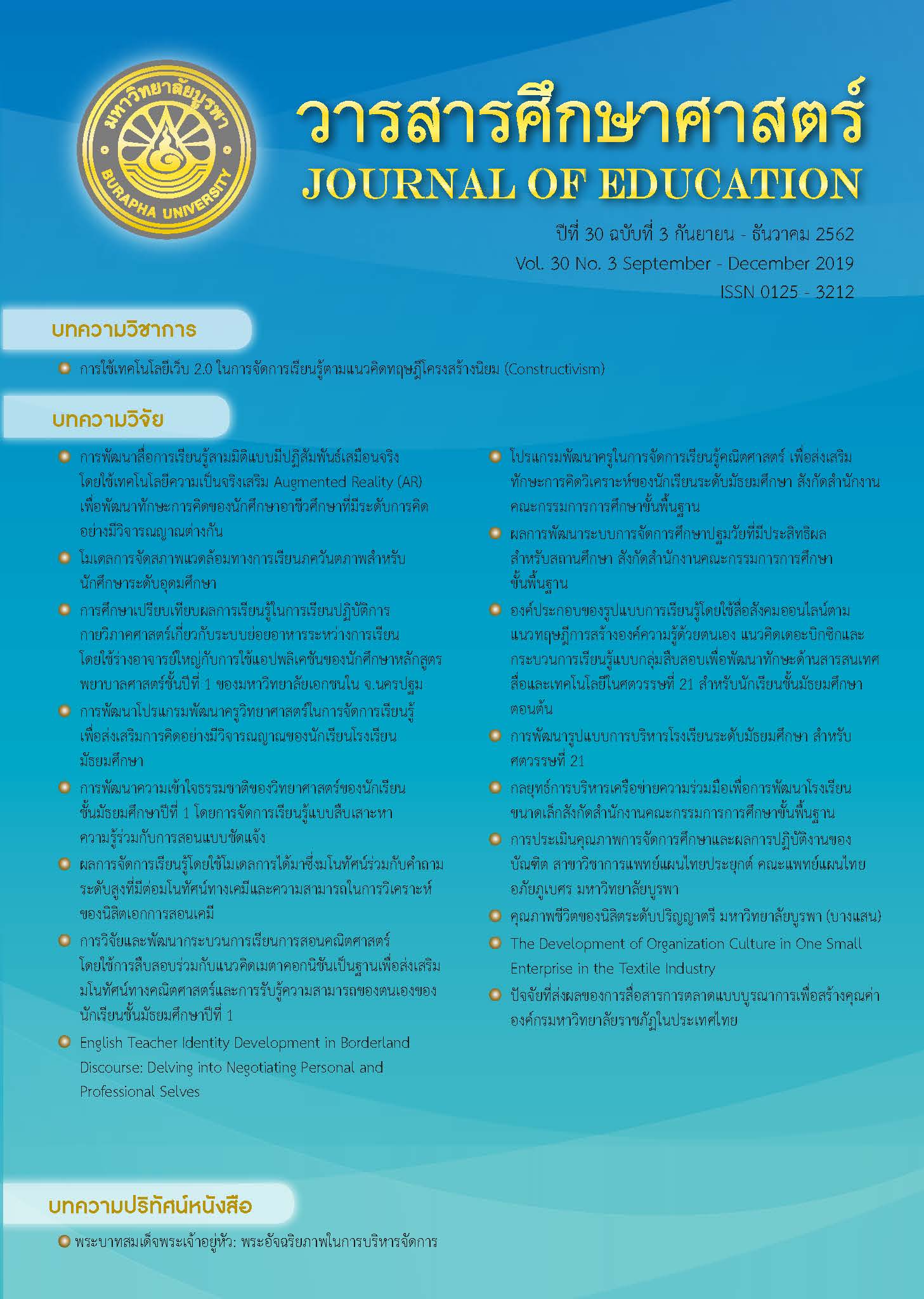
ผลการจัดการเรียนรู้โดยใช้โมเดลการได้มาซึ่งมโนทัศน์ร่วมกับคำถามระดับสูงที่มีต่อมโนทัศน์ทางเคมีและความสามารถในการวิเคราะห์ของ นิสิตเอกการสอนเคมี
คำสำคัญ:
โมเดลการได้มาซึ่งมโนทัศน์ร่วมกับคำถามระดับสูง, มโนทัศน์ทางเคมี, ความสามารถในการวิเคราะห์บทคัดย่อ
การวิจัยครั้งนี้มีวัตถุประสงค์ เพื่อเปรียบเทียบมโนทัศน์ทางเคมีและความสามารถในการวิเคราะห์ของนิสิตเอกการสอนเคมีก่อนเรียนและหลังเรียนโดยใช้โมเดลการได้มาซึ่งมโนทัศน์ร่วมกับการตั้งคำถามระดับสูง กลุ่มตัวอย่างที่ใช้ในการวิจัยครั้งนี้เป็นนิสิตเอกการสอนเคมี ที่ลงทะเบียนเรียนรายวิชา 41140659 เคมีระดับโรงเรียน 2 ปีการศึกษา 2560 จำนวน 23 คน ซึ่งได้มาจากการเลือกแบบเจาะจง เครื่องมือที่ใช้ในการวิจัย ได้แก่ 1) แผนการสอนรายวิชา 41140659 เคมีระดับโรงเรียน 2 โดยใช้โมเดลการได้มาซึ่งมโนทัศน์ร่วมกับคำถามระดับสูง 2) แบบวัดมโนทัศน์ทางเคมี ซึ่งวัดมโนทัศน์ทางเคมี 5 สาระ ได้แก่ พันธะเคมี ปริมาณสารสัมพันธ์ กรด-เบส สมดุลเคมี และไฟฟ้าเคมี 3) แบบวัดความสามารถในการวิเคราะห์ วิเคราะห์ข้อมูลโดยใช้ ค่าเฉลี่ย ส่วนเบี่ยงเบนมาตรฐาน การทดสอบค่าทีแบบกลุ่มตัวอย่างไม่เป็นอิสระจากกัน และการวิเคราะห์ข้อมูลเชิงคุณภาพ
ผลการวิจัยพบว่า
- มโนทัศน์ทางเคมีของนิสิตที่ได้รับการจัดการเรียนรู้โดยใช้โมเดลการได้มาซึ่งมโนทัศน์ร่วมกับคำถามระดับสูงหลังเรียนสูงกว่าก่อนเรียน อย่างมีนัยสำคัญทางสถิติที่ระดับ .05 ในภาพรวมทุกสาระเคมี
- ความสามารถในการวิเคราะห์ของนิสิตที่ได้รับการจัดการเรียนรู้โดยใช้โมเดลการได้มาซึ่งมโนทัศน์ร่วมกับคำถามระดับสูงหลังเรียนสูงกว่าก่อนเรียน อย่างมีนัยสำคัญทางสถิติที่ระดับ.05
- ผลการวิเคราะห์ข้อมูลเชิงคุณภาพจำแนกตามสาระ ได้แก่ พันธะเคมี ปริมาณสารสัมพันธ์ กรด-เบส สมดุลเคมี และไฟฟ้าเคมี พบว่านิสิตเอกการสอนเคมีหลังเรียนโดยใช้โมเดลการได้มาซึ่งมโนทัศน์ร่วมกับคำถามระดับสูงมีมโนทัศน์ทางเคมีอยู่ในกลุ่ม 1 มีจำนวนเพิ่มขึ้นมากที่สุดคิดเป็นร้อยละ78.26, 82.0, 78.26, 73.91, 78.26 ตามลำดับ นิสิตสามารถตอบคำตอบถูก และให้เหตุผลครบทุกองค์ประกอบที่สำคัญของแต่ละแนวคิด ในขณะที่นิสิตมีมโนทัศน์ทางเคมีในกลุ่มที่ 2 กลุ่มที่ 3 มีจำนวนลดลงอย่างเห็นได้ชัด และกลุ่มที่ 4 มีจำนวนลดลงมากที่สุด กล่าวคือไม่มีนิสิตที่มีมโนทัศน์ที่คลาดเคลื่อนหลังเรียน
เอกสารอ้างอิง
ฐาน. กรุงเทพฯ: ชุมนุมสหกรณ์การเกษตรแห่งประเทศไทย.
กฤษฎา พนันชัย, พนัสดา มาตราช, สุภาพ ตาเมือง และศักดิ์ศรี สุภาษร. (2561). ความเข้าใจมโนมติและแบบจำลองทางความคิด เรื่องสมดุลเคมีของนักเรียนชั้นมัธยมศึกษา
ปีที่ 5 จากการเรียนด้วยการเรียนรู้แบบสืบเสาะร่วมกับเทคนิคการทำนาย สังเกต-อธิบาย. วารสารวิทยาศาสตร์และวิทยาศาสตร์ศึกษา. 1(1), 49-60.
ชาตรี ฝ่ายคำตา, เพ็ญศรี บุญสวรรค์ส่ง และวรรณทิพา รอดแรงค้า. (2549). การสำรวจความรู้ในเนื้อหาวิชาเคมีของนิสิตครูวิทยาศาสตร์. วารสารเกษตรศาสตร์ (สังคม).
27(1), 10-25.
ชาตรี ฝ่ายคำตา. (2551).แนวคิดทางเลือกของนักเรียนในวิชาเคมี. วารสารศึกษาศาสตร์มหาวิทยาลัยสงขลานครินทร์ วิทยาเขตปัตตานี. 9(2), 11-28.
ทิศนา แขมมณี. (2555). ศาสตร์การสอน: องค์ความรู้เพื่อการจัดกระบวนการเรียนรู้ที่มีประสิทธิภาพ. (พิมพ์ครั้งที่ 16). กรุงเทพฯ: สำนักพิมพ์แห่งจุฬาลงกรณ์มหาวิทยาลัย.
ประพันธ์ศิริ สุเสารัจ. (2556). การพัฒนาการคิด. (พิมพ์ครั้งที่ 5 ฉบับปรับปรุงเพิ่มเติม). กรุงเทพฯ: โรงพิมพ์ห้างหุ้นส่วนจำกัด 9119 เทคนิคพริ้นติ้ง.
พิมพันธ์ เตชะคุปต์. (2544). การเรียนการสอนที่เน้นผู้เรียนเป็นสำคัญ: แนวคิด วิธีและเทคนิคการสอน. กรุงเทพฯ: เดอะมาสเตอร์กรุ๊ป แมเนจเม้นท์.
ไพฑูรย์ สินลารัตน์ และคณะ. (2554). กรอบมาตรฐานคุณวุฒิระดับอุดมศึกษาของประเทศไทย: จากการวิจัยสู่ การปฏิบัติ.กรุงเทพฯ: โรงพิมพ์แห่งจุฬาลงกรณ์
มหาวิทยาลัย.
ไพฑูรย์ สินลารัตน์ และคณะ. (2558). ศาสตร์การคิด. (พิมพ์ครั้งที่ 1). กรุงเทพฯ: มหาวิทยาลัยธุรกิจบัณฑิต.
ภัทรภร ชัยประเสริฐ และคณะ. (2558). การประเมินหลักสูตรการศึกษาบัณฑิต (หลักสูตร 5 ปี) สาขาวิชาการสอนเคมี (หลักสูตรปรับปรุง พ.ศ. 2554) คณะศึกษาศาสตร์
มหาวิทยาลัยบูรพา.วารสารศึกษาศาสตร์. 26(3), 127-140.
วรรณทิพา รอดแรงค้า. (2540). Constructivism. กรุงเทพฯ: ภาควิชาการศึกษา คณะศึกษาศาสตร์ มหาวิทยาลัยเกษตรศาสตร์.
วิศนี ใจฉกาจ และจุไรรัตน์ สุดรุ่ง. (2562). กลยุทธ์การพัฒนาครูด้านการสอนคิดวิเคราะห์ โรงเรียนมัธยมศึกษาสำนักงานเขตพื้นที่การศึกษามัธยมศึกษาเขต 8.วารสาร
ครุศาสตร์จุฬาลงกรณ์มหาวิทยาลัย. 47(1), 337-356.
ศรเนตร อารีโสภณพิเชฐ. (2557). กลยุทธ์การเรียนการสอนเพื่อพัฒนาทักษะการคิดวิเคราะห์:แผนที่มโนทัศน์. วารสารครุศาสตร์. 42(3), 194-210.
สมโภชน์ อเนกสุข. (2559). วิธีการทางสถิติสำหรับการวิจัย. (พิมพ์ครั้งที่ 8). ชลบุรี: คณะศึกษาศาสตร์ มหาวิทยาลัยบูรพา.
สุวิทย์ มูลคำ และอรทัย มูลคำ. (2552). 21 วิธีจัดการเรียนรู้: เพื่อพัฒนากระบวนการคิด. (พิมพ์ครั้งที่ 8). กรุงเทพฯ: ภาพพิมพ์.
Bloom, B.S. (1956). Taxonomy of educational objectives: Cognitive domain. New York: McKay, 20-24.
Brown, D.E. (1992). Using examples and analogies to remediate misconceptions in physics: Faculty influencing conceptual change. Journal of Research in Science and Teaching, 29(1), 17-34.
Bruner, J., Goodnow, J.J., & Austin, G.A. (1967). A Study of thinking. New York: Science Editions.
Joyce, B., & Weil, M. (1996). Model of teaching. London: Allyn and Bacon.
Lasley, T.J., & Matczynski, T.J. (1997). Strategies for Teaching in a Diverse Society Instructional Models. Belmont, CA: Wadworth.
Lasley, T.J., & Matczynski, T.J. (2002). Instructional Models: Strategies for Teaching in a Diverse Society. (2nd ed.). Belmont, CA: Wadworth.
Mahesh, P. (2014). Effect of Concept Attainment Model of Teaching on Achievement in Chemistry at Higher Stage. International Journal for
Research in Education. 3(7), 22-26.
Rajwinder, K. (2017). To Study the Effectiveness of Concept Attainment Model of Teaching on Achievement of Secondary School Students in
Chemistry. Scholarly Research Journal for Humanity Science & English Language, 6858-6863. Retrieved from http://oaji.net/pdf.html?
n=2017/1201-1529054318.pdf
Sreelekha, S., & Nayar, A.K. (2004). The Effectiveness of Concept Attainment Model in Learning Chemistry at Secondary level. New Delhi: NCERT
publication.
ดาวน์โหลด
เผยแพร่แล้ว
รูปแบบการอ้างอิง
ฉบับ
ประเภทบทความ
สัญญาอนุญาต
ลิขสิทธิ์ของบทความที่ปรากฏในวารสารศึกษาศาสตร์ มหาวิทยาลัยบูรพา เป็นของวารสารศึกษาศาสตร์ มหาวิทยาลัยบูรพา ทั้งนี้บทความทุกเรื่องผ่านการตรวจสอบความถูกต้องทางวิชาการจากผู้ทรงคุณวุฒิ ข้อความและข้อมูลของบทความในวารสารฯ เป็นแนวคิดของผู้แต่ง มิใช่เป็นความคิดเห็นของกองบรรณาธิการ และมิใช่ความรับผิดชอบของคณะศึกษาศาสตร์ มหาวิทยาลัยบูรพา ไม่สงวนลิขสิทธิ์การนำไปใช้ประโยชน์ทางวิชาการแต่ต้องอ้างอิงแสดงแหล่งที่มาและอยู่ในขอบเขตของกฎหมายลิขสิทธิ์


