
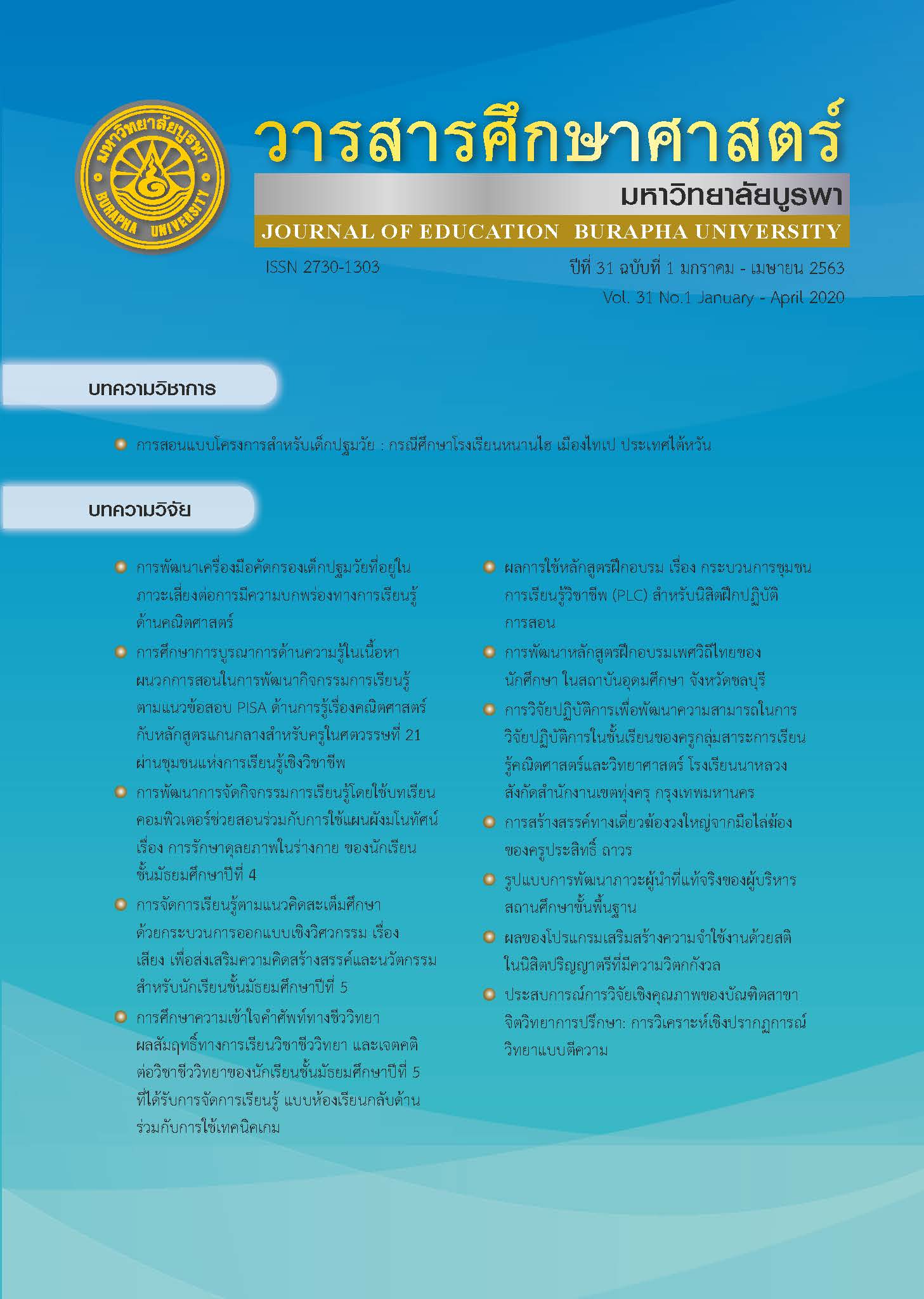
การสอนแบบโครงการสำหรับเด็กปฐมวัย : กรณีศึกษาโรงเรียนหนานไฮ เมืองไทเป ประเทศไต้หวัน
คำสำคัญ:
การสอน, โครงการ, เด็กปฐมวัย, ประเทศไต้หวันบทคัดย่อ
โรงเรียนหนานไฮ เมืองไทเป ประเทศไต้หวัน เป็นตัวอย่างของโรงเรียนที่ใช้การสอนแบบโครงการสำหรับเด็กปฐมวัยอายุ 3-5 ปีที่ประสบความสำเร็จ เนื่องจากให้เด็กเป็นศูนย์กลางของการเรียนรู้ เด็กได้แสวงหาความรู้จากสิ่งที่ตนเองสนใจโดยใช้กระบวนการสืบสอบ จนสามารถสร้าง องค์ความรู้ได้ด้วยตนเอง โดยมีครูเป็นเพียงผู้อำนวยความสะดวกผ่านกระบวนการเรียนรู้แบบโครงการทั้งหมด 3 ระยะ ได้แก่ ระยะเริ่มต้นโครงการ ระยะพัฒนาโครงการ และระยะสรุปโครงการ เด็กจะได้ทำกิจกรรมผ่านการอภิปราย การทำงานภาคสนาม การนำเสนอประสบการณ์เดิม การสืบค้น และการจัดแสดง ซึ่งสามารถนำแนวทางทั้ง 3 ระยะ รวมทั้งแนวทางการทำงานร่วมกับผู้ปกครอง การจัดสภาพแวดล้อมทั้งในและนอกห้องเรียน และการสนับสนุนครูในการทำวิจัยมาเป็นแนวทางในการประยุกต์ใช้ได้ในประเทศไทย
เอกสารอ้างอิง
แนวคิดคอนสตรัคติวิสโดยการใช้การจัดประสบการณ์แบบโครงการ.วิทยานิพนธ์ครุศาสตร
มหาบัณฑิต, สาขาวิชาการศึกษาปฐมวัย, บัณฑิตวิทยาลัย, จุฬาลงกรณ์มหาวิทยาลัย.
นภเนตร ธรรมบวร. (2546). หลักสูตรการศึกษาปฐมวัย.กรุงเทพฯ: ธรรมดาเพรส.
บุปผา เรืองรอง. (2556). โครงงานการสอนแบบโครงการ (Project Approach). สืบค้นเมื่อ 27
พฤษภาคม 2562 จาก http://taamkru.com
พัชรี ผลโยธิน (2555). รวมนวัตกรรมทฤษฎีการศึกษาปฐมวัยสู่การประยุกต์ใช้ในห้องเรียน :
การศึกษาแนวโปรเจ็ค แอพโพรช (Project Approach).กรุงเทพฯ : สำนักพิมพ์สาราเด็ก.
วรนาท รักสกุลไทย และคณะ. (2544). การเรียนรู้แนวใหม่ PROJECT APPROACH. กรุงเทพฯ:
เฟริสท์พริ้นติ้ง.
วัฒนา มัคคสมัน. (2539). การพัฒนารูปแบบการเรียนการสอนตามหลักการสอนแบบโครงการเพื่อ
ส่งเสริมการเห็นคุณค่าในตนเองของเด็กวัยอนุบาล. วิทยานิพนธ์ครุศาสตรมหาบัณฑิต,
สาขาวิชาการศึกษาปฐมวัย, บัณฑิตวิทยาลัย, จุฬาลงกรณ์มหาวิทยาลัย.
วิวรรณ สารกิจปรีชา. (2562). การเรียนรู้แบบ “Project Approach” โรงเรียนอนุบาลกุ๊กไก่.
สืบค้นเมื่อ 8 กันยายน 2562 จากhttps://kukai.ac.th/Thai/Project_Approach.php
สิริมา ภิญโญอนันตพงษ์: (2550). เอกสารประกอบการเรียนวิชา ECED 201 การศึกษาปฐมวัย
โครงการความร่วมมือระหว่างมหาวิทยาลัยราชภัฎสวนดุสิตกับกรมการส่งเสริมการปกครองท้องถิ่น. กรุงเทพฯ: กราฟฟิคไซต์ มหาวิทยาลัยสวนดุสิต.
สุจินดา ขจรรุ่งศิลป์. (2542). เอกสารที่นำเสนอในการสัมมนาระดับชาติ เรื่องการปฏิรูปการเรียนรู้:มิติ
ใหม่เพื่อการพัฒนาศักยภาพมนุษย์ระหว่างวันที่ 15-17 กันยายน 2542. มหาวิทยาลัย
เกษตรศาสตร์. กรุงเทพฯ: คณะศึกษาศาสตร์ มหาวิทยาลัยศรีนครินทรวิโรฒ.
อัญญารัตน์ แสนสระดี. (2562). แนวการสอนแบบโครงการ (Project Approach). สืบค้นเมื่อ 8
กันยายน 2562 จาก https://sites.google.com/site/learningdiscoverytoyou/home)
Berk, L.E. (1994). Vygotsky’s Theory : The Importance of Make belive play, Young
Children, 50(11).
Edwards, C., Gandini. L.; & Foman, G (1993). The Hundred Languages of Children : The
Reggio approach to early childhood education, 151-169.
Hartman, A.J. (1995, August). Project wort : Supporting children : Supprting chidren’s
need for children Education lnternational.7(3), 93
Knoll, M. (1996). Faking a dissertation : Ellswort Colling, William H. Kipatrick, and the
Project Curriculum. Curriculum Studies. 28(2), 193-223.
ดาวน์โหลด
เผยแพร่แล้ว
รูปแบบการอ้างอิง
ฉบับ
ประเภทบทความ
สัญญาอนุญาต
ลิขสิทธิ์ของบทความที่ปรากฏในวารสารศึกษาศาสตร์ มหาวิทยาลัยบูรพา เป็นของวารสารศึกษาศาสตร์ มหาวิทยาลัยบูรพา ทั้งนี้บทความทุกเรื่องผ่านการตรวจสอบความถูกต้องทางวิชาการจากผู้ทรงคุณวุฒิ ข้อความและข้อมูลของบทความในวารสารฯ เป็นแนวคิดของผู้แต่ง มิใช่เป็นความคิดเห็นของกองบรรณาธิการ และมิใช่ความรับผิดชอบของคณะศึกษาศาสตร์ มหาวิทยาลัยบูรพา ไม่สงวนลิขสิทธิ์การนำไปใช้ประโยชน์ทางวิชาการแต่ต้องอ้างอิงแสดงแหล่งที่มาและอยู่ในขอบเขตของกฎหมายลิขสิทธิ์


