
ประสบการณ์ศึกษาในหลักสูตรปริญญาตรี ความสนใจ และแรงจูงใจเลือกประกอบอาชีพในอนาคตของนักศึกษาชั้นปีที่ 3 วิทยาลัยพัฒนศาสตร์ ป๋วย อึ๊งภากรณ์ มหาวิทยาลัยธรรมศาสตร์
Article Sidebar
Main Article Content
บทคัดย่อ
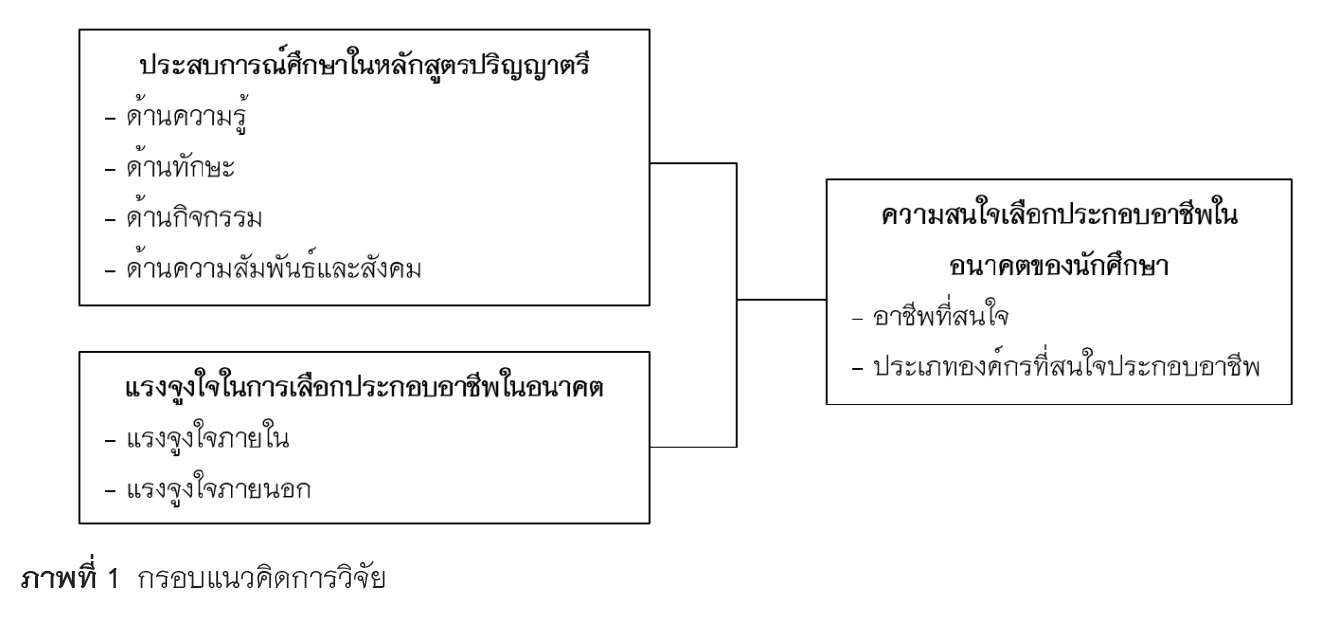
ประสบการณ์ศึกษาในหลักสูตรปริญญาตรีและแรงจูงใจทั้งภายในและภายนอกมีส่วนสำคัญต่อความสนใจเลือกประกอบอาชีพในอนาคตของนักศึกษา การศึกษาข้อมูลดังกล่าวจะทำให้สถาบันการศึกษาทราบถึงจุดเด่นจุดที่เป็นโอกาสในการพัฒนาของหลักสูตรและทิศทางในการผลิตบัณฑิตในอนาคต การวิจัยครั้งนี้เป็นการวิจัยแบบผสานวิธี มีวัตถุประสงค์เพื่อศึกษาระดับประสบการณ์ศึกษาในหลักสูตรปริญญาตรี ความสนใจและระดับแรงจูงใจในการเลือกประกอบอาชีพในอนาคตของนักศึกษา โดยใช้กรณีศึกษาเป็นนักศึกษาชั้นปีที่ 3 วิทยาลัยพัฒนศาสตร์ ป๋วย อึ๊งภากรณ์ มหาวิทยาลัยธรรมศาสตร์ เก็บข้อมูลเชิงปริมาณด้วยแบบสอบถามจากกลุ่มตัวอย่างที่เป็นนักศึกษาชั้นปีที่ 3 จำนวน 60 คน และเก็บข้อมูลเชิงคุณภาพด้วยการสัมภาษณ์เชิงลึกกับผู้ให้ข้อมูลหลักที่เป็นนักศึกษาชั้นปีที่ 3 จำนวน 8 คน เครื่องมือที่ใช้ในการวิจัยคือแบบสอบถามออนไลน์และแบบสัมภาษณ์กึ่งโครงสร้าง วิเคราะห์ข้อมูลด้วยสถิติเชิงพรรณนาและการวิเคราะห์เนื้อหา
ผลการวิจัยพบว่าในภาพรวมนักศึกษามีระดับประสบการณ์ศึกษาในหลักสูตรปริญญาตรีในระดับมาก โดยมีระดับประสบการณ์ด้านกิจกรรมสูงที่สุด รองลงมาคือด้านทักษะ ด้านความสัมพันธ์และสังคม และด้านความรู้ ตามลำดับ โดยอาชีพในอนาคตที่นักศึกษาสนใจ 3 อันดับแรก คือ 1) ผู้ประกอบการทางสังคมหรือธุรกิจส่วนตัว
2) นักจัดการความรับผิดชอบต่อสังคมหรือนักจัดการความยั่งยืนขององค์กร และ 3) นักพัฒนาทรัพยากรมนุษย์และองค์การ โดยนักศึกษาส่วนใหญ่ ร้อยละ 70 สนใจเลือกประกอบอาชีพในองค์กรภาคเอกชน สำหรับระดับแรงจูงใจในการเลือกประกอบอาชีพในอนาคตพบว่า นักศึกษามีระดับแรงจูงใจภายในสูงกว่าระดับแรงจูงใจภายนอก โดยแรงจูงใจภายในที่สำคัญคือความสนใจงานที่สร้างประโยชน์แก่สังคม รองลงมาคือการมีเป้าหมายที่ชัดเจนในอาชีพ และการมีบุคลิกภาพที่เหมาะกับอาชีพในอนาคต ส่วนแรงจูงใจภายนอกที่สำคัญคือลักษณะงานและความก้าวหน้าในงาน ค่าตอบแทนและแนวโน้มทางการตลาด รวมถึงรายวิชาในหลักสูตรที่มีประโยชน์ต่อการนำไปประกอบอาชีพ ดังนั้นหลักสูตรควรจัดการเรียนการสอนที่สนับสนุนกิจกรรมการเรียนรู้นอกห้องเรียน การพัฒนาทักษะและความถนัดในสาขาวิชา และปรับปรุงพัฒนาหลักสูตรอย่างต่อเนื่องให้ตอบโจทย์กับนักศึกษาและความต้องการของตลาดแรงงาน ตลอดจนทำความร่วมมือกับองค์กรภาครัฐและเอกชนเพื่อร่วมกันพัฒนานักศึกษาและพัฒนาสภาพแวดล้อมที่เอื้อต่อความก้าวหน้าในการทำงานที่จูงใจให้นักศึกษาสนใจเลือกประกอบอาชีพในอนาคตได้ตรงตามคุณลักษณะและความสามารถของตนเอง
Downloads
Article Details

อนุญาตภายใต้เงื่อนไข Creative Commons Attribution-NonCommercial-NoDerivatives 4.0 International License.
เอกสารอ้างอิง
Aungyot, T., Khanthanatee, S., & Khumpitak, N. (2020). Factors affecting the demand of the bachelor degree students’ job designation in Nakhon Ratchasima province. In The 7th National Conference Nakhon Ratchasima College (pp. 168-176). May 23, 2020. Nakhon Ratchasima: Nakhon Ratchasima College. [In Thai]
Best, J. W. (1981). Research in education. (3rd ed.). New Jersey: Prentice. Hall Inc.
Chaiya, S. (2019). The development of lifelong learning skills of students in the 21st century. Academic Journal of Education, 20(1), 168-180. [In Thai]
Chantapong, S. (2022). Trends in the job market and the rise of freelance work in the Gig Economy. Retrieved from https://www.bot.or.th/content/dam/bot/documents/th/research-and-publications/articles-and-publications/articles/pdf/Article_1Mar2022.pdf [In Thai]
Daosri, T., Thipkonglad, P., Khemphong, P., Dubsork, S., Pengpis, S., Wisarutphaisan, W., & Phutiariyawat, J. (2021). The study of the learning management approach of school in the 21st century. Journal of Humanities and Social Sciences Nakhon Pathom Rajabhat University, 11(1), 59-74. [In Thai]
Dewey, J. (1933). How we think: A restatement of the relation of reflective thinking to the educative process. Boston: D.C. Heath & Co Publishers.
Holland, J. L. (1997). Making vocational choices: A theory of vocational personalities and work environments. (3rd ed.). Odessa: Psychological Assessment Resources, Inc.
Institute of Trade Strategies. (2024). Top 10 dream careers for the new generation and the status of Gen Z in 2024. Retrieved from https://tradestrategies.utcc.ac.th/wp-content/uploads/2024/02/10-อาชีพเด่น-อาชีพในฝันของเด็กรุ่นใหม่-ปี-67.pdf [In Thai]
Julrma, O., Puthaco, N., & Thongkamsamut, C. (2022). A study on needs for extra-curricular activities of undergraduate students, faculty of architecture, Khon Kaen University. Art and Science Great Mekong Subregion Research Journal, 30(2), 72-84. [In Thai]
Junruan, J., Namboonruang, S., & Ratniyom, R. (2023). Factors influence decision making choose a career of undergraduate students in Muang District, Lampang Province. Phimoldhamma Research Institute Journal, 10(1), 15-26. [In Thai]
Kaewka, C., Klinsukhon, S., & Kamkaew, R. (2022). Factors influencing the choices of jobs for the undergraduates of the faculty of management science at Loei Rajabhat University. Research and Development Journal, Loei Rajabhat University, 17(60), 62-72. [In Thai]
Nimpathomvong, P. & Kangsadanporn, A. (2023). The dream job of generation Z youth. Journal of Dhamma for Life, 29(4), 71-82. [In Thai]
Panyavaranant, C. & Limsakul, M. (2024). Listening to the voices of the younger generation, choosing organizations that care about the environment. Retrieved from https://www.prachachat.net/sd-plus/news-1591155 [In Thai]
Pengbubpha, W. & Sriklaub, K. (2021). Important career skills in the modern age that Thai students should be enhanced: A needs analysis. Journal of Educational Studies, 15(1), 137-149. [In Thai]
Puey Ungphakorn School of Development Studies. (2023). Bachelor of Arts Program in Innovation for Human and Social Development. Retrieved from https://www.psds.tu.ac.th/_files/ugd/b8deb4_f704d55f0c484e43b91447aad261af34.pdf [In Thai]
Rachsomboon, P., Yapradit, S., Leelasrisiri, C., & Sithitool, T. (2020). Group relation activity to build relationship among students, instructors, and mentors using advice giving technique of high vocational certificate students (High Voc. Cert.), bilateral system, Eastern Technological College (E.TECH). Romphruek Journal of the Humanities and Social Sciences, 38(2), 139-152. [In Thai]
Ratbunthong, C. (2023). A study of reasons with participating in activities of undergraduate student’s at Rajamangala University of Technology Phra Nakhon. RMUTP Research Journal Humanities and Social Sciences, 8(1), 43-56. [In Thai]
Roddang, N., Toopgrajank, S., & Charoenwiriyakul, C. (2022). The decision making in choosing the career of undergraduate students in Bangkok and Vicinity. Journal of Development Administration Research, 12(4), 733-742. [In Thai]
Ryan, R. & Deci, E. (2000). Intrinsic and extrinsic motivations: Classic definitions and new directions. Contemporary Educational Psychology, 25(1), 54-67.
Smith, J. & Spurling, A. (1999). Lifelong learning: Riding the tiger. London: Cassell.
Sukwan, C. & Tongaram, P. (2025). Needs assessment for competency development of graduate diploma students in teaching profession at Phranakhon Si Ayutthaya Rajabhat University. Valaya Alongkorn Review Journal, 15(1), 57-78. [In Thai]
